



25 November 2026
Austin Stack - true to the Republic

Book review
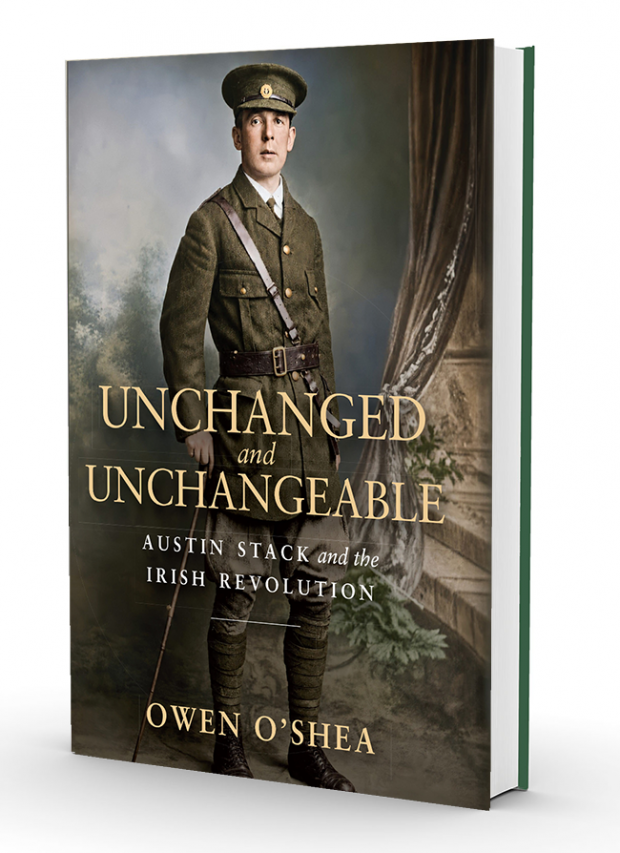
‘Unchanged and Unchangeable - Austin Stack and the Irish Revolution’
By Owen O’Shea. Publisher by Merrion Press.

It has been said that few revolutions have been as well documented and as comprehensively written about as the Irish revolution 1913 to 1923. Yet some leading figures remained for long in shadow and have only recently been brought more into the light, such as Rory O’Connor in Gerry Shannon’s biography and Austin Stack in this new biography by Owen O’Shea.
Both Stack and O’Connor were leading Republicans, fundamentally opposed to the 1921 Treaty and both of them had detractors who tried to devalue their contribution and their legacy.
The manner in which Stack in particular was disparaged by Free State men of power, such as Dick Mulcahy and Ernest Blythe, is in a way a tribute to him. Stack was widely respected during the Black & Tan war and his refusal to support the Treaty was undoubtedly a blow to the Free State cause. To limit the damage, some Free Staters felt the need, then and later, to portray him as negatively as they could.
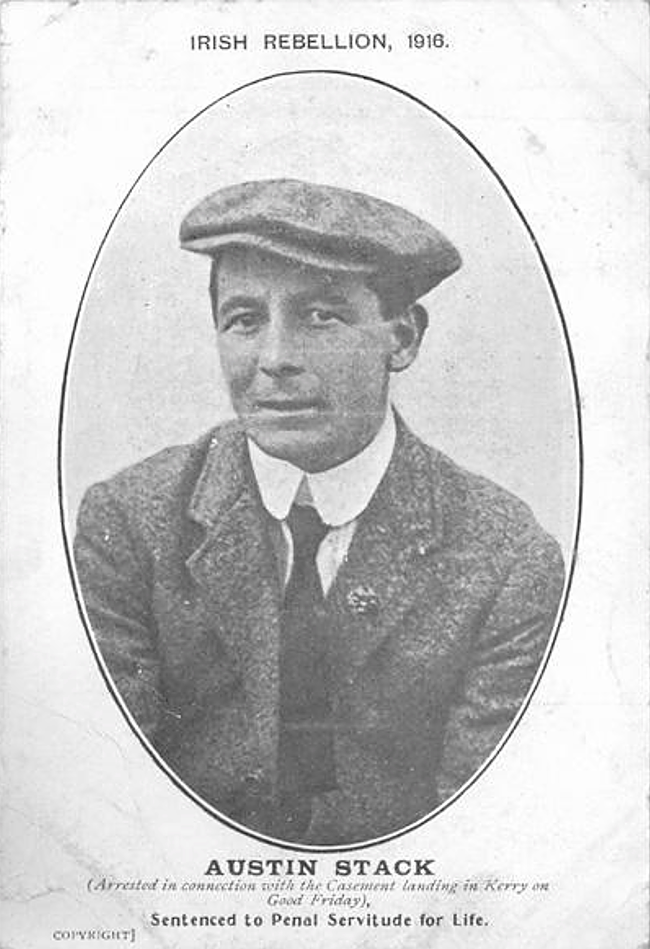
Much of this negativity focused on Stack’s work as Minister for Home Affairs in the First Dáil Éireann. Michael Collins famously regarded him as incompetent but Owen O’Shea shows that this was unjust and it tells us more about Collins than about Stack. The latter took on an enormous task in establishing and running a system of Republican courts in the most difficult circumstances. As the war escalated, courts were set up throughout much of the country and they undermined and superseded the British court system. They were popular and also gained international respect for the Dáil as a very practical example of its work, the Sinn Féin philosophy of Irish self-reliance and separation from England in action. Stack and his small Department, operating covertly in Dublin, under constant threat of arrest, deserved great credit for their achievement.
Stack came to the ministerial role after leading many prison battles and after a spectacular escape from Strangeways in Manchester. He had led resistance in Crumlin Road and Mountjoy under the British and would do the same under the Free State. The mass hunger strike of 1923 was the last of several in which he had taken part, severely damaging his health.
The Kerry background is crucial in understanding Stack. He was imbued with the Fenianism of his father, helped to build up the GAA in the county, led it for years, and was a popular figure in his native Tralee and across the county. He commanded the Kerry Volunteers and was three times elected a TD. This was the basis for his rise to national leadership in the IRA, Sinn Féin and the Dáil. That he brought with him commitment and leadership ability was widely recognised.
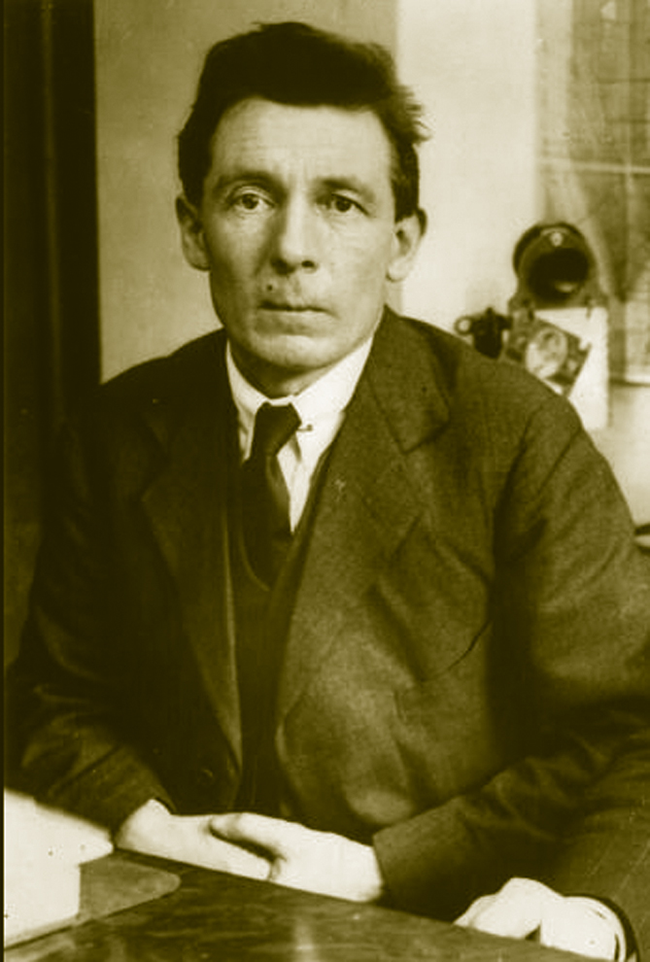
He was idealistic and dedicated. He was not politically sophisticated and his sole political aim was Ireland’s freedom as a Republic. He believed all other social and economic objectives would have to wait and could only be achieved when England was driven out. Like Terence MacSwiney he felt deeply that he had let his comrades down in 1916, though there was little more either of them could have done given the failure of the German arms shipment and Eoin Mac Néill’s countermanding order. But this experience drove and motivated both of them and they were determined to fight for the Republic whatever the cost to themselves.
For Stack the cost was great. After prison battles, hunger strikes, tireless ministerial work, the traumatic Treaty split, prison again, another hunger strike, his health was broken. He had been close to de Valera but, putting principle before personality, he did not follow him into Fianna Fáil. His last years were spent trying to hold together a dwindling Sinn Féin organisation and he was only 49 when he died in 1929.
This biography is very well deserved by Stack and very well written by Owen O’Shea. It redresses the balance and gives Stack his rightful place in our history.