

24 November 2026
Story of a Republican youth movement
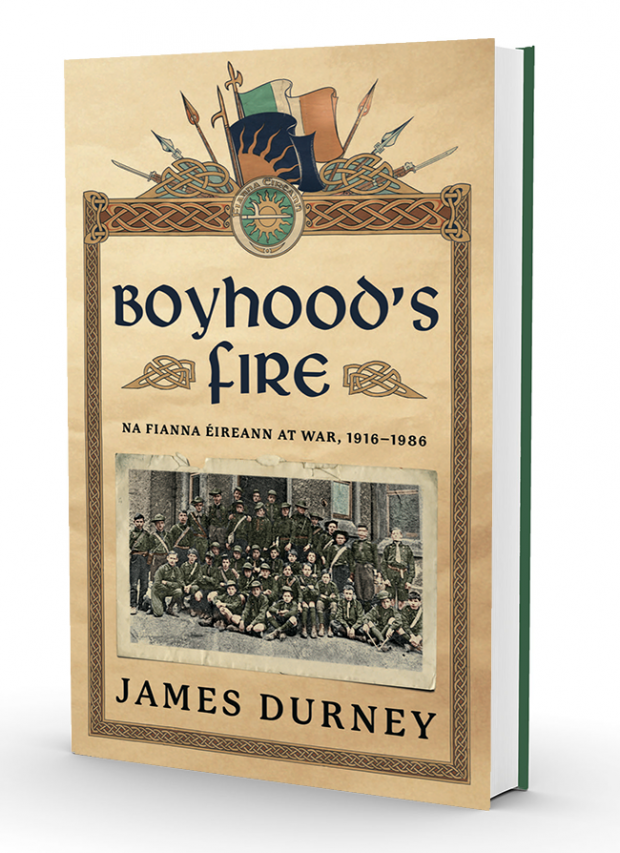
Book review: By James Durney, author of ‘Boyhood’s Fire - Na Fianna Éireann at War 1916-1986’. Published by Merrion Press.
On 16 August 1909 the Irish National Boy Scouts (Na Fianna Éireann) was formed by two nationalist activists, Bulmer Hobson and Countess Constance Markievicz, as an alternative to directly counteract the influence of Sir Robert Baden-Powell’s Boy Scout movement in Ireland.
Na Fianna Éireann membership was open to male children from eight years old to 18, regardless of class, creed or political party. While the Fianna was initially for boys, some girls did join, although, by 1922, membership had been limited to boys aged between 12 and 18. Each member was given the title Fian (warrior) and the boys were offered a combination of military training, outdoor pursuits and Irish cultural activities. The aim of the semi-military movement was to train the youth of Ireland for armed conflict against British rule.
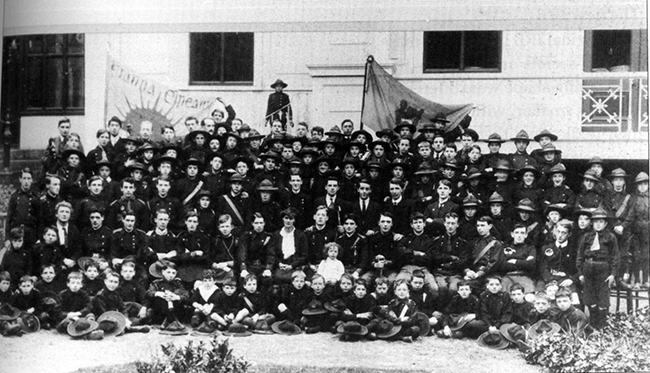
Within weeks, a growing number of boys were meeting at Camden Street Hall every Tuesday and Thursday evening for military drill. Limerick born Con Colbert, who had enrolled at the inaugural meeting, was the first instructor in elementary drill formations for the first troop, or branch. The boys also received drill instruction from Seán Kavanagh, an ex-member of the British Army. Regular activities included weekly meetings, route marches, camping trips and céilí dances. Within a year there were five sluaighte (troops) in Dublin and branches in Waterford, Belfast and Clonmel; the first Ard-Fheis (high assembly) had also been held. Subsequently, Na Fianna Éireann developed branches in nineteen counties in Ireland as well as branches in Glasgow and Liverpool.
The Irish Volunteers were formed in Dublin in November 1913. Young men who were in the Fianna and had gained experience in the organisation were subsequently appointed as Volunteer officers. The expertise of the Fianna in military training was much sought after by the Volunteers, as many had several years’ training in military drill, signalling and weapons handling.
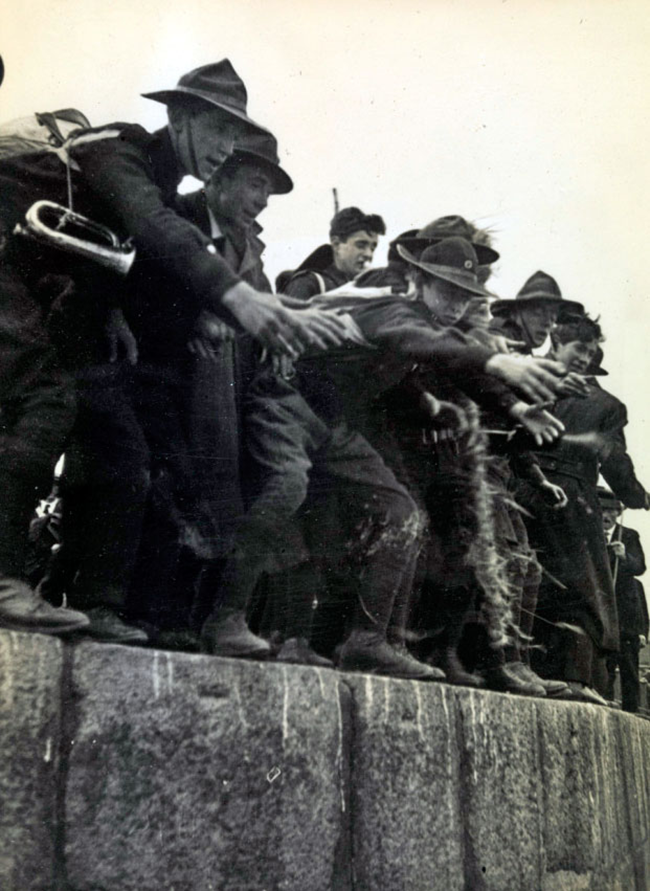
Through an arms committee, the Irish Volunteers succeeded in purchasing 1,500 Mauser rifles with 49,000 rounds of ammunition from a German arms dealer. One of those involved in the committee, Erskine Childers, agreed to transport most of the cargo onboard his yacht, the Asgard, to Howth harbour, where Volunteers would be on hand on 26 July to accept a shipment of 900 rifles and 29,000 rounds of ammunition. Na Fianna played a significant role in unloading and transporting the arms and ammunition to safety and worked well in conjunction with the Volunteers at the Howth gun-running. Now armed, the Republican Movement t was ready for rebellion.
On 24 April 1916, 1,600 men, women and children assembled in Dublin and proclaimed an Irish Republic. They occupied a series of locations around the city that had been chosen for their strategic importance. Dozens of the rebels were youthful members of Na Fianna Éireann. During Easter Week the Fianna took part in all the major fighting in the city and four of them were killed in action – including fourteen-year-old Seán Healy, the youngest rebel to die in the Easter Rising.
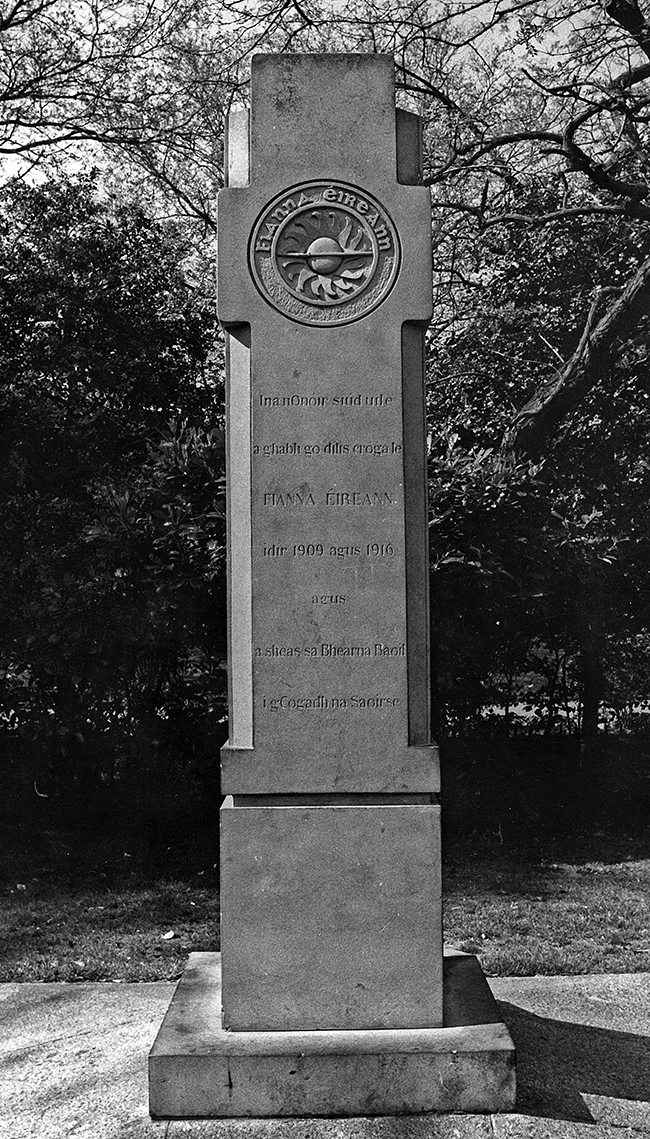
The lives of Fianna members were filled with meetings, camping trips, route marches, shooting practice, concerts and skirmishes with police, the British military and extreme loyalist groups. A Fian might be called upon to carry messages and dispatches, scout ahead of armed and unarmed republicans, smuggle arms, watch for movements of enemy forces. Any of these operations could put their lives at risk.
Throughout the Irish revolution of 1916–23, Na Fianna Éireann recruited, trained and nurtured a core of young republican activists who made an essential contribution to the Irish Republican Army’s armed struggle. The Fianna embraced the Irish revolution, the fight for freedom that had eluded previous generations. Many of the leading members of the IRA in the War of Independence had been experienced members of the Fianna, including Paddy O’Daly, Liam Mellows and Roger McCorley.
The later Civil War and the northern pogroms would decimate the organisation, but out of the ashes arose a new generation of youthful warriors such as Tommy Woods and Peter Daly, who died in the Spanish Civil War, and boyhood pals Cathal Goulding and Brendan Behan, who would take the fight to the England.
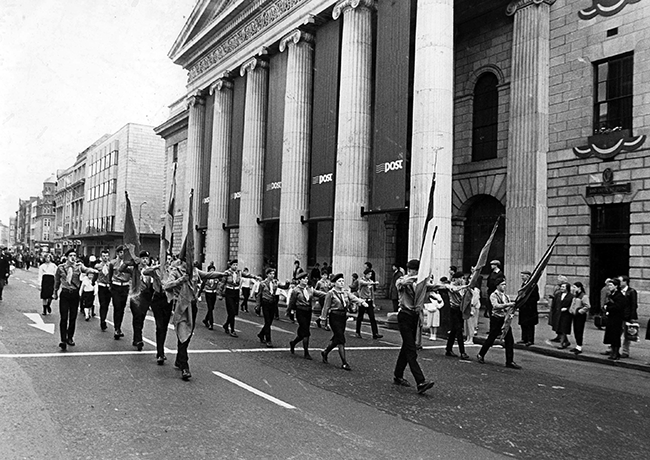
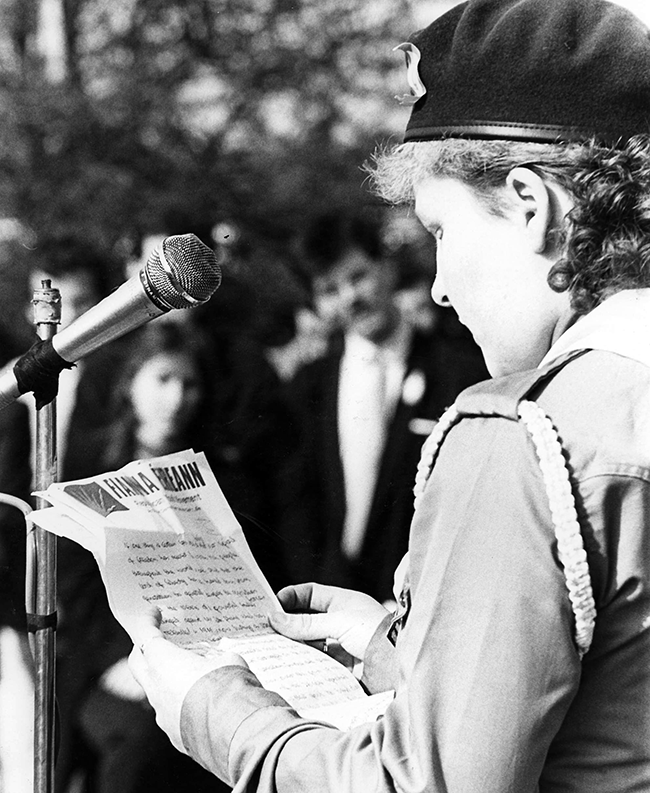
The new generation of Fianna warriors were young, enthusiastic and inexperienced. When Belfast and Derry erupted in 1969 the first republican killed in action was fifteen-year-old Fianna member, Gerald McAuley, shot dead defending Bombay Street in Belfast from a loyalist mob. A further thirty Fianna members would lose their lives in the Troubles, while six of the ten hunger strikers who died in 1981 were former members. They were children of their time, young lions facing the might of a ruthless government and a dying British Empire.
From 1913 to 1981 80 Fianna were killed in action or by accident, or died of illness brought on by prison conditions. Seven were killed during and after the Easter Rising, including Con Colbert and Seán Heuston, executed by firing squad as leaders of the insurrection. Six died during the War of Independence, while eight more were killed during the Truce period, including two in Belfast. A further 12 lost their lives during the Civil War. 31 Fianna members were killed between 1969 and 1981, many of them in accidental shootings and training accidents – seventeen died in 1972, the worst year of Troubles violence.
The last Fianna member to die was John Dempsey (16), shot dead by British soldiers, in Belfast, on 8 July 1981 during rioting following the death of hunger-striker Joe McDonnell.
The book contains a full and comprehensive Roll of Honour of all Fianna who died for Ireland from 1913-1981.