



16 October 2026
We were never supposed to stand on the Garvaghy Road again
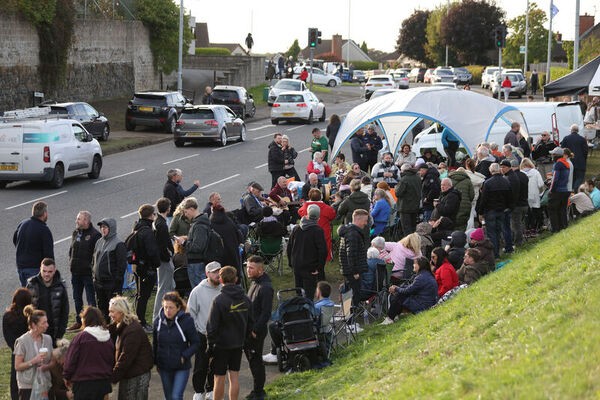
• Solidarity we can offer the people of the Garvaghy Road - we must ensure that they never have to go through this again
I was born in 1993. I was four years old when the events of Drumcree in 1997 unfolded. Too young to remember the fear, the violence or the images that would become etched into the memories of an entire generation.
But I grew up knowing about the Garvaghy Road. Like so many young Irish republicans, I knew the stories. I had seen the footage, heard the accounts and understood what Drumcree represented. It was part of our history; part of the struggle that had shaped the Ireland I grew up in.
I never imagined I would find myself standing on that same road, preparing for history to repeat itself.
The days leading up to the recent events on the Garvaghy Road are something of a blur. The first night in particular is difficult to piece together. What I remember most clearly is the feeling.
Everyone was on high alert. There was an urgency in how people moved, how they spoke, how they reacted to every development. It was as though everyone’s nervous system had been activated at once.
People who had lived through Drumcree before seemed to recognise something that those of us who hadn’t experienced it could not yet fully understand. As the court proceedings continued, we made our way to Drumcree Community Centre, just off the Garvaghy Road.
Inside, tea and coffee were being poured. People stood around in small groups, talking quietly, sharing updates and trying to work out what would happen next. There was an almost ordinary familiarity to it. The cups of tea, the conversations, people checking in on one another, but beneath it all was an unmistakable nervousness.
Different scenarios were being discussed, plans were being made depending on what the courts decided, people were preparing themselves for every possible outcome.
As it became increasingly clear that the courts were not going to rule in favour of the residents, something changed. The nervousness gave way to fear. Not imagined fear. Not exaggerated fear. Real fear, rooted in the lived experiences of people who knew exactly what had happened on this road before.
As the police approached the top of the hill, a siren suddenly sounded. To this day, I don’t know whose house it came from or who set it off, but the sound of it blaring across the area is something I don’t think I’ll ever forget. Hundreds of people began making their way towards the road. The rain was pelting down.
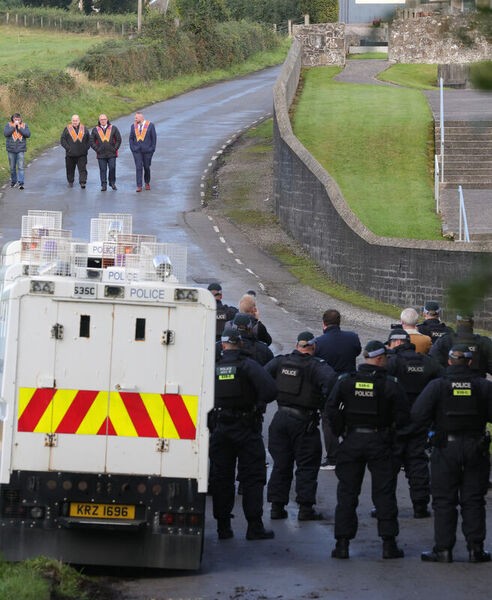
I walked to the top of the hill, where two police jeeps were positioned facing down the Garvaghy Road, across the road stood people of all ages, arms linked together.
There is something rooted deep in you as an Irish republican, a feeling that when you see injustice, you have a responsibility to stand against it. And standing there that night, everything about what was happening felt unjust. It was surreal, almost like I had stepped into an alternative universe.
I had grown up believing that the days of forcing an unwanted Orange march through a nationalist community were behind us. That the peace which had been built, however imperfectly, meant that the people of the Garvaghy Road would never again have to face this.
Yet here we were. I also have to admit something about those of us who were younger. There was, initially, a certain excitement among some of us. Perhaps a misplaced romanticism about experiencing something we had only ever heard our older comrades speak about. The kind of stories passed down through generations of republicans, stories of standing together, holding the line and refusing to give in.
That feeling didn’t last very long. I remember the advice being passed along the line.
“Don’t let them get your wrists or your fingers.”
“Why?”
“Because they’ll bend them back. It’s unbearable.”
“Oh. Right.”
“Tuck your head in as much as you can.”
“Why?”
“Because they’ll lift you by the jaw.”
And just like that, the romanticism disappeared.
This wasn’t a story from a history book. It wasn’t something to be admired from the comfort of another generation. It was real and the people standing beside me knew exactly how real it could become.
I found myself looking particularly at the older women standing on the front line. Women who had been here before. Women who knew what was potentially coming. Who knew how brutal the beatings could be, what it felt like to be dragged from the road, what it meant to stand your ground when every instinct in your body must have been telling you to be afraid. And still they stood.
Resolute. Immovable. Drenched to the skin, arms linked with people young enough to be their children and grandchildren.
There was no romanticism for them. They knew precisely what they were facing, and they stood there anyway. Every time the police made another announcement, you could feel the tension rise through the crowd. People gripped one another that little bit tighter. Bodies stiffened. Conversations stopped.
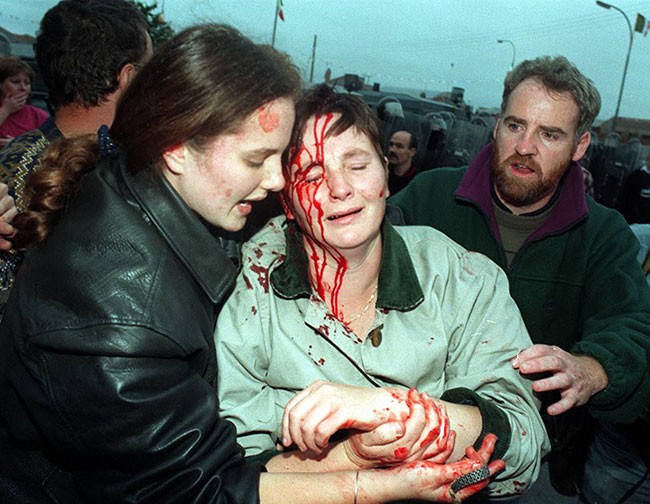
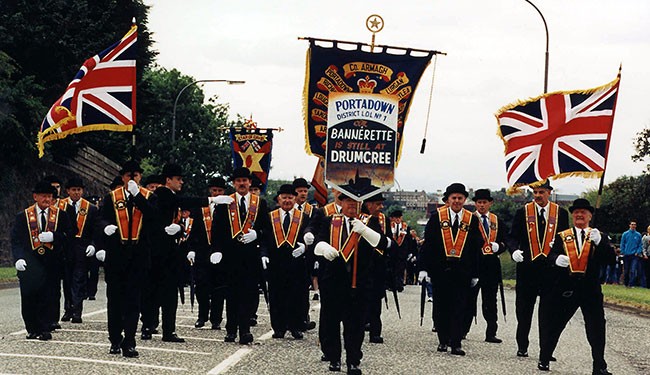
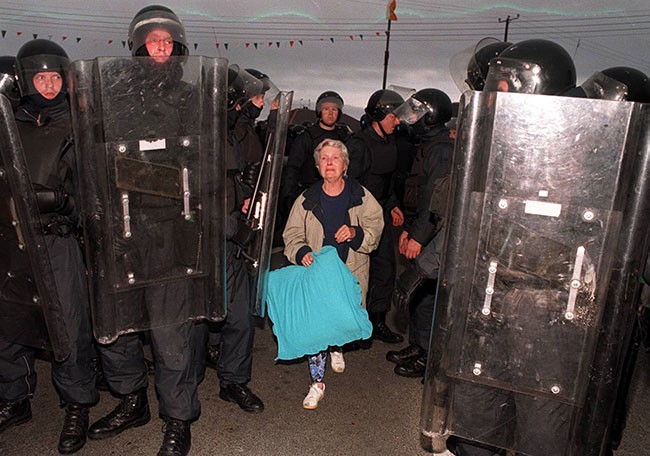
• For those who had been there in 1997 memories came flooding back
Everyone was preparing for what might come next. For those who had been there in 1997, I can only imagine what memories those moments brought flooding back. For those of us who hadn’t, we were beginning to understand.
The night crawled on into the following day. The rain never seemed to stop. People came and went, others remained in place, and slowly the police began to retreat and reposition their jeeps. But the tension didn’t disappear with them.
There were too many years of mistrust, too many memories, too much history for that. Over the days that followed, thousands of people from across Ireland made their way to the Garvaghy Road, people of every age, from every corner of the country, came to stand with the residents and make one thing clear: There could be no going back.
And in amongst the seriousness of it all, something else emerged. There were pop-up Gaeltachts, music, laughter and stories being shared. People made sure everyone was fed. Cups of tea appeared from nowhere. Strangers became familiar faces. Old friends were reunited and new friendships were made.
There were moments when you could almost forget why we were there.
Almost. Because the reality of the situation was never very far away. Every update, every movement, every new development was a reminder that the peace the Garvaghy Road community had enjoyed for 28 years was being threatened.
I kept thinking about a visit I had made to the area a few years earlier during an election campaign.
We had been visiting St Mary’s school at the top of the hill, and I remember looking around and asking, with genuine fascination, “Oh, is that the Garvaghy Road?” It was a place I knew so much about without ever having really known it. A place from news footage, from stories told by older republicans, from books and documentaries about a time I had been too young to understand. I remember that sense of curiosity. And now, years later, I was standing on the very same road, arms linked with people who had stood there almost three decades earlier.
It felt like being transported backwards in time. Except this wasn’t history. It was happening in front of me. And I felt angry.
Angry that this was happening at all. Angry that a community which had lived in peace for 28 years was once again being forced to defend something as basic as its right to live free from sectarian intimidation.
I felt an overwhelming sadness too. Looking at the older women standing on that road, I kept thinking about everything they had already been through. They had stood here before. They had experienced the fear, the violence and the uncertainty. They had raised families, built lives and watched their community move forward. And now, almost three decades later, here they were again.
There was something profoundly unjust about that. But perhaps more than anything, I felt disbelief.
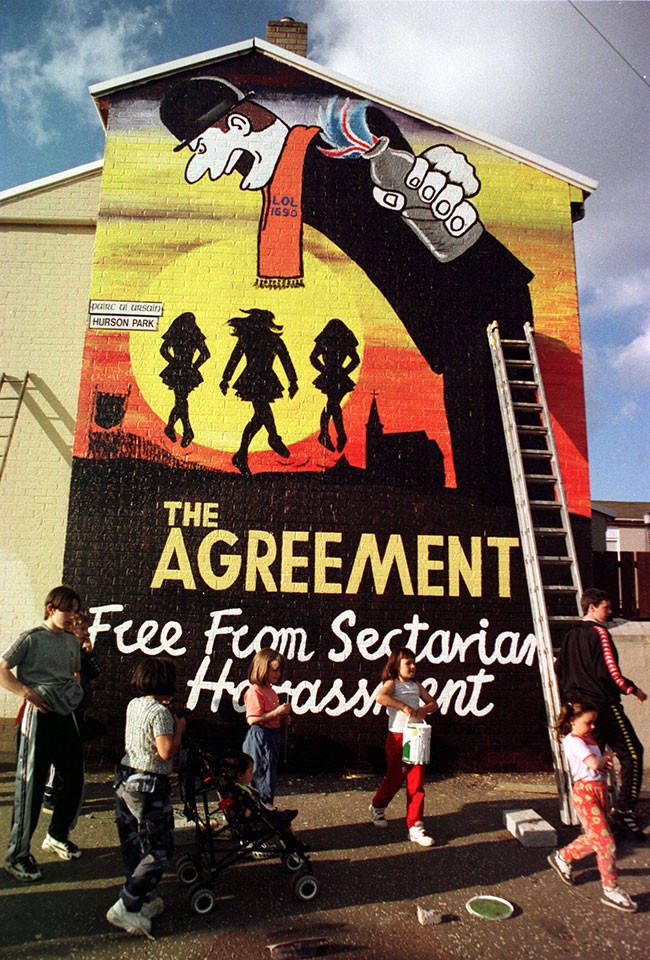
I was born in 1993. I was five when the Good Friday Agreement was signed. I belong to a generation that grew up hearing about the conflict rather than experiencing it in the way our parents and grandparents had.
We were raised with the understanding that things had changed. That the peace process, for all its imperfections, had drawn a line under certain injustices. That the battles fought by those who came before us had secured something better for those of us who followed. And yet there I was, standing on the Garvaghy Road in the pouring rain, listening to people explain how to protect myself if the police began dragging us from the road.
How could we possibly be back here? What struck me most was that the older generation didn’t seem to share our disbelief. They were angry, they were frightened, but they weren’t surprised in the same way. They knew what could happen because they had lived it and I think that was one of the hardest things for me to comprehend. That something I regarded as almost unthinkable was, for them, a possibility they had never been able to entirely rule out.
I don’t want my generation to inherit those experiences. I certainly don’t want the generation coming after us to inherit them either.
Those women should have been able to look back on Drumcree as something they had survived, something they had overcome, something their children and grandchildren would only ever know through stories.
Instead, they were standing on the same road, facing the same fears, fighting for the same basic rights. We often speak about the courage of previous generations of republicans. Standing on the Garvaghy Road, I understood that courage in a way I never had before. I also found myself thinking that they should never have needed to show it again.
My generation grew up in a different Ireland. We are the generation who were children when the Good Friday Agreement was signed. We grew up with the expectation that things would move forward, that the injustices our parents and grandparents experienced would not be ours to confront in the same way.
We knew the stories, but we weren’t supposed to have to live them and yet, standing on the Garvaghy Road, I found myself alongside people who had already fought this battle, watching them prepare to fight it all over again.
I thought about the younger people standing there, some even younger than I was, and what it meant that they too were being confronted with something that should have been consigned to history.
And I thought about the residents, because for all the political arguments, the court proceedings, the commentary and the headlines, at the centre of everything were ordinary people who simply wanted to live in peace.
The people standing on that road were not a “mob”. They were not a “rabble”, as some would have you believe. They were decent people. Parents, grandparents, young people, neighbours and friends. People who believed, fundamentally, that no community should be subjected to sectarian intimidation and that the residents of the Garvaghy Road had a right to live free from it. People who knew that standing alongside them was simply the right thing to do.
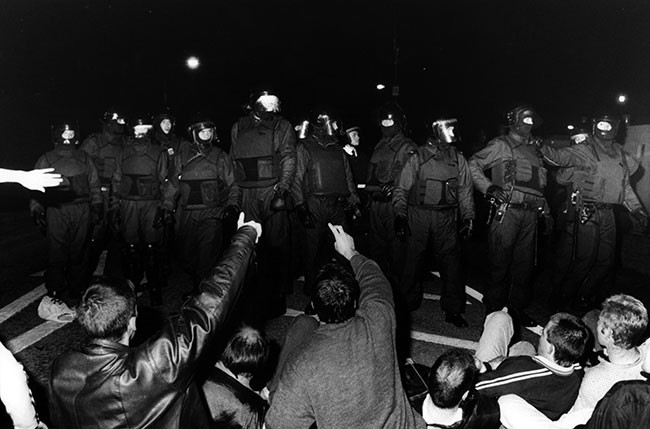
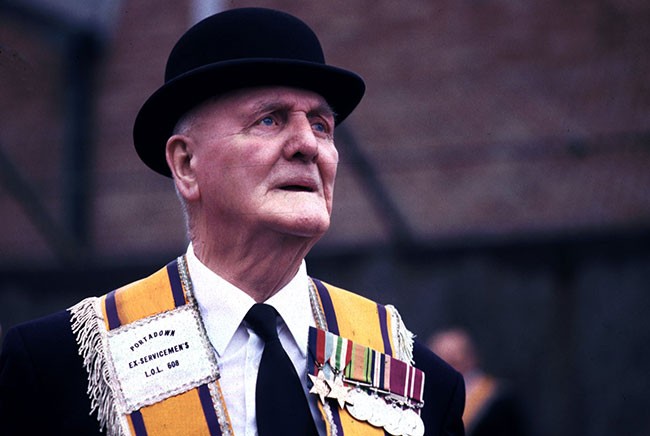
• Garvaghy Road 1997
Twenty-eight years of peace was not a problem that needed to be solved. It was a peace that deserved to be protected.
The Garvaghy Road has taught me something that no history book or conversation ever could.
It has shown me the courage of those who came before us, the responsibility carried by those of us who came after them, and just how fragile progress can be when it is taken for granted.
It has also reminded me that solidarity is not an abstract political idea. Sometimes it is standing in the pouring rain, arms linked with strangers, knowing what might happen next and refusing to leave them standing alone.
As republicans, we will always stand with communities facing injustice. That is who we are, and that is what we do. But the greatest act of solidarity we can offer the people of the Garvaghy Road is to ensure they never have to go through this again.
I was four years old in 1997. I am 33 now.
And I should never have had to stand on the Garvaghy Road in those circumstances. Neither should anyone else. There can be no going back. Not now. Not ever.