

12 September 2026
Scandals we need to remember
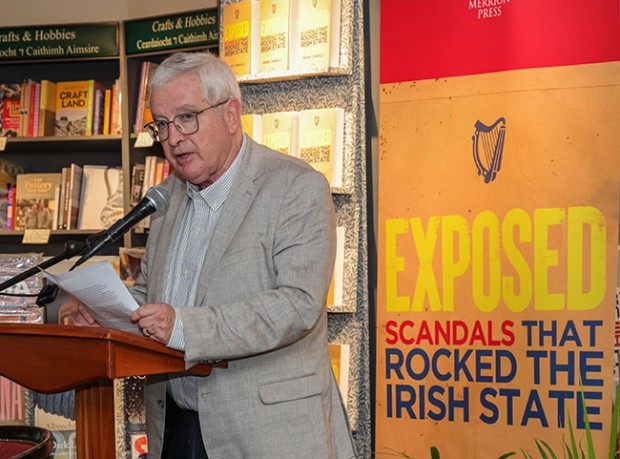
• Frank Connolly

Renowned Irish journalist Frank Connolly exposed some of the biggest scandals that rocked the political establishment and led to tribunals of inquiry and the resignation of at least one Taoiseach. Here Mícheál Mac Donncha interviews him about corruption then and now.

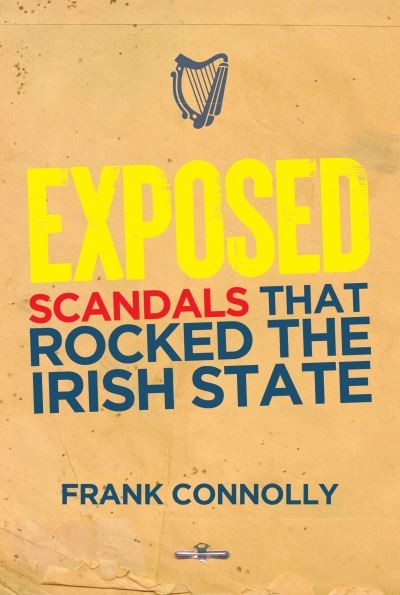
‘Exposed: Scandals that Rocked the Irish State’
by Frank Connolly. Published by Merrion Press
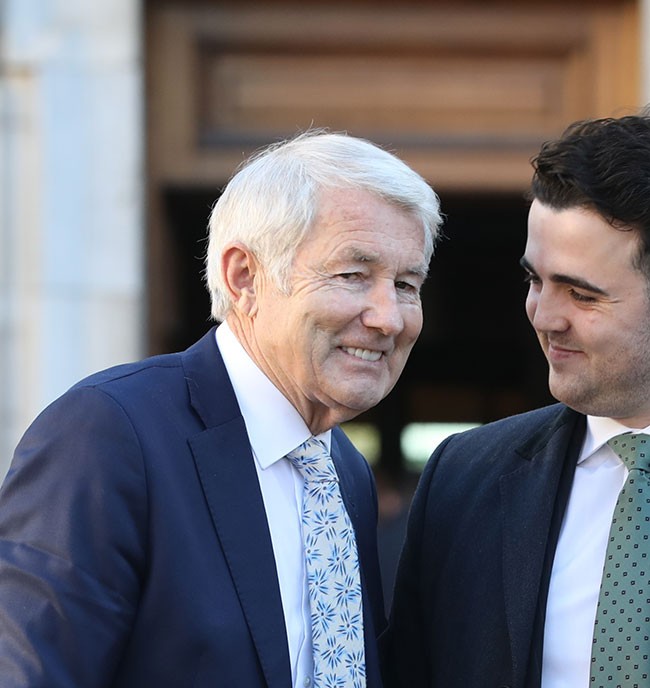
• Michael Lowry
This book is a comprehensive overview of the scandals that, as the title says, rocked the Irish state. Why revisit them now?
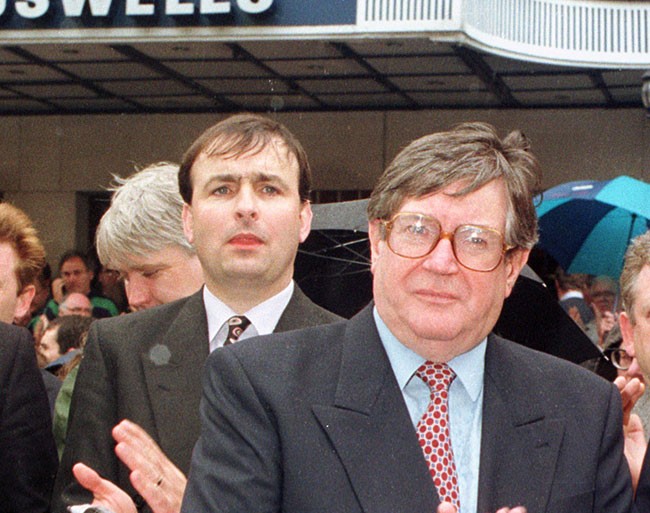
When the disgraced former minister, Michael Lowry, was invited into the negotiations to form a new government in Dublin in early 2025, I thought it was important to remind people, particularly a younger generation, about the scandals of the recent past. Lowry resigned as minister for communications in the Fine Gael led government in late 1996 after it emerged that he had received large payments and other benefits from businessman and retailer, Ben Dunne.
When the Moriarty tribunal reported on corrupt payments Lowry received from Dunne and another businessman Denis O’Brien from whom he procured even larger amounts in connection with the award by his department of the lucrative second mobile phone licence in 2011 then leader of Fianna Fáil, Micheál Martin called for his resignation from the Dáil and from politics. In 2025, Martin and the FG leader, whose party expelled Lowry, asked him to help form the current government in which he currently plays a significant role. The Moriarty tribunal also found that former FF leader and Taoiseach, Charles Haughey, accumulated almost £10 million in excess of his salary over his decades in politics, mostly derived from the corrupt nexus between politics and business interests in the 1970s and ‘80s.
In this book I recount how, between 1995 and 1997 I wrote in the Sunday Business Post how a man called Jim Gogarty witnessed a corrupt payment of £80,000 in cash to one of Haughey’s proteges and then government minister, Ray Burke, during the 1989 general election in connection to land re-zoning in north Dublin. This led to Burke’s resignation as minister for foreign affairs in October 1997 and the establishment of the Flood tribunal into planning in Dublin. From 1998, I reported for the newspaper on the explosive allegations by Tom Gilmartin whose plans to develop two major retail centres in Dublin were obstructed by politicians and public officials who were being paid huge sums by rival business people.
You link the planning corruption among politicians and other public officials to the origin of the housing crisis. How so?
I think it is no accident that the network of corrupt TD’s councillors and public officials working with builders and developers in the construction of housing across Dublin during the 1980s and 90s coincided with the political decision to restrict the role of local authorities in the provision of social and affordable housing for the rapidly growing population across the county. The State effectively ceded its vital role in building and maintaining the public housing stock to the private market, which was never capable of meeting the long-term needs of the people for decent homes in properly serviced estates.
• Ray Burke
One thing that struck me reading this book was how efforts were made to thwart and divert both journalistic and tribunal investigations. And some in the media had a role in this?
The business interests exposed by Gogarty in relation to the payments to Ray Burke employed expensive public relations firms and lawyers and used every means including disinformation to the media to deflect the allegations and indeed obstruct and delay the tribunal.When Gilmartin came forward with his claims that Liam Lawlor TD and former city and county manager George Redmond sought massive payments in return for planning favours and exposed the role of PR man Frank Dunlop in the bribing of up to one third of the elected members of Dublin County Council to influence re-zoning across the county the businessmen who benefitted from their activities pushed back even harder. As the investigation embroiled senior politicians including EU Commissioner, Padraig Flynn, who pocketed a £50,000 donation to Fianna Fáil and later Bertie Ahern we faced regular threats of legal action while the Flood and later Mahon tribunal were dragged up and down to the High Court as efforts to hamper the investigations into planning corruption intensified.
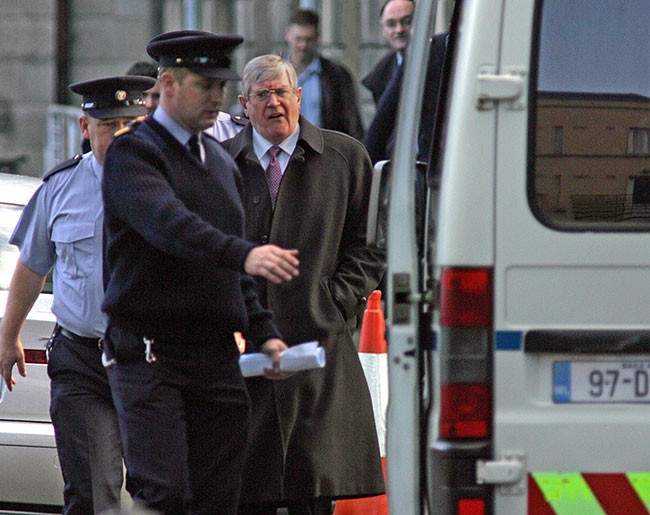
When it emerged in 1998 that Ray Burke had also received a payment of £50,000 from a company controlled by the owner of Independent Newspapers, Tony O’Reilly, the attitude of the media group took amore hostile turn towards the tribunal despite the best efforts of many of its journalists to follow the corruption trail. The newspaper also continued to promote Bertie Ahern as Taoiseach despite the net closing in on his bizarre financial arrangements during his term as minister for finance in the late 1980s and early 90s. There were other efforts to hinder my investigations into Ahern’s involvement with the businessman who forced Gilmartin out of his business and into bankruptcy. At the end of the day, Ahern was forced to resign in 2008 when we exposed as untrue his explanations for large amounts of sterling deposits, and in one case a $45,000, lodgement, into bank accounts under his control.
Many people will probably be most shocked by the Garda scandals in Donegal and Kerry, but not only there. Can you say something about that?
In 1999, I met publican, Frank McBrearty senior, in Raphoe, county Donegal, who told me how his son Frank junior and nephew Mark McConnell were wrongly accused by gardai of the murder of local cattle dealer, Richie Barron in October 1996. His family and staff were subjected to a prolonged campaign of persecution and harassment before it was established that they were not involved in Barron’s death. In fact, our investigation showed that some members of the gardai who were present in Raphoe on the night of the hit and run incident framed the McBrearty’s in order to protect those who were more likely responsible. Similarly, I exposed the role of other gardai in Donegal in the planting of illicit drugs in the premises of innocent publican Frank Shortt in Redcastle in north Donegal who was wrongly jailed for almost three years in 1995 for allowing the sale of the substances in his nightclub and bar. Some of these gardai were involved in planting ‘hoax’ bombs across the north-west that they later announced as ‘IRA’ finds in order to secure promotion within the force. I met with Sheenagh McMahon, the wife of one of the detectives involved who provided evidence of her husband’s activities in both the planting of the drugs and the hoax bombs. Detective Garda Noel McMahon resigned and Superintendent Kevin Lennon was dismissed following the findings of the Morris tribunal which investigated the corrupt activities of members of the force in Donegal. Another innocent man, Hugh Diver, was wrongly accused of planting an explosive type device at an MMDS mast in Ardara in south Donegal in 1996. The device was actually prepared in a local garda station and planted by a member of the force in order to damage the community protest against the television transmission service in the mid-1990s.
• Eddie Fullerton
Can you tell us about the link between the Garda corruption in Donegal and the murder of Sinn Féin Councillor Eddie Fullerton?
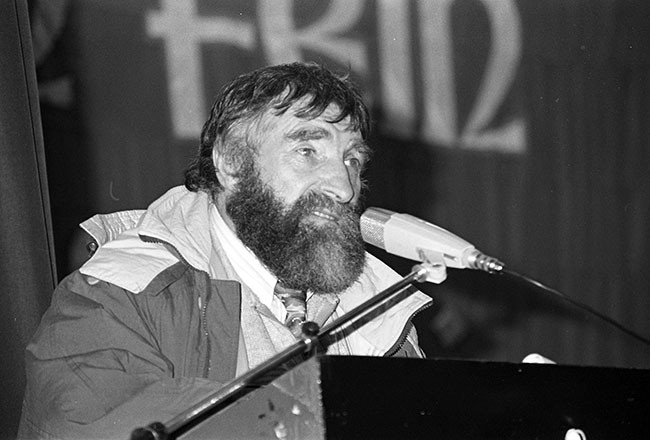
Some of those members exposed in the internal garda inquiries and the Morris tribunal were involved in the investigation into the murder of Eddie Fullerton at his home in Buncrana in May 1991. Details provided by Sheenagh McMahon (now O’Doherty) from her husband’s notebook contained information related to alleged payments to a person known to Fullerton. While no direct link has been established between any individual garda or other person identified in the notesand the UDA gang believed to have killed Fullerton, the circumstances of the councillor’s murder and the subsequent police investigation remain the subject of current investigations into alleged State collusion by his family, human rights organisations and lawyers, North and South.
• Joanne Hayes
There is new information about the persecution of Joanne Hayes, the Kerry Babies case. What is it?
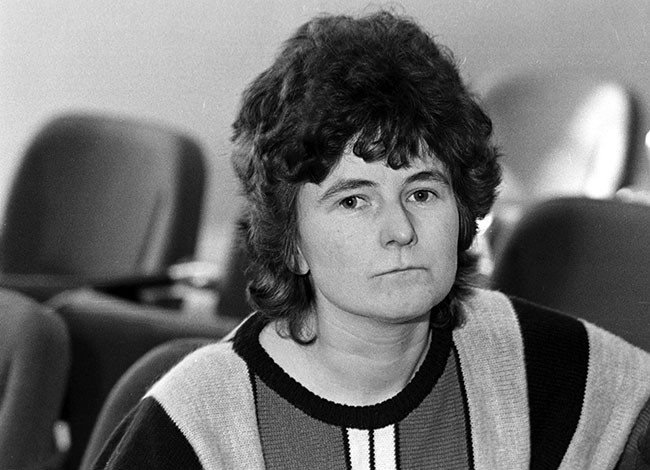
Over the past year I learned more about the circumstances surrounding the death of Baby John, who was found with his neck broken and 28 stab wounds on a beach in Caherciveen in south Kerry in April 1984. This murder led to the infamous Kerry Babies case during which Joanne Hayes and her family were accused of, and admitted to, the brutal killing of the baby, a crime which they did not commit. I have recently confirmed that the father and brother of the woman who gave birth to Baby John were members of the Garda. Her father died several years before the birth while her brother was a serving garda in County Kerry when the infant was brutally killed soon after his birth. This brother lived with his mother until she died a few years before his own death. He was previously suspected of vandalising the headstone of the baby’s grave on two occasions after it was erected by the local undertaker, Tom Cournane. According to the gardaí, the identity of Baby John’s parents was established following a general search for DNA matches among people living in the area, which led to their arrest and questioning in 2023.
During my recent research in the area, I spoke to Jack Griffin, a farmer and builder who discovered the body of Baby John when he was running along White Strand in Caherciveen on the evening of 14 April 1984. He described how he found the body of the infant face down between the rocks with stab marks on his back. Griffin said that the body was naked, washed and dry when he found it. He said he was shocked when he learned of the extent of the baby’s wounds and was distressed for many years after his shocking and horrific experience. A Goulding’s 0-7-30 fertiliser bag, tied at the top but with ahole in the bottom, was found near the body along with a brown plastic shopping bag with another clear plastic bag inside it. It was assumed by gardaí that the body had been placed in the plastic bags, which were put into the fertiliser bag but then fell through the hole in the bottom. The bags were sent by the exhibits officer, Sergeant Patrick Reidy, to the Forensic Science Laboratory in Dublin, but no fingerprint or detailed forensic testing was carried out on them. They were last handled by Sergeant Reidy but disappeared after he claimed to have left them at Tralee Garda Station during the subsequentinvestigation. Sergeant Reidy lived on the same street and was friendly with the family of the woman who gave birth to the child. He had also served in the force with her late father. Some years before he died, Reidyinformed a source to whom I spoke that he knew who killed Baby John but would ‘leave it to others find out’.In April 2026, the Garda Síochána confirmed that a file had been sent to the DPP in relation to the appalling death of the baby 42 years ago.
What of corruption now? Is it of a different nature and scale?
Inevitably, the nature of corruption has changed from stuffed envelopes and brown bags full of cash but with the State spending between £130 and £150 billion annually, and with consistent reports of huge waste, over-spending and unexplained delays to projects across a plethora of government departments and state bodies it would be naïve not to assume certain levels of corruption between public servants and private interests. As I report in this book, the agencies charged with overseeingpoliticians and public servants are ill resourced by their own admission and, with some notable exceptions such as the Comptroller & Auditor General, have been less than effective.
The book tracks 15 years of investigative journalism. Is it more difficult now to carry out such investigations?
The media has obviously suffered from a collapse in advertising revenues and the overwhelming influence of social media on consumers while restrictive defamation laws and the influence of government over the public broadcasting service have also had a chilling effect. As a consequence, there are less resources put into investigative journalism even though there is no shortage of talented young reporters who are hungry to get involved in the type of work that is covered in this book.
Follow us on Facebook
An Phoblacht on Twitter
An Phoblacht Podcast

Uncomfortable Conversations
An initiative for dialogue
for reconciliation
— — — — — — —
Contributions from key figures in the churches, academia and wider civic society as well as senior republican figures