

5 August 2026
Unwavering commitment
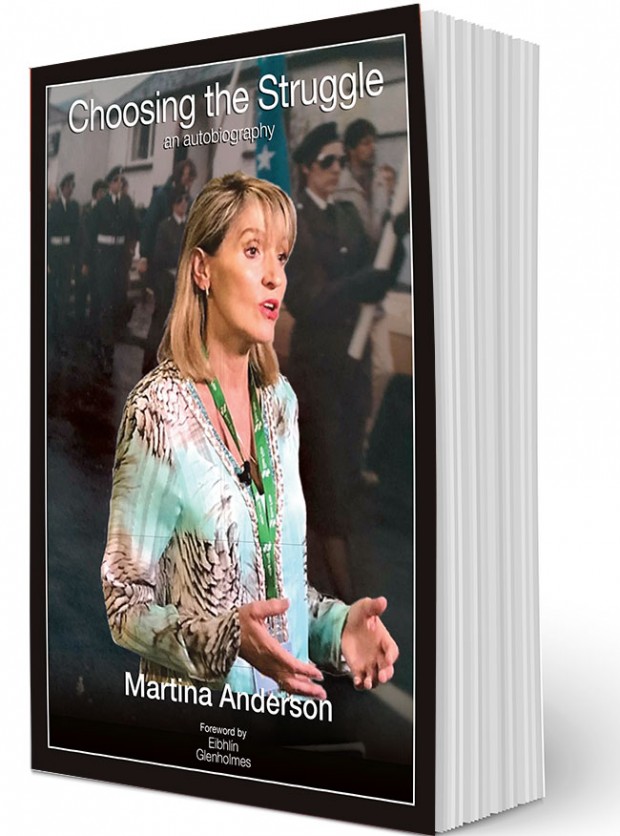

Book Review:
‘Choosing the Struggle’
By Martina Anderson
Published by Beyond the Pale

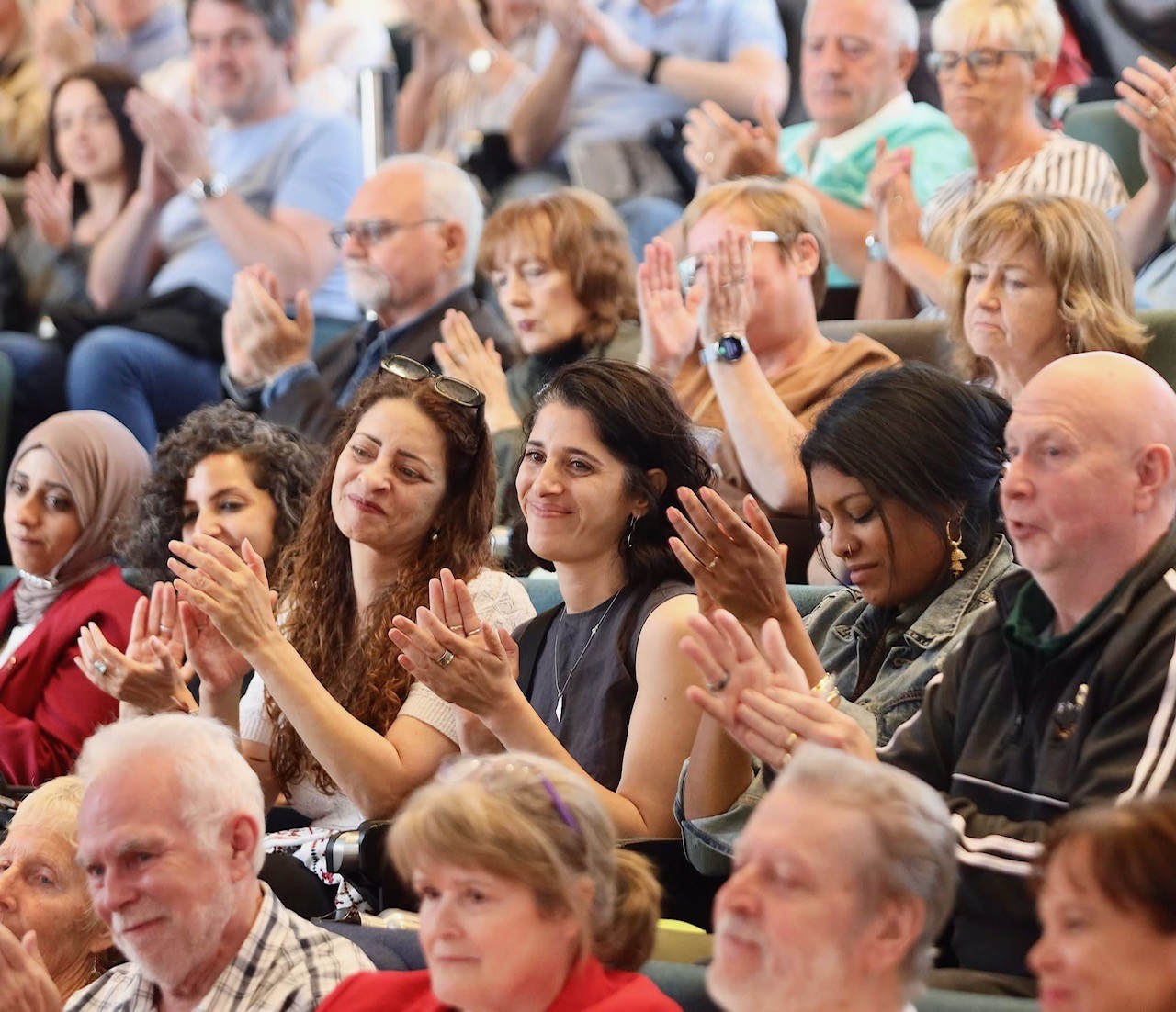
• A section of the capacity audience for the book launch at Féile an Phobail
Martina Anderson grew up a few metres away from Free Derry corner. The Bloody Sunday massacre took place on her family’s doorstep. The experiences of her family, her city, her country and her own will and determination meant that at a very early age she opted to join the struggle for freedom.
She came of the people consigned to second-class citizenship by the Unionist regime from 1921 onwards. The same people were abandoned by successive Free State governments, despite their occasional anti-Partition rhetoric. When it mattered, they turned their backs on Derry. The people of the Bogside were left to defend themselves and to forge in the flames of the collapsing Orange state new ways of struggle. Young people like Martina Anderson grew to maturity during intense conflict and saw armed struggle as the only means to end British oppression and to re-unite Ireland.
They were lectured at by the establishment politicians of Fianna Fáil, Fine Gael and Labour, some of whom said they should choose a peaceful path to Irish unity, but more of whom simply denounced Martina and her comrades as terrorists and criminals. When the Free State establishment had the opportunity to help resolve the H-Block/Armagh prison crisis in 1980 and ’81 by supporting the five reasonable demands of the prisoners they refused to do so. They chose censorship and demonisation of republicans. Margaret Thatcher faced no challenge from Dublin. She allowed ten prisoners to die on hunger strike. It was inevitable that young people like Martina Anderson in Derry would intensify their activism, and others like Ella O’Dwyer from Tipperary would get involved for the first time.
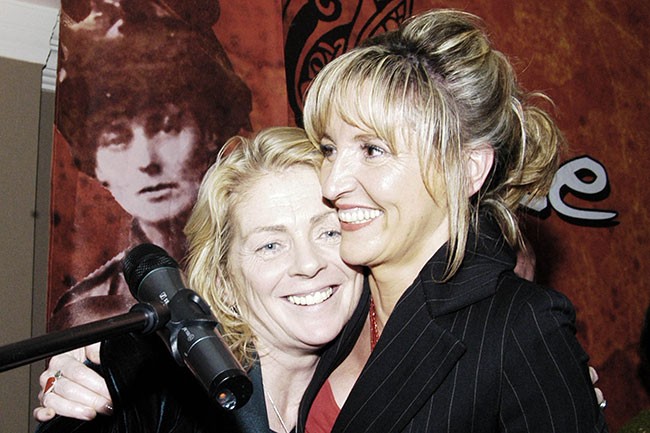
• Martina and Ella O’Dwyer
This is the autobiography of a deeply committed person – committed to her family, to her friends, to her comrades, to the struggle for freedom. She had to make difficult choices along the way, and these choices she chronicles openly and honestly. She gives a voice to many women in the republican struggle and beyond.
Martina and Ella’s arrest with other republicans in Glasgow began a prolonged nightmare for the two young women. Martina describes that ordeal in grim and harrowing detail. We re-live with her the physical and mental trauma. But we also see the absolute determination and commitment of two Irish republican women who refused to be broken. They resisted and their minds soared above the walls of Brixton and Durham prisons. As a young reporter in An Phoblacht, beginning in 1985, I regularly wrote up reports about Martina and Ella and the horrendous treatment they were enduring, with strip-searches used as a form of torture several times per day. But we had no idea of the full extent and impact of what the two women were going through. And, they would be the first to point out, they were not the only ones. That said, the horrific ‘medical’ treatment of Martina at the hands of a former British Army officer, stands out as nothing less than a brutal pre-meditated assault that deprived her of the ability to have children.
Martina and Ella endured and survived in Durham Jail. But they did more. They led other prisoners in demanding decency in the filthy, decrepit, cockroach-infested prison, and eventually they succeeded when the prison authorities were forced to change the inhuman and degrading conditions. They paid the price of resistance but it was worth it, as when Martina was put on punishment for throwing a shovelful of cockroaches into the governor’s office! Much of the first half of the book chronicles Martina’s jail experiences and as such it is a very valuable addition to the library of republican prison literature.
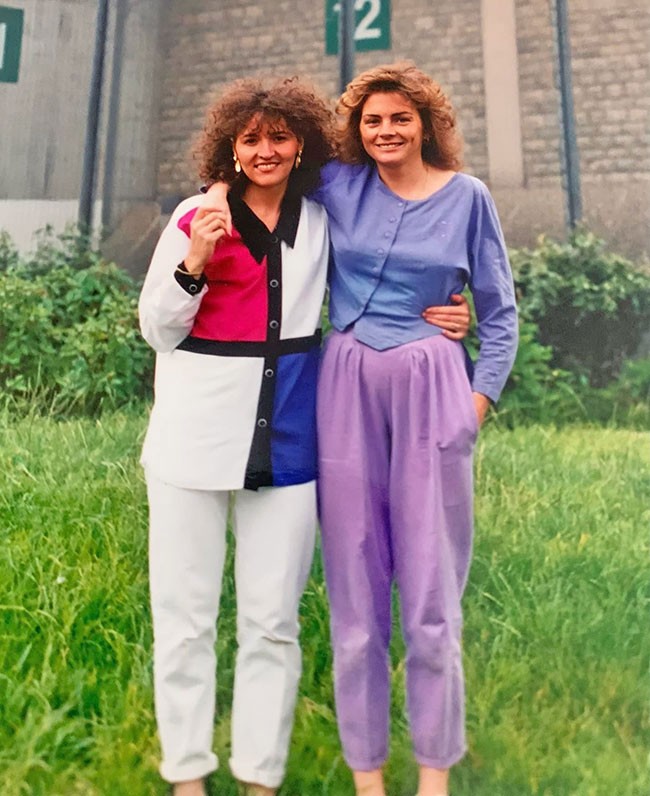
• Martina and Ella in Prison
The book is also valuable and important as a memoir of Irish republicans developing a peace strategy and a new political strategy to pursue their objectives. It tells of how an IRA activist who lived through Bloody Sunday in her city, witnessed the tragedy of the 1981 hunger strike, experienced daily British military repression on the streets and in her home, and personally endured torture in English prisons, had the politics and the discipline not only to adopt but to help lead the unarmed strategy. Martina writes: “Ireland’s peace process stands as living proof that when dialogue, dignity and inclusion are placed on the table, people will seize the moment and grab peace with both hands.”
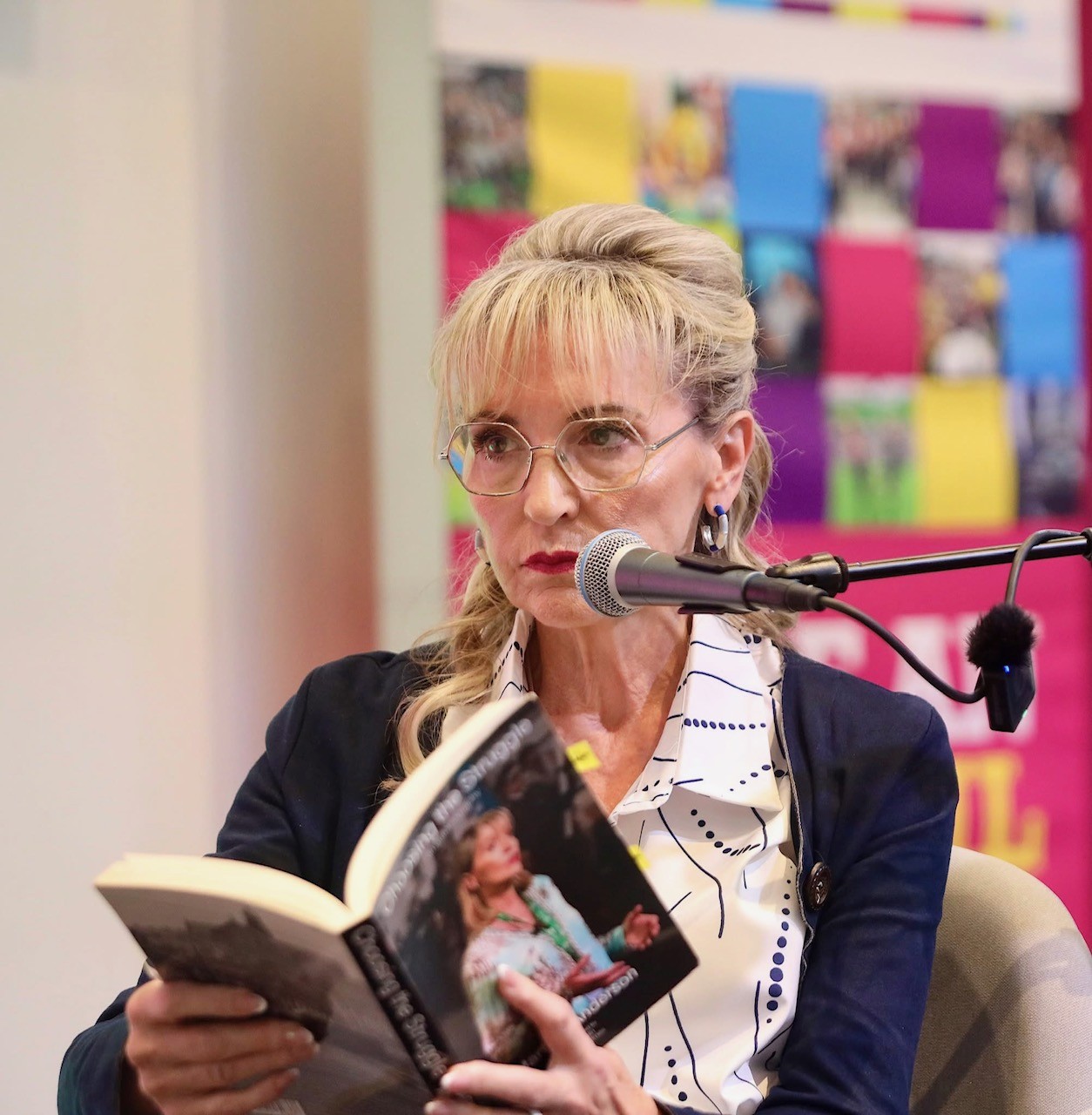
• Martina Anderson reading from her autobiography
In the second part of the book Martina tells of her release and her political activism in a succession of roles in Sinn Féin. Her focus is always on how to bring about change, the need for Irish unity and socialism, based not on learned ideology but on lived experience. This definition of socialist republicanism echoes James Connolly and deserves to endure:
“The belief that freedom meant little if working people stayed poor. That dignity began with labour. In our family nationalism and social justice were not competing ideas. They were the same struggle, viewed from different rooms of the same house.”
It was rightly said that there would be a battle a day to implement the Good Friday Agreement. How true that was is clear from Martina’s description of her time in the Assembly and it reads like a balance sheet of political advances and setbacks. It reminds us of the extent to which the DUP has acted as a barrier to change, facilitated by successive British governments, and continuing to this day. And difficult questions for Sinn Féin persist about how best to support the structures set up under the Agreement for the benefit of all, while challenging the reactionary conservatism and obstructionism of the DUP, and all in the context of the drive for the Irish Unity referendum. One thing is certain – we need now more than ever the absolute commitment to rights and the steely determination to drive progressive change that Martina advocates in this book.
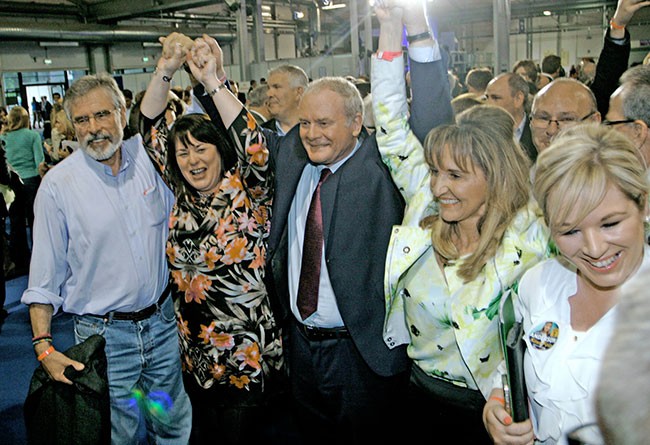
• Martina Anderson is elected as a MEP
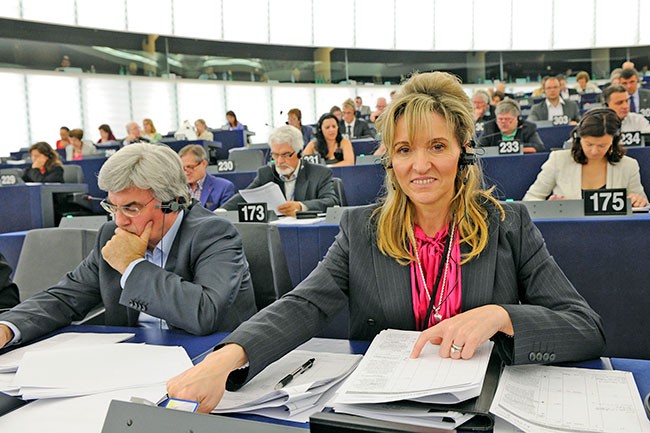
As an MEP for the Six Counties Martina will be best remembered for how she challenged the British government and stood up for Ireland during the great Brexit debacle. She has also been a great supporter of the Palestinian people and other nations in struggle and the belief in international solidarity is a major theme of this book. It is an extension of her love of family, friends and comrades. As she writes: “Comradeship, in its purest form, is love made militant.”
It is hugely important for Irish republicans to tell our own stories, to write our own history. This book by Martina Anderson stands out as one of the most significant such memoirs ever written. Here is an authentic voice telling her story honestly and articulately and it is essential reading.
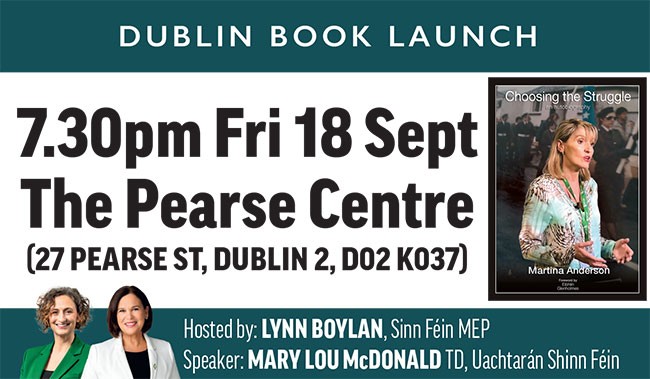
• Buy Here: sinnfeinbookshop.com
Follow us on Facebook
An Phoblacht on Twitter
An Phoblacht Podcast

Uncomfortable Conversations
An initiative for dialogue
for reconciliation
— — — — — — —
Contributions from key figures in the churches, academia and wider civic society as well as senior republican figures