



30 March 2026
Across the world to freedom
Remembering the Past - The Catalpa escape - 150th anniversary
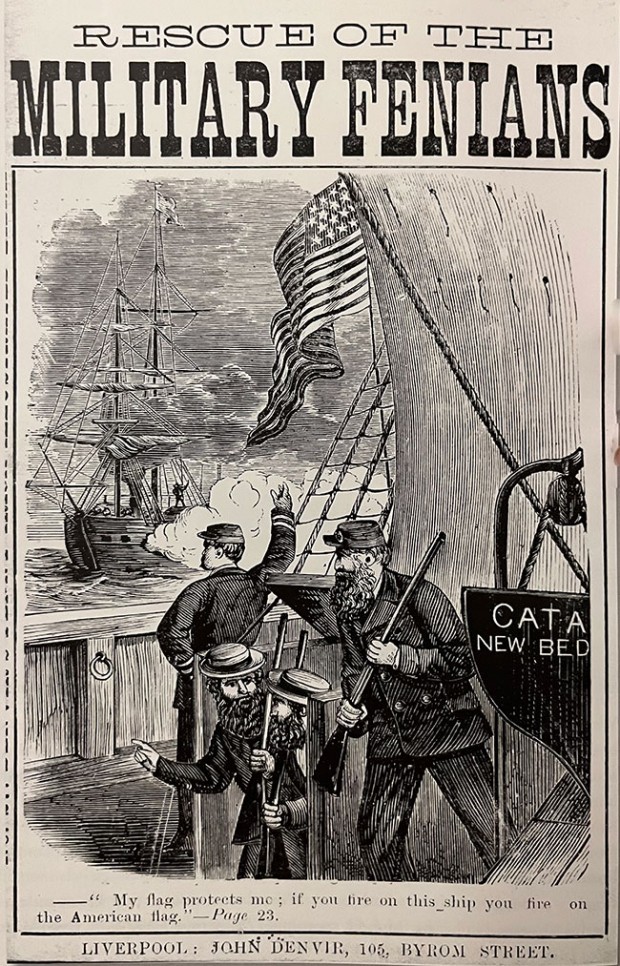

When six escaped Fenian prisoners in Western Australia climbed on board a whaling ship called the Catalpa in April 1876 it was the culmination of efforts that had spanned two continents, an entire ocean and nearly three years. It is one of the most remarkable stories in the history of Irish Republicanism.
The six Irishmen were former soldiers in the British Army, sentenced to penal servitude for life in the British penal colony at Fremantle, Western Australia. Their crime in British eyes was a cause of pride to them and to most of their compatriots - their membership and activism in the Irish Republican Brotherhood. The man who masterminded their escape was the man who recruited them into the IRB - John Devoy. With other jailed Fenians Devoy had been released in an amnesty, was exiled from Ireland and was now living in America. But for the ‘soldier Fenians’ there was no amnesty as, to the British, they were traitors as well as rebels. As chief recruiter, Devoy had created many thousands of such rebels in British Army ranks in Ireland, before arrests devastated the Fenians in the years 1865-1867.
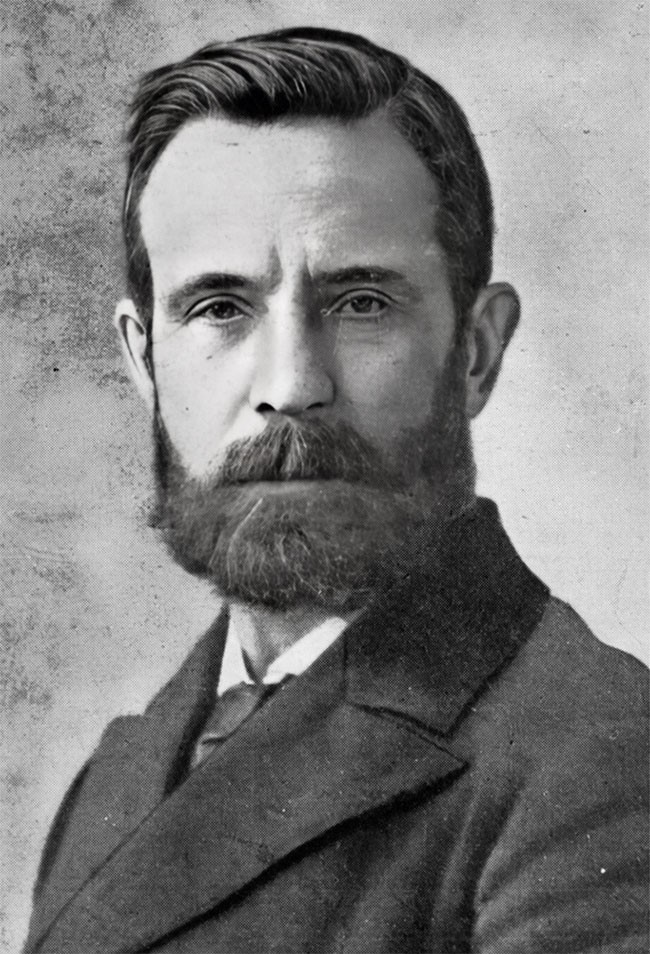
• John Devoy
In late 1873 or early 1874 Devoy received a letter which said: “Dear friend, remember this is a voice from the tomb. For is this not a living tomb?” It was from James Wilson who reminded Devoy that he and his fellow Fenian prisoners had been nearly nine years in custody and the hard labour and isolation of the Western Australia penal colony was close to breaking them. In July 1874 a convention of Clan na Gael, the Irish revolutionary organisation, was held in Baltimore, Maryland, where Devoy proposed that they come to the aid of the Australian prisoners. Another letter from one of them, Martin Hogan, was read at the convention: “I must feel sad at the thought of being forgotten and neglected.”
Devoy was appointed to head a rescue committee and, appealing for financial help to Clan na Gael members, he wrote: “The rescue of these men would be an act of humanity in itself, and could be the first victory gained over England in our day.”
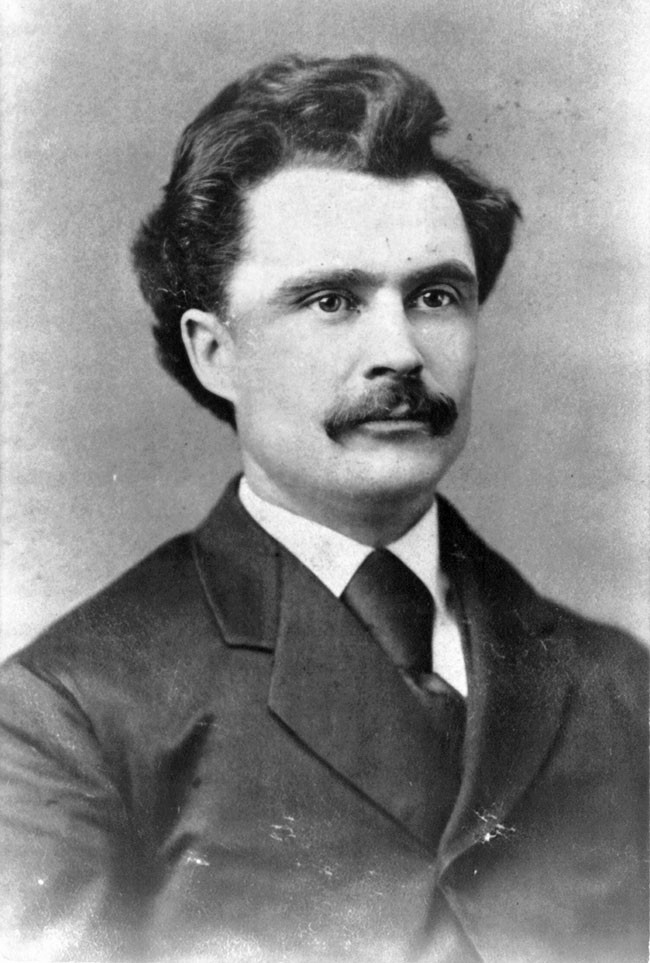
• John Boyle O’Reilly
Luckily for Devoy there was an ally he could rely on with unique knowledge to help plan the rescue. John Boyle O’Reilly had been sentenced to death in Dublin in 1867 but this was commuted to life imprisonment and he was one of the 61 Fenian prisoners in that year who were transported to Western Australia on board the ship Hougoumont, the last of all convict ships to sail to Australia. O’Reilly escaped from the penal colony in 1869 and, after many perilous adventures at sea, reached the USA. He became a journalist, poet, lecturer and editor of The Pilot newspaper in Boston.
O’Reilly introduced Devoy to Henry Hathaway, a former whaling ship captain, who had helped O’Reilly to escape. Hathaway recommended that Clan na Gael purchase and fit out a ship which could partly fund the enterprise through whaling on its round trip to Australia. Devoy bought the Catalpa in March 1875. Captain George Anthony, a 29-year-old New Bedford mariner who had no Irish connection, agreed to sail the ship and carry out the rescue. They set sail for Western Australia on 29 April 1875 and only Anthony and the first mate knew the true purpose of the voyage.
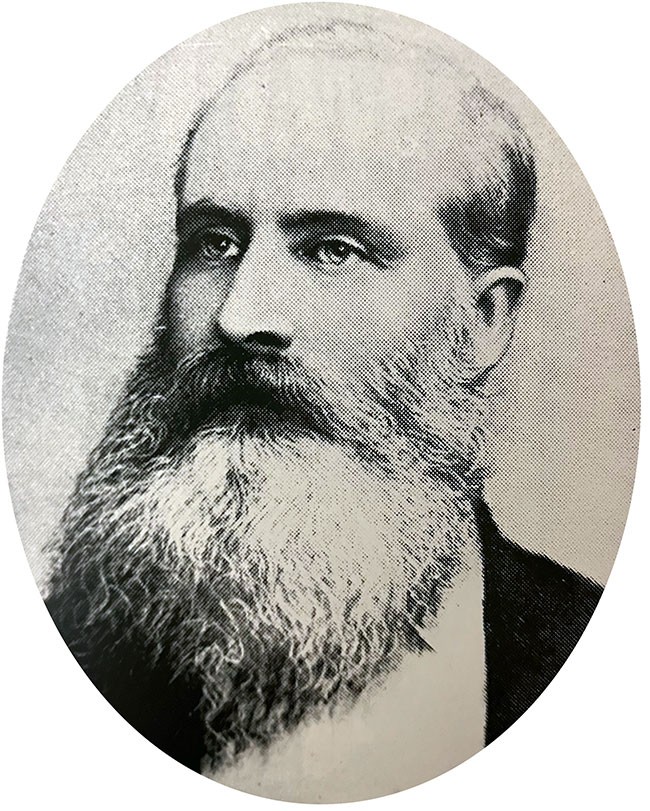
• John Breslin
Now another remarkable figure enters the drama. In 1865 John Breslin had masterminded the escape of the leader of the IRB, James Stephens, from Richmond Prison in Dublin, a major blow to the British regime. Heeding Devoy’s appeal to strike another such blow, Breslin agreed to travel to Australia to co-ordinate the rescue there. He posed as an American businessman interested in gold-mining. Established in Fremantle with the help of Australian Fenians, he had to wait months for the arrival of the Catalpa. He managed to meet the British governor of Western Australia and was even given a tour of Fremantle Prison!
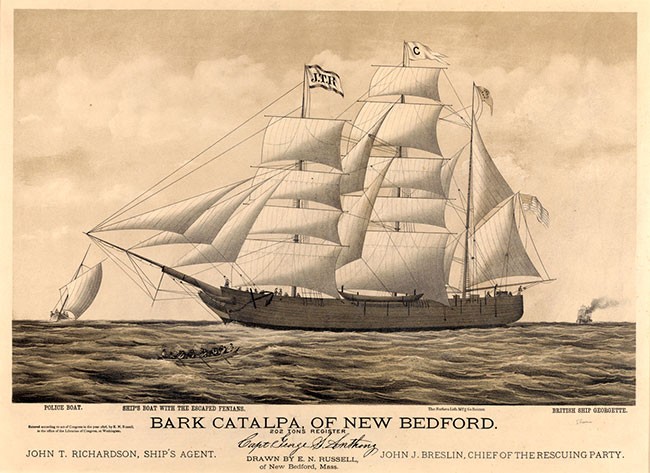
The Catalpa arrived in the port of Bunbury at the end of March 1876. Breslin planned the final rescue of the prisoners with Anthony. Such was the isolation of the prison at Fremantle, surrounded by desert and ocean, that the prisoners were unchained and largely unsupervised when outside the prison for work. The message reached them that the rescue was on. Anthony anchored the Catalpa off Rockingham beach and on 17 April sent a whaleboat ashore. Breslin and his associate Tom Desmond, in two horses and traps, picked up the six prisoners and made for the beach. The escaped Fenians were soon at sea. Who were these six men, lifted from the far side of the world?
James Wilson had written the ‘voice from the tomb’ letter. He was 40 and had received a life sentence in 1866 as had each of his comrades Thomas Darragh (42), Martin Hogan (37), Michael Harrington (48), Thomas Hassett (36) and Robert Cranston (34).
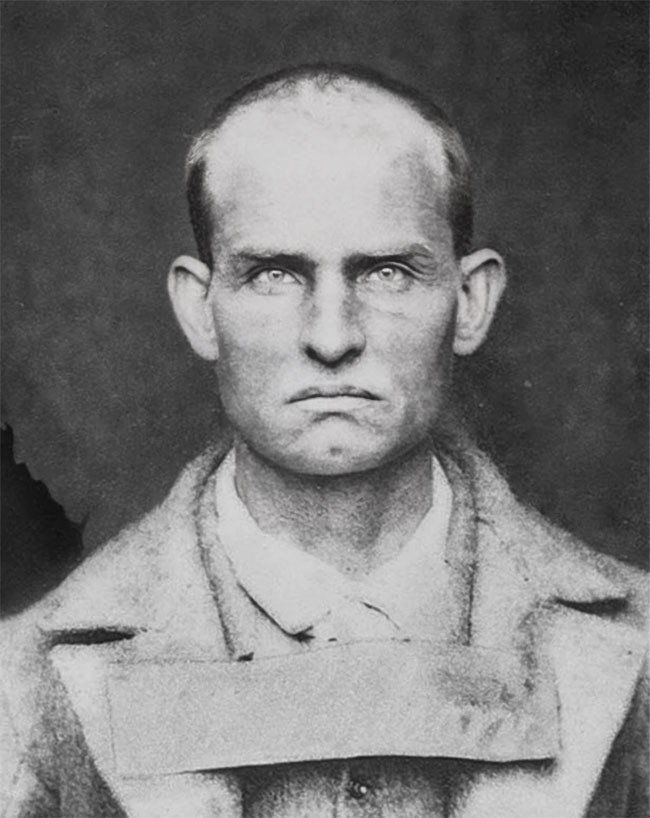
• James Wilson
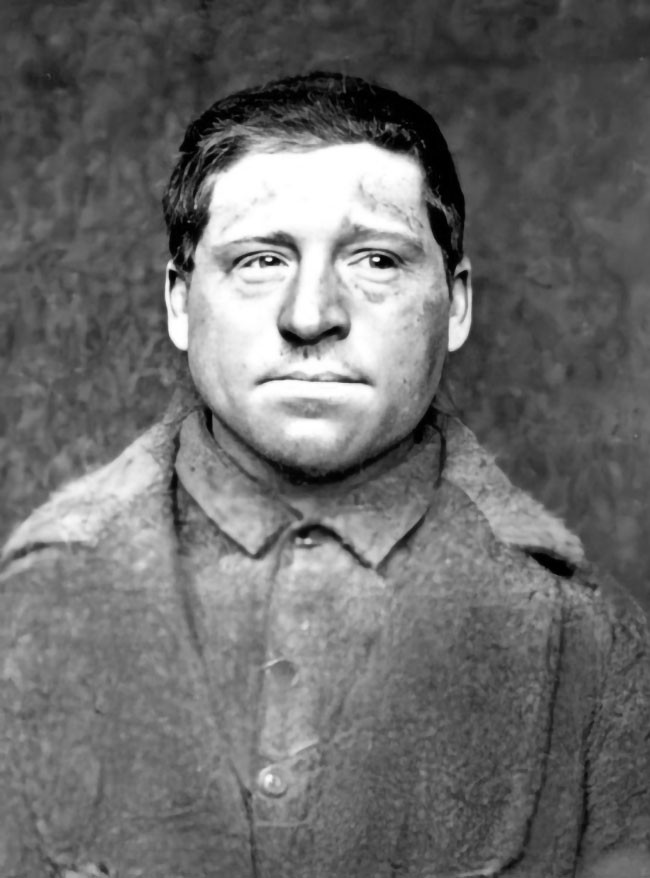
• Thomas Darragh
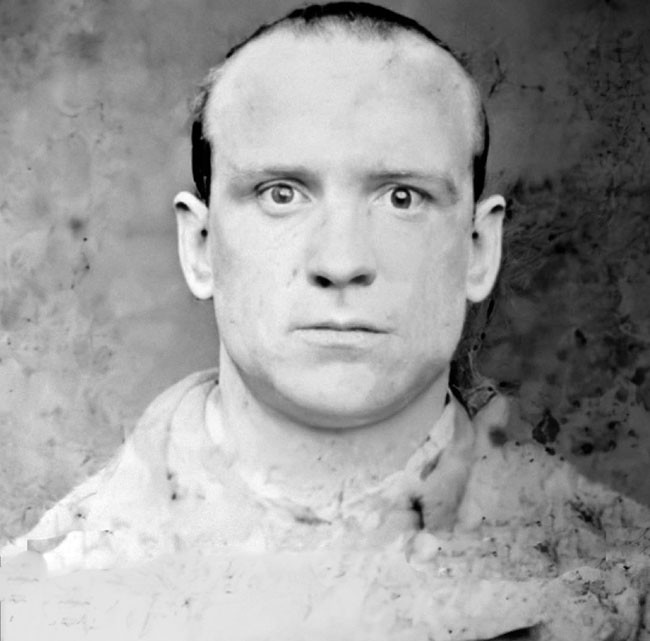
• Martin Hogan
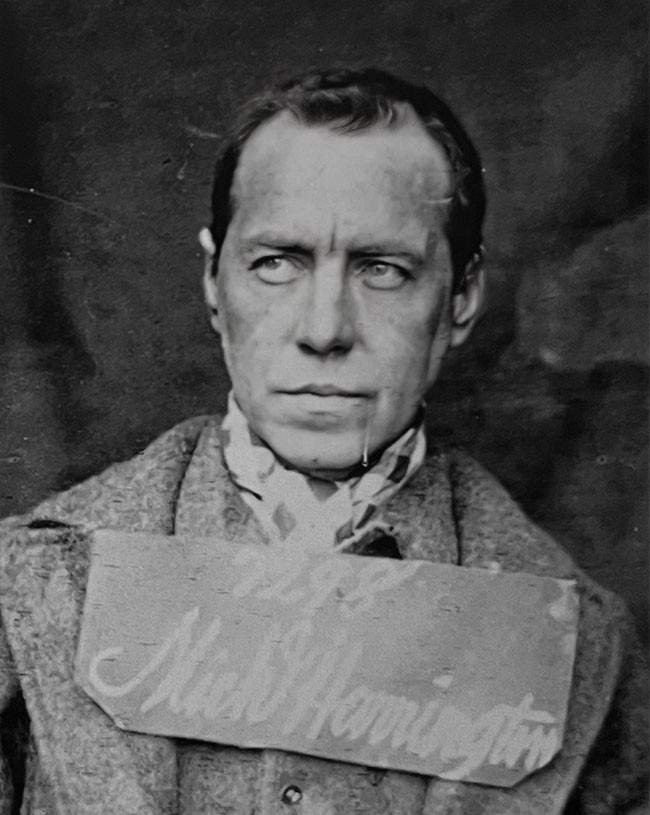
•Michael Harrington
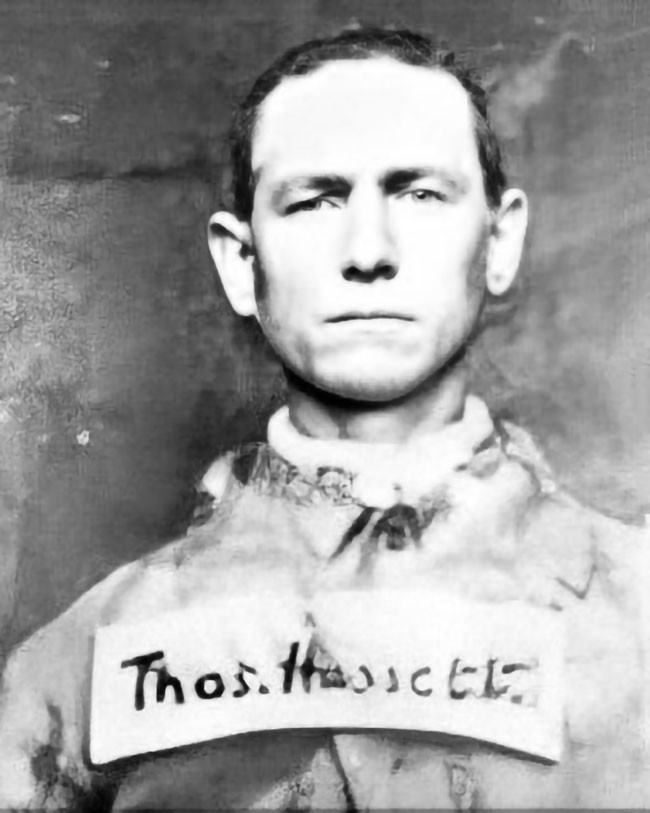
• Thomas Hassett
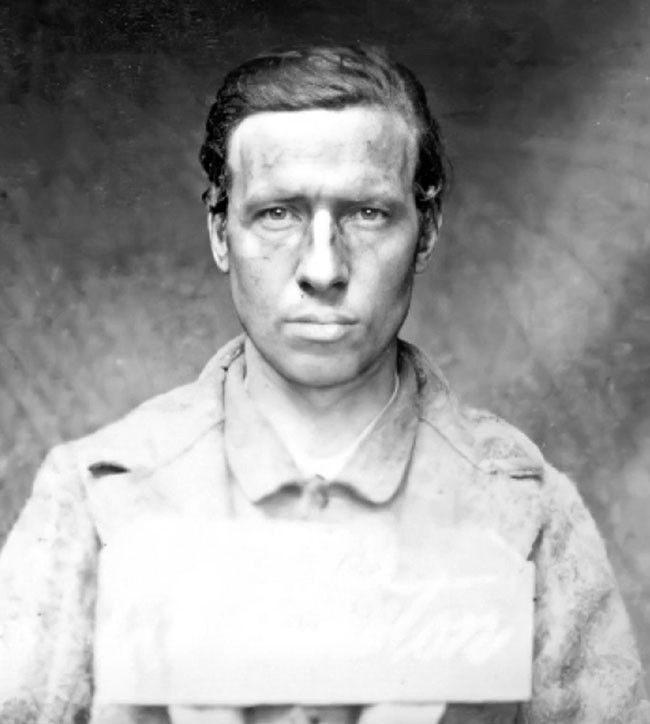
• Robert Cranston
These men were on their way to freedom but were not out of danger yet. The small boat was hit by bad weather and in a squall their sail and mast were lost. The crew rowed for hours through the stormy night to the Catalpa. They finally reached the ship and, with the British by now alerted and heading towards them, the boat with its crew and rescued Fenians was hastily hauled on board while the Catalpa got underway.
A British steamer, the Georgette, approached and its captain demanded to board the Catalpa, saying it had escaped prisoners aboard. Captain Anthony denied this and refused repeated demands from the British captain to board. The latter threatened force if he was not allowed to board within 15 minutes. Below decks on the Catalpa the six Fenians and the crew were heavily armed and ready to repel boarders. The British would have to fire on an American ship flying the US flag in international waters and then fight to board her. But when Anthony sailed his ship straight towards the Georgette she retreated. The Fenians were free.
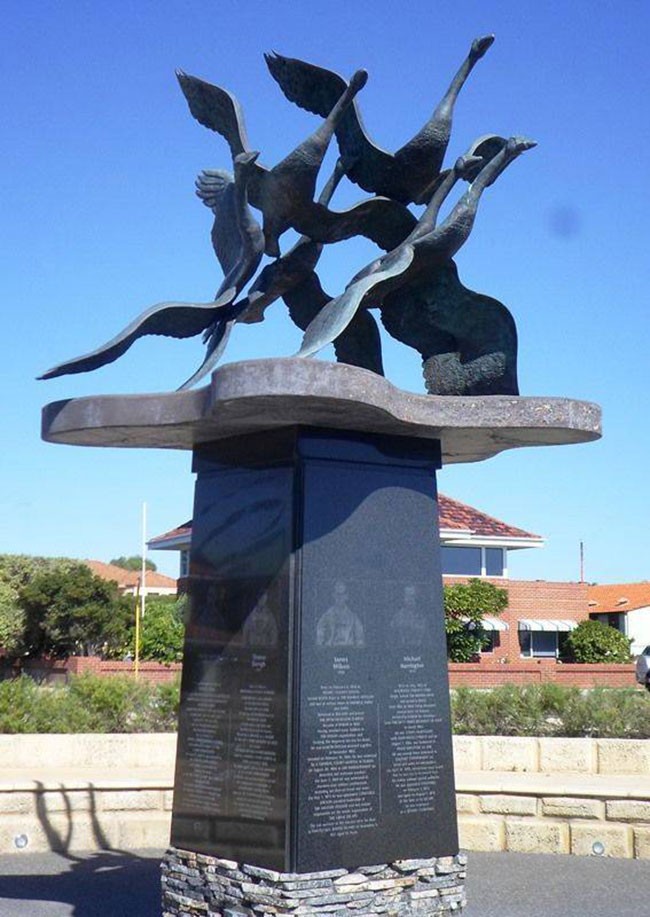
• Wild Geese, Catalpa Memorial, Rockingham, Western Australia
The Catalpa arrived in New York on 19 August 1876 and received a tumultuous welcome. There was another when she sailed into New Bedford five days later. At a reception, John Boyle O’Reilly paid tribute to Captain Anthony and the mariners of New Bedford. Turning to Thomas Hassett, he said:
“Look at that man sitting there. Six years ago he escaped from his prison in the penal colony and fled into the bush, and lived there like a wild beast for a whole year, hunted from district to district, in a blind but manful attempt to win his liberty. When England said the rescue was illegal, America could answer, as the Anti-Slavery men answered when they attacked the Constitution, as England herself answered in the cause of Poland: ‘We have acted from a higher law than your written constitution and treaties - the law of God and humanity.’ It was in obedience to this supreme law that Captain Anthony rescued the prisoners, and pointed his finger at the Stars and Stripes when the English vessel threatened to fire on his ship.”
The escape and rescue of six Irish Republican prisoners 150 years ago this month from the British penal colony in Western Australia, and their passage half way across the world to the United States, ranks as one of the greatest achievements in the history of political imprisonment and in the Irish freedom struggle.
Follow us on Facebook
An Phoblacht on Twitter
An Phoblacht Podcast

Uncomfortable Conversations

An initiative for dialogue
for reconciliation
— — — — — — —
Contributions from key figures in the churches, academia and wider civic society as well as senior republican figures