


12 March 2026
Centenary of the Easter Lily
Remembering the Past
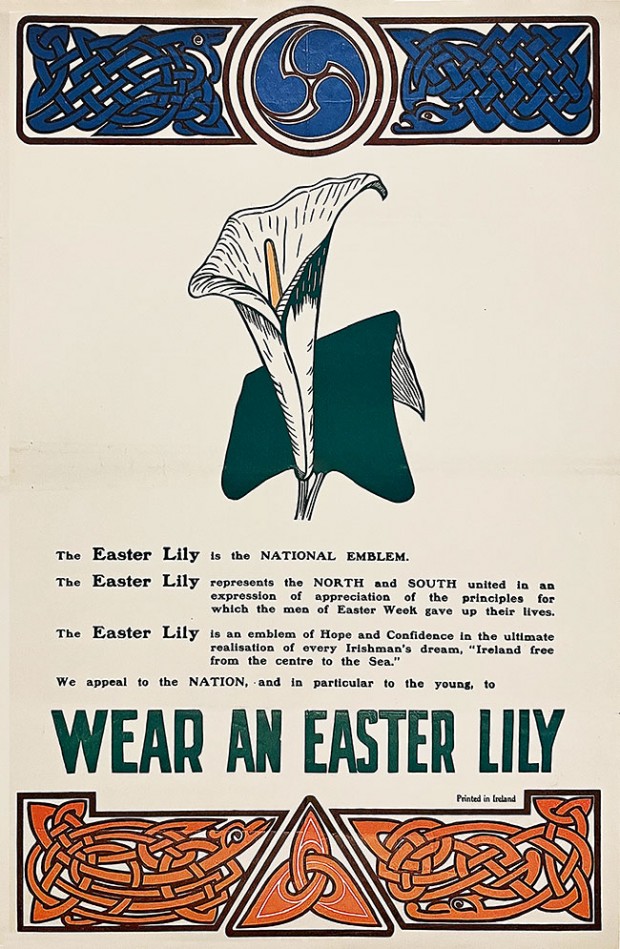

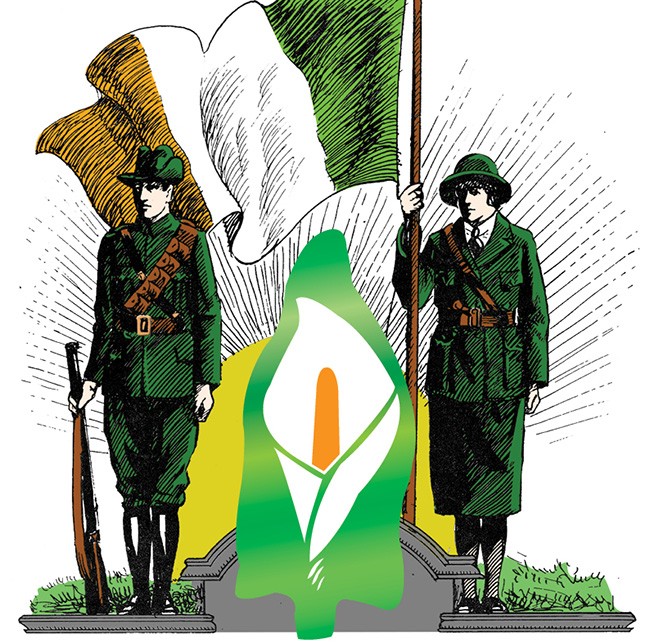
For one hundred years now Irish Republicans have worn the Easter Lily emblem to mark the anniversary of the 1916 Easter Rising and to pay tribute to all those who died for Irish freedom in every phase of struggle. In 1926 it was the women of Cumann na mBan who initiated what was to become the enduring symbol of Irish Republicanism.
Commemoration of Easter 1916 began in 1917 and it was Republican women who in that year decorated graves with flowers and organised events. These included the placing of the banner honouring James Connolly on the ruins of Liberty Hall and the raising of the Tricolour on the ruins of the GPO. During the Civil War, with thousands of male Volunteers on the run or in prison, women provided guards of honour at funerals and once again marked the graves of the patriot dead.

Cumann na mBan was the first national organisation to vote against the Treaty in 1922 and hundreds of its members were imprisoned by the Free State and the Orange state in the Six Counties. By 1926 it had re-grouped and prominent among its activists were Sighle Humphreys and Fiona Plunkett, both national officers of the organisation. Sighle had joined Cumann na mBan in 1919 and her mother was a sister of The O’Rahilly who was killed in the Moore Street fighting in 1916. She was very active throughout the 1920s and was jailed on several occasions. Fiona Plunkett was the daughter of Count Plunkett and sister of executed Proclamation signatory Joseph Plunkett. She joined Cumann na mBan in 1917, the year she marched with them at Thomas Ashe’s funeral. She too was imprisoned repeatedly.
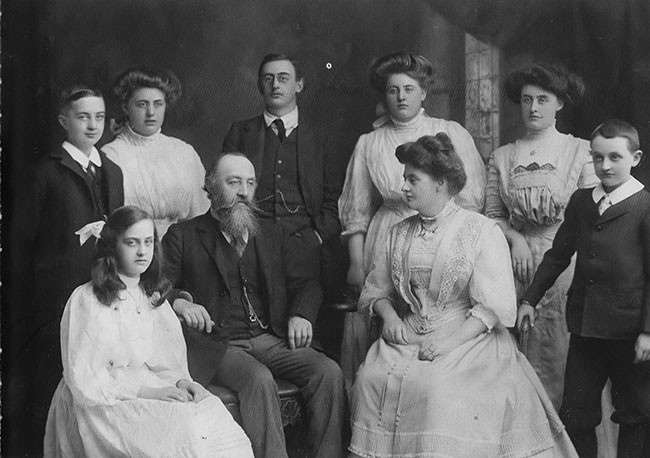
• Plunkett family 1908. (Back L to R) George, Gerry, Joe, Moya and Mimi, (Front L to R) Fiona, Count George Noble, Countess Elizabeth and Jack
In early 1926 it was Sighle Humphreys and Fiona Plunkett who proposed that the symbol of the Calla Lily should be used to honour the Republican dead at Easter. On 15 March of that year they sent a circular to branches of Cumann na mBan in which they said “we consider this would be the most suitable for Easter, and it has also the republican colours”. And so at Easter 1926 for the first time the lily was sold and worn. It increased in popularity as the years passed. In 1928 the original silk or cotton version was replaced by the paper lily. The wish expressed by Cumann na mBan in 1929 that it would surpass the Royal British Legion poppy, then widely sold, came through as the lily gained in popularity throughout the 32 Counties.
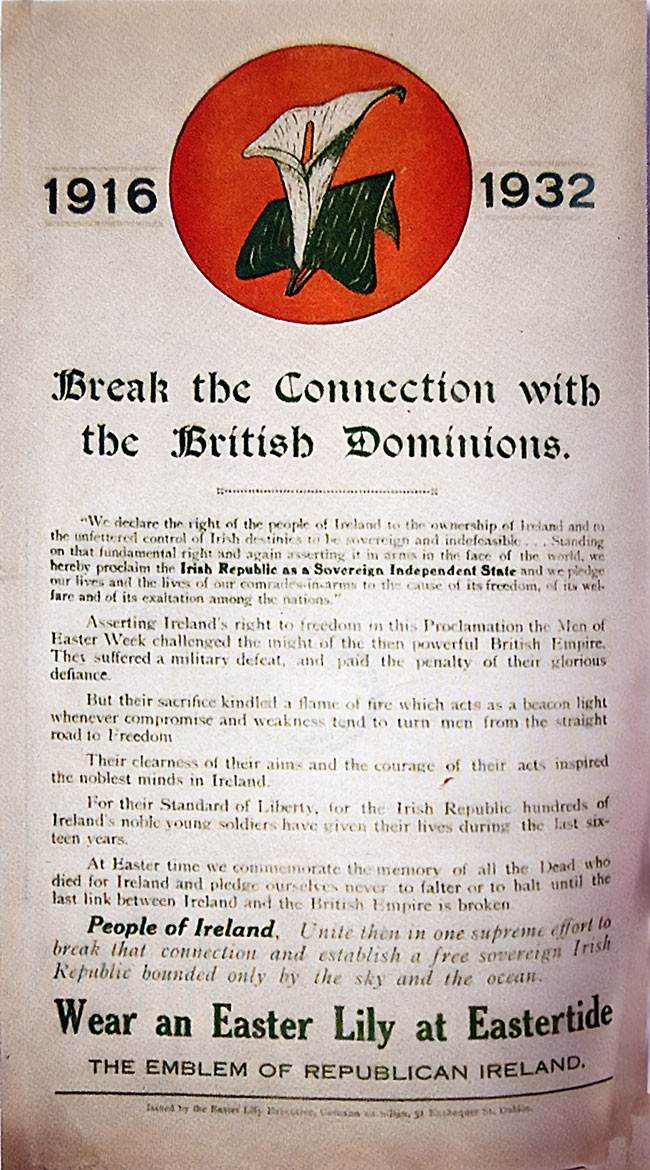
Fianna Fáil attempted in the ‘30s to rival the Easter Lily with a torch emblem but this failed to gain support. Meanwhile on both sides of the Border from the 1930s on, republicans faced harassment from State forces for selling the lily with prosecutions, fines and even jailings. As Minister for Justice 1961-1964 Charles Haughey of Fianna Fáil introduced legislation to combat bogus charity collecting but this was quickly used against the sale of Easter lilies, a subject of public controversy at the time.
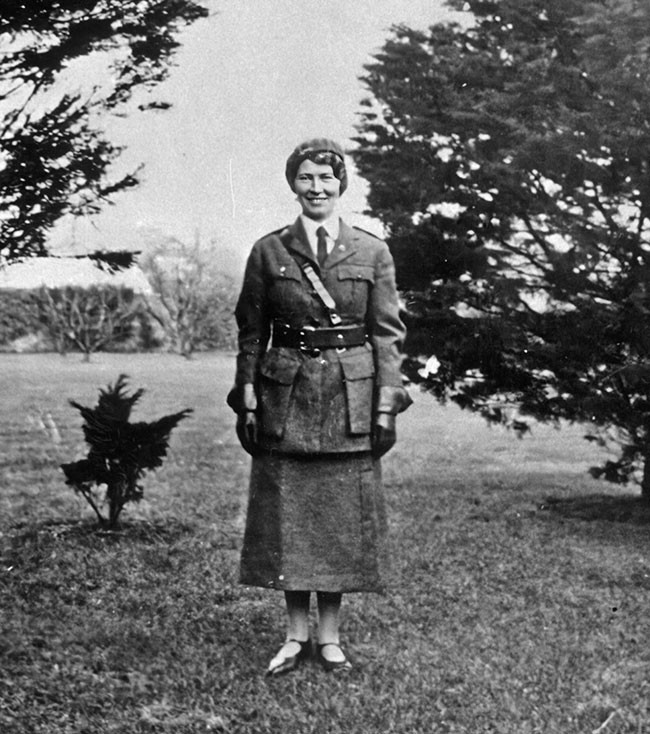
• Sighle Humphreys
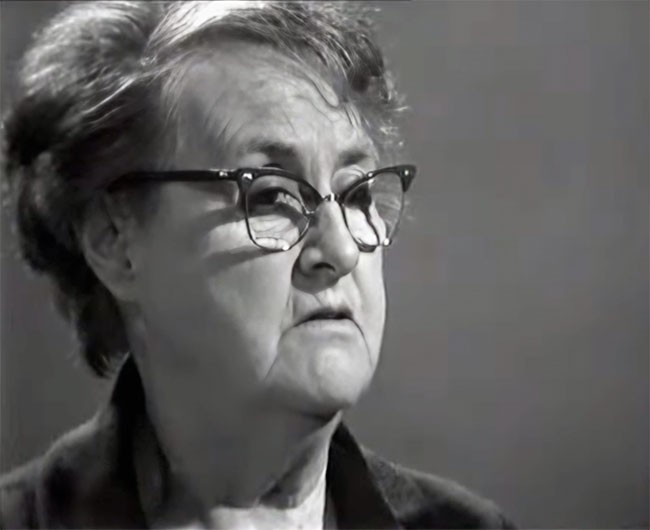
• Fiona Plunkett
When the Republican Movement split in 1969/’70 those who went on to form the Workers Party adopted a gum-backed Easter lily, earning them the nickname ‘Stickies’. Those who reorganised and continued as Sinn Féin retained the traditional use of the pin and this has remained to this day. Equally popular now is the metal Easter lily pin badge. The growth of Sinn Féin has seen the symbol more widely used than ever.
Both Sighle Humphreys and Fiona Plunkett remained staunch in their republicanism until their deaths in 1977 and 1994 respectively. In 1976 the Fine Gael/Labour Coalition banned Sinn Féin’s national 60th Anniversary 1916 Commemoration in Dublin. It went ahead and Fiona Plunkett was one of those on the platform at the GPO. She was also among those prosecuted for her participation that day. Sighle Humphries, after a life of activism, supported the H-Block and Armagh prisoners during the hunger strikes of 1980 and ’81, seeing the hunger strikers as fighting in the same cause as the men and women of 1916 whom she and Fiona had ensured would always be honoured.

BUY YOUR EASTER LILY
Follow us on Facebook
An Phoblacht on Twitter
An Phoblacht Podcast

Uncomfortable Conversations

An initiative for dialogue
for reconciliation
— — — — — — —
Contributions from key figures in the churches, academia and wider civic society as well as senior republican figures