


11 March 2026
Reclaiming the Nation
Democracy, sovereignty and the future of the Left
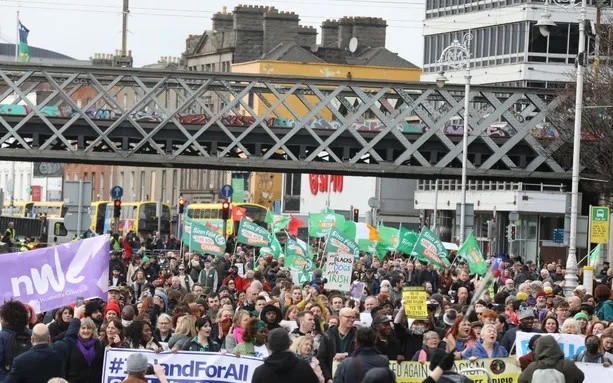

Across Europe parties that once spoke for labour, social democracy and working-class communities are struggling to hold the loyalty of the voters who built them. In France, former industrial strongholds that once supported the left now vote heavily for Marine Le Pen’s National Rally. In Germany, regions that once backed social democracy have turned toward the far-right Alternative for Germany. Similar shifts are visible across much of Europe.
Even in Ireland, where the far-right remains comparatively very small, similar dynamics have begun to appear. Small far-right groups have attracted pockets of support in some working-class communities, drawing votes from areas that historically leaned towards the left.
Industrial regions that once formed the backbone of the left are increasingly supporting right wing parties that promise protection from globalisation, economic insecurity and cultural dislocation - promises the traditional left has too often been seen as reluctant to make.
This shift has produced a strategic crisis for the European left. It raises an unavoidable question - why do so many working-class voters now believe that the political right speaks more convincingly to their sense of security, belonging and democratic control than the parties that historically claimed to represent them?
Part of the answer lies in political ground which the left has abandoned in recent decades.
For much of the past generation progressive politics has grown wary of the language of nationhood, sovereignty and democratic control. These concepts are often treated as suspect, associated primarily with reactionary nationalism or the politics of exclusion. Yet the democratic history of Europe tells a very different story.
National self-government was historically the condition that made progressive politics possible.
A forgotten democratic tradition
Much of the democratic history of modern Europe was shaped by national movements of a progressive character. In Ireland, Italy, Greece and many other countries nationalism became the language through which peoples living under imperial or dynastic rule demanded democratic self-government. It was not a politics of exclusion but a politics of emancipation - the assertion that ordinary people should control the political institutions that governed their lives.
James Connolly understood this relationship clearly. He never saw national freedom and social justice as competing causes. For him they were inseparable.
“The cause of labour is the cause of Ireland; the cause of Ireland is the cause of labour,” he wrote, capturing in a single sentence the idea that democratic sovereignty and social progress could reinforce one another.
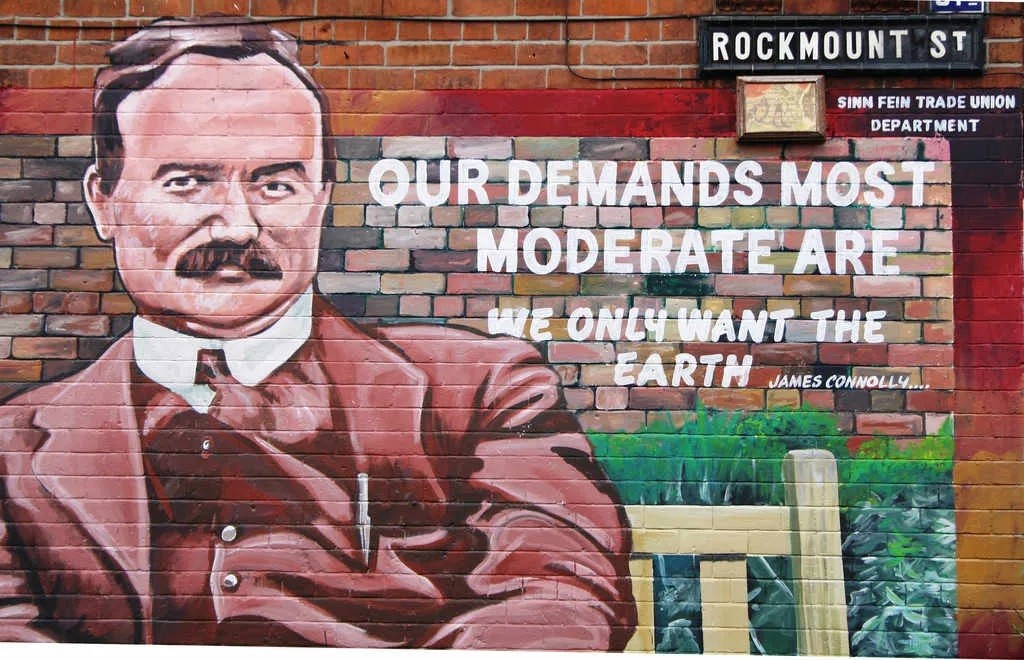
Connolly’s reasoning was straightforward. If economic decisions affecting millions of people were shaped by political institutions beyond their control, then working people would never truly determine their own economic future. Political sovereignty mattered not as an abstract ideal, but because it determined who ultimately exercised power.
Earlier socialist thinkers also recognised this connection. Figures such as Karl Marx and Friedrich Engels supported movements for national self-determination - including Irish and Polish independence - arguing that struggles against imperial domination could open the way for democratic and social transformation.
Connolly approached national independence not simply as a cultural aspiration but as a democratic necessity - the creation of political institutions capable of shaping economic and social development.
That insight once sat comfortably within the broader European left. Throughout much of the 20th Century progressive politics operated within democratic nation-states where elected governments retained substantial authority over taxation, industry, labour law and public investment. Within those frameworks the left achieved many of its greatest victories.
When democracy had power
The most transformative achievements of the European left were built not in post-national political systems but within democratic states capable of exercising real authority over economic life.
After the Second World War, governments across Western Europe embarked on a wave of social reform. Welfare states expanded, labour protections were strengthened, and public services were built on a scale never before seen.
In Britain the Labour government led by Clement Attlee created the National Health Service. Across Scandinavia, parties such as the Swedish Social Democratic Party constructed welfare states that dramatically reduced inequality and expanded social security.
These achievements were only possible because democratic governments possessed the authority to regulate markets, direct investment and reshape economic systems.
In other words, the left succeeded when democratic institutions had real power.
The erosion of democratic control
Over the past 40 years that relationship between democracy and economic power has become increasingly strained.
Global financial markets, multinational corporations and supranational institutions now shape economic outcomes in ways that often appear distant from the reach of ordinary citizens.
Decisions affecting employment, industrial development and public investment are frequently experienced by ordinary people as external constraints rather than political choices.
Within Europe this tension is particularly visible in the institutional structure of the European Union itself. Important areas of economic policy - from fiscal rules to competition law - are increasingly shaped at European level, often through institutions that remain distant from direct democratic accountability. For many citizens this creates a growing perception that decisions affecting their economic lives are being taken beyond the reach of national democratic politics.
The same tension is increasingly visible in European foreign and defence policy. In recent years the European Union has begun moving towards greater military integration and defence spending, raising questions about democratic accountability and the direction of European foreign policy. For countries such as Ireland, with our tradition of military neutrality, these developments have generated debate about sovereignty and democratic control.
The German sociologist Wolfgang Streeck has argued that this shift represents a growing tension between democratic politics and the structures of modern capitalism. When economic governance becomes insulated from democratic accountability, he suggests, democratic legitimacy inevitably begins to weaken.
The political theorist Chantal Mouffe, has similarly argued that progressive politics must once again speak the language of democratic power and popular sovereignty if it is to rebuild durable political majorities.
Whether one attributes these developments to globalisation, financial integration or institutions like the EU, the political consequences are visible across Europe. Many citizens feel that democratic politics no longer exercises meaningful influence over the economic forces shaping their lives.
Where that feeling takes root, frustration soon follows.
The far-right has proven adept at channelling that frustration into political support.
The strategic error of the left
Instead of confronting this democratic deficit directly, much of the European left gradually retreated from the language of sovereignty and democratic power. Questions of nationhood and political control were increasingly treated as uncomfortable relics of an earlier age rather than essential components of democratic politics.
In many countries progressive politics became increasingly focused on cultural and identity debates, while questions of economic power, democratic control and national political authority receded into the background. These issues were often important in their own right, but their prominence sometimes came at the expense of the traditional left-wing language of democratic economic power.
Migration became another area where the left often struggled to articulate a coherent democratic response. In many working-class communities rapid social and economic change produced genuine anxieties about housing, public services and labour markets. Too often progressive parties appeared uncomfortable addressing these concerns, leaving the far-right free to frame migration as a question of national survival rather than democratic policy.
In doing so the left made a profound strategic mistake.
Across Europe far-right movements stepped into the space the left had vacated, presenting themselves as the defenders of democratic control against distant institutions and unaccountable economic forces.
Reclaiming democratic nationalism
Nations remain the political communities through which democratic legitimacy is expressed.
So, the challenge facing the European left today is what kind of nationalism will shape the future of European politics.
One possibility is the exclusionary nationalism of the far-right, rooted in cultural hostility and political resentment. But there is another tradition - one embedded in European democratic history - that sees national self-government as a vehicle for popular empowerment and social justice.
This older tradition understood that democratic politics requires political communities capable of exercising collective power. Without such communities, the promise of democratic control over economic life becomes difficult to realise.
Connolly himself warned against the illusion that international solidarity alone could substitute for democratic power. Observing debates among socialists of his time, he remarked sharply that while some insisted workers had no country, capitalists certainly did - and they used it. His point is as relevant today as it was then.
If the left abandons the central democratic importance of the nation in the name of abstract internationalism, they simply leave that space for others to fill.
A democratic future
None of this implies that international cooperation should be abandoned. Climate change, peace, financial stability and global technological transformation all require cooperation between states. But cooperation between democratic societies is best done on the basis of political communities that retain the capacity to govern themselves.
The left succeeded in the 20th Century because it combined social justice with democratic power. Welfare states, labour protections and public services were built by governments able to shape economic systems in the name of their citizens.
Nations remain the political communities through which democratic legitimacy is expressed.
The real question is whether the language of national sovereignty will be defined by the far-right or reclaimed by a progressive politics rooted in social justice, democracy and popular power.
If the left abandons that ground, others will occupy it. If it reclaims it, the democratic nation-state can once again become the arena in which social transformation becomes possible.
The left once changed Europe through democratic national politics. It needs to do so again.
• This article originally appeared on Seán MacBrádaigh’s Substack newsletter The Long View. You can subscribe here: https://substack.com/@senmacbrdaigh
Follow us on Facebook
An Phoblacht on Twitter
An Phoblacht Podcast

Uncomfortable Conversations

An initiative for dialogue
for reconciliation
— — — — — — —
Contributions from key figures in the churches, academia and wider civic society as well as senior republican figures