

18 February 2026
Rory O'Connor - new light on an elusive figure
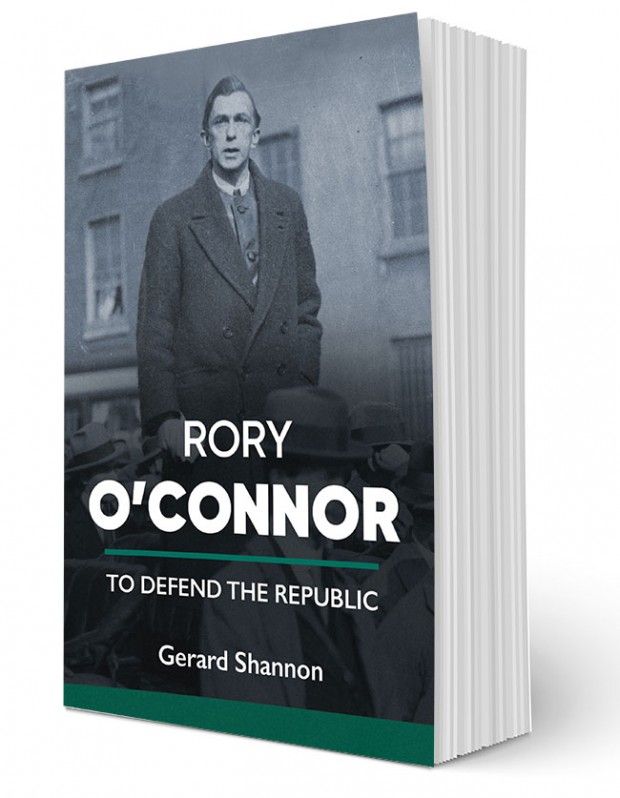

Gerard Shannon, author of the first ever biography of Rory O'Connor, speaks to An Phoblacht's Mícheál Mac Donncha. Best remembered for his execution by the Free State government with Liam Mellows, Joe McKelvey and Richard Barrett on 8 December 1922, Rory O'Connor was a key member of the IRA leadership from 1917 on, though mostly out of the public eye.

This is the first biography of Rory O’Connor. Why do you think he has been neglected up to this, given that so many from that period, some of them less prominent than O’Connor, have had biographies?
Rory O'Connor was very much an important player in the Irish revolutionary movement, and he seemed to have a preference to work behind the scenes, whether in the Volunteers, Sinn Féin, IRA or Dáil Éireann. This of course changed when he became a public figure in early 1922. Numerous accounts attest to his efficiency and diligence in his various roles, and he himself seemed content to keep most of those he knew at a personal remove. He also did not leave behind a great abundance of personal papers. This has resulted in him persisting as an enigma in the public memory and for historians despite his importance, which I hope to change with my new book.
His background was unusual compared to most IRA officers, relatively privileged. Can you tell us about that and what led him to republicanism?
Yes, his father was a high profile solicitor and supporter of the colonial regime. Rory's childhood home was on Kildare Street where the Department of Enterprise building is now. O'Connor enjoyed a privileged education, and studied engineering in university. He then went to Canada in 1910 to work on the Canadian railroad where he supervised workers building the tracks. He decided to return to Ireland in 1915 where he seemingly contemplated joining the British army. Yet, it was a certain group of friends and social network that he had established before going to Canada that brought him into the fold of militant republicanism, especially Joseph Plunkett and his brothers, and the wider group around them. One key individual, for instance, was Thomas Dillion, a fellow engineering graduate who married a sister of Joseph's, Geraldine, an important activist and close friend of Rory's in her own right. Dillon and O'Connor set up the Larkfield Chemical Company on the Plunkett estate, which was a cover for building bombs and munitions for the Volunteers in anticipation of the Easter Rising.
What was his role in the Tan war? It is less well known than his role in the Civil War but from your book it seems it was quite important?
Rory O'Connor was on Joseph Plunkett's engineering staff in the run-up to the Easter Rising, and was subsequently wounded, but avoided arrest. He was key to the reorganisation and rebuilding of both the Irish Volunteers and Sinn Féin in the aftermath of the Rising. By the outset of the Tan War, Rory O'Connor was the IRA's Director of Engineering on the General Headquarters staff. In that role, he advised and oversaw the Volunteers' methods of sabotage to infrastructure, such as use of munitions and demolition of roads, railways and barracks walls. O'Connor planned and assisted in the escape of high-profile republican prisoners, and jokingly called himself 'Director of Jail Deliveries'. He also became the O/C of the IRA in Britain, its most notable action being the burning of Liverpool docks in late 1921. O'Connor also enjoyed the close confidence of Michael Collins.
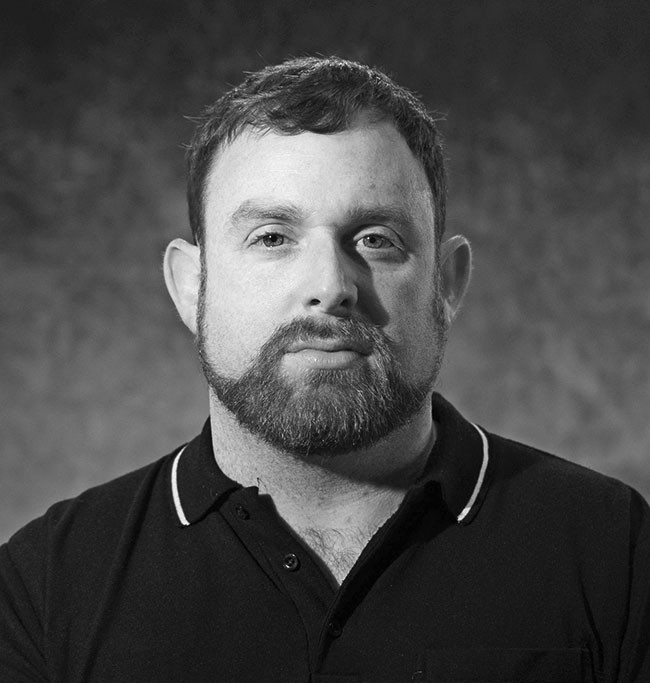
• Gerard Shannon
In reading the book I was reminded that he had been tortured while held by the British in Dublin Castle. How did that affect him?
In January 1921, Rory O'Connor was briefly interned by the British and at the beginning of that experience, he was held and tortured by the RIC Auxiliaries in the guard room of Dublin Castle. He bravely resisted telling his captors anything, even denying his name. This room was of course where his comrades Dick McKee and Peadar Clancy had been killed, along with the civilian Conor Clune, only a few weeks before. O'Connor often suffered ill-health with his lungs, which only could have exacerbated with the experience. Despite this, he later managed to escape Rath Camp, and quickly returned to his IRA roles not long thereafter.
What was the basis of his opposition to the Treaty?
Like other leading IRA figures, Rory O'Connor was deeply disturbed by how the Dáil voted by a slim majority in favour of the Treaty in January 1922. In O'Connor's view, the IRA was the Army of the Irish Republic, and had sworn an oath to Dáil Éireann. He felt the IRA could, and should, now reject the authority of the Dáil as the government and parliament could no longer claim to represent the Irish Republic. The same Republic that was declared in 1916, and affirmed by the Irish electorate at subsequent elections. This was why he and other IRA leaders opposed to the Treaty then pushed for a holding of an IRA Convention to become their own authority over the army and maintain the republic. O'Connor emerged as one of the leaders of this group of IRA leaders, and became their spokesperson, which was a testament to the esteem he was held in by others. This is how Rory O'Connor became a public figure in 1922.
Rory O’Connor’s pre-Civil War press conference has been much debated with allegations that he wanted a military dictatorship. Is that the case?
This was at a press conference where O'Connor was to explain the position of the IRA on the eve of the Army Convention. O'Connor's infamous remark 'you can take it that way if you like' was a response to a journalist asking him if the Irish people expect a military dictatorship by the IRA. It was an 'off the cuff' remark, O'Connor being flippant and smart, but a disastrous utterance and not reflected in what the IRA was to do. Such an approach towards dictatorship was not adopted, encouraged or enthusiastically embraced at the subsequent convention - and there is no further evidence O'Connor himself personally advocated it. This is probably why O'Connor would also insist the seizure of the Four Courts complex by the IRA's Dublin Brigade was 'not a coup e'tat or revolution' when it occurred. While preventing the election in June 1922 was discussed as an option at the IRA Convention, it was not a path the IRA wished to ever embark upon. It is important to note these were discussed at the time, but equally important to note, they did not happen.
His military strategy after the seizure of the Four Courts seems to have been purely defensive?
There were continued debates, and even a temporary split, within the IRA on the eve of the civil war, which Rory O'Connor was central to. These ructions among republicans hamstrung the opposition to the Treaty in being ready for a military response from their pro-Treaty opponents and former comrades. When the military bombardment by the Free State forces began on 28 June 1922, O'Connor and the other leaders in the Four Courts reverted to a doomed defence of the building. Several days into the battle of Dublin, O'Connor is captured with the members of the Four Courts garrison, and has no further influence over republican fighting in the civil war. An even great tragic irony is that he, Liam Mellows, Joe McKelvey and Dick Barrett were executed as a reprisal by the new Free State administration, for something they had no involvement in: The assassination of the pro-Treaty TD, Séan Hales.
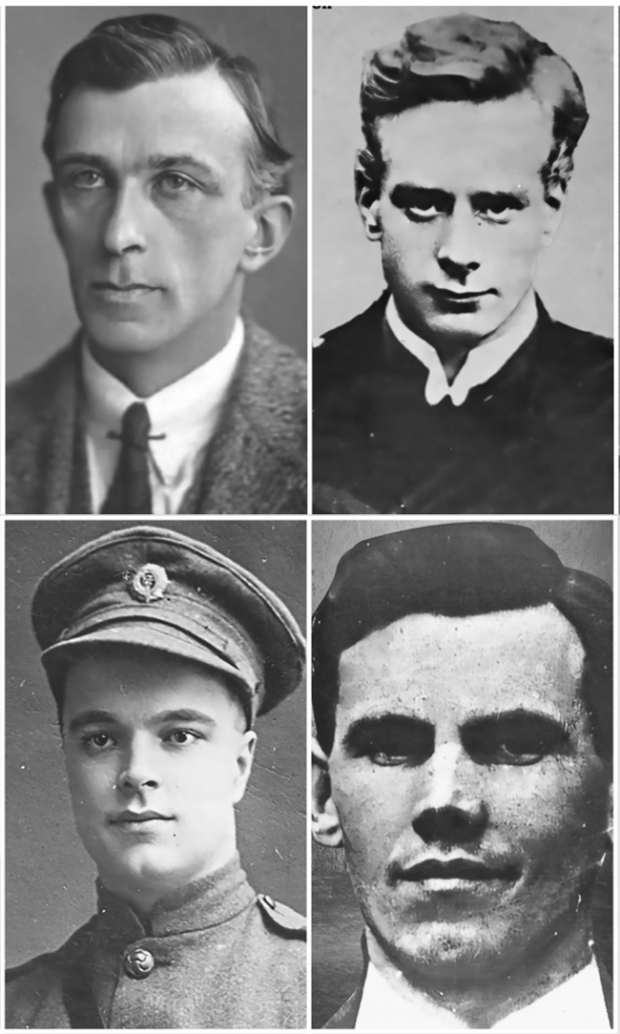
• Rory O’Connor, Liam Mellows, Richard Barrett and Joseph McKelvey
He is best remembered with Mellows, McKelvey and Barrett for his execution by the Free State on 8 December 1922. What do you think is his legacy beyond that?
Rory O'Connor has rarely been commemorated or discussed in isolation to the events of his death. Even unlike the other three men, Rory O'Connor is not remembered in an area associated with him. He did not leave a great abundance of personal papers behind, and all this, I think, has made him an elusive figure on his own for much of the last century. A more full view of his legacy, while not shying away from the circumstances and controversy around his death, should also acknowledge his influence and impact as an important IRA leader in the fight for Irish freedom. I hope my new book illuminates more of that.
Follow us on Facebook
An Phoblacht on Twitter
An Phoblacht Podcast
Uncomfortable Conversations
An initiative for dialogue
for reconciliation
— — — — — — —
Contributions from key figures in the churches, academia and wider civic society as well as senior republican figures