


12 February 2026
Frank Stagg: 50 Years On – “We Are a Risen People”
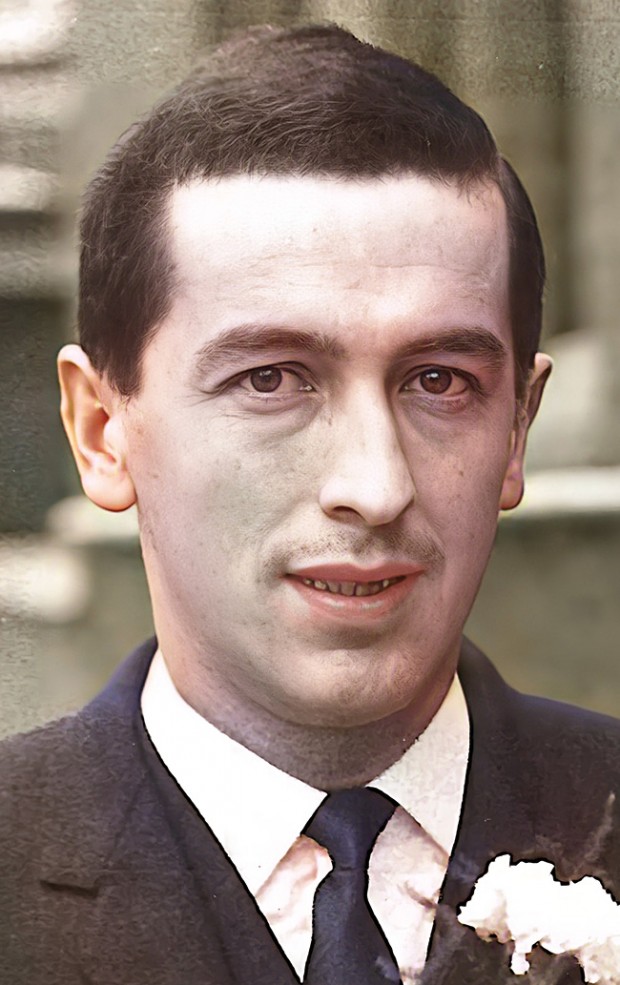

"Fifty years on, we remember him with pride"
Today marks fifty years since the death of Frank Stagg – the young Mayo man who gave his life on hunger strike in Wakefield Prison on 12 February 1976. Half a century later, his courage, his conviction, and his unbreakable belief in Irish freedom still echo through our national story.
Hunger strike – Stailc Ocrais – is one of the oldest forms of protest known to our people. From the Brehon Laws to the Ramayana, from ancient Ireland to colonial India, it has always been the weapon of the powerless against the powerful. Frank Stagg stood firmly in that tradition.
At just 19, Frank left Mayo for England to work as a bus conductor. He married, built a life, and like so many Irish emigrants, watched events at home with growing alarm. As the conflict at home intensified, Frank – following in the footsteps of his father Henry who had been active during the Tan war– joined Sinn Féin in Luton, and later the IRA. In 1973 he was arrested alongside Fr Patrick Fell and, despite virtually no evidence, convicted under Britain’s notorious conspiracy laws and sentenced to ten years.
What followed was a story of extraordinary endurance and unimaginable cruelty.
Frank and his friend Michael Gaughan joined a hunger strike in 1974 demanding the repatriation of Irish POWs held in decrepit Victorian jails across England. The British response was barbaric. Frank had his teeth knocked out during force-feeding; steel clamps wrenching his jaw open as guards poured gruel down a tube forced into his throat. This same practice killed Michael Gaughan – yet the British continued to force-feed Frank until May 1975.
Twice Frank ended his hunger strike after receiving assurances of repatriation. Twice the British reneged, shuttling him from prison to prison, locking him in solitary confinement in dark, wet, rat-infested cells. And so, with no other weapon left to him, Frank began a third and final hunger strike in Wakefield Prison.
After 62 days, with his family by his side, Frank slipped into his final sleep.
But even in death, the cruelty did not end.
The Fine Gael–Labour government in Dublin hijacked his funeral, seized his remains, diverted his flight to Shannon, arrested his brother George, and buried Frank in an isolated grave against his explicit wishes. Garda Special Branch officers dug the grave themselves as locals refused to take part in what they saw as a shameful act.
Yet the people of Ireland answered. The next day, over 50,000 lined the streets of Ballina to honour a man who had hungered for dignity and died for Irish freedom. Shots were fired over his grave. His mother received the Tricolour. And the words of Joe Cahill, Tom Maguire and others rang out across Leigue Cemetery.
Still, the state encased his grave in concrete and posted armed Gardaí around the clock to prevent his comrades from fulfilling his dying request: to be buried in the Republican Plot beside Michael Gaughan.
They underestimated the love of a family – and the determination of a community.
In 1977, on a moonless, rain-lashed November night, George Stagg and five trusted comrades carried out one of the most daring acts of devotion in modern Irish history. Working in darkness, soaked to the skin, dodging patrol cars and headlights, they dug down through rock and earth, broke into the grave from the side, and gently lifted Frank’s coffin from the concrete trap built to imprison him even in death.
George placed his hands on the coffin and whispered: “For you, Frank. We’re doing this for you, Frank.”
Before dawn, Frank Stagg was finally reinterred in the Republican Plot beside his comrade Michael Gaughan – exactly as he had wished.
Frank Stagg was demonised and brutalised in life by the British state; in death his body was seized and defiled by the Dublin government. But because of the love of his family, his community, and the republican movement, he now rests with the Mayo martyrs, where he belongs.
In his final message to his comrades, Frank wrote words that still carry the full weight of his courage and clarity:
“We are a risen people. This time we must not be driven into the gutter, even if this should mean dying for justice! The fight must go on!”
Fifty years on, we remember him with pride.
Fifty years on, we honour his sacrifice.
Fifty years on, we still rise!
Follow us on Facebook
An Phoblacht on Twitter
An Phoblacht Podcast

Uncomfortable Conversations
An initiative for dialogue
for reconciliation
— — — — — — —
Contributions from key figures in the churches, academia and wider civic society as well as senior republican figures