


11 February 2026
The importance of Frank Stagg 50 years on
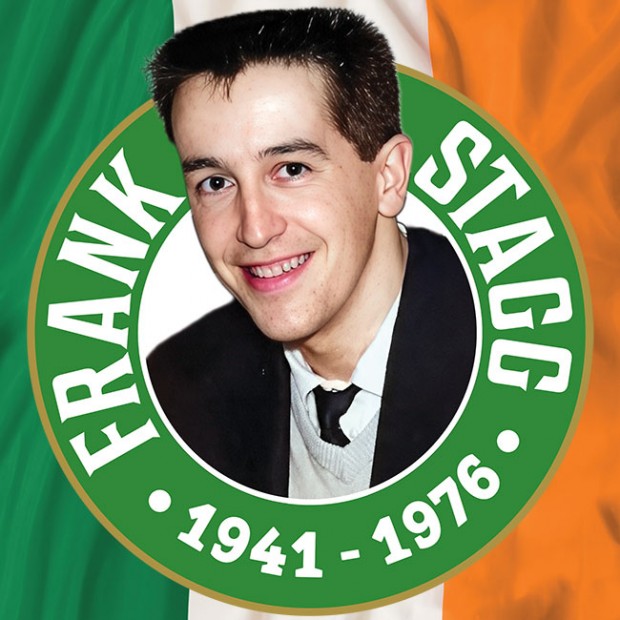

When Frank Stagg embarked on what was to be his fourth and final hunger strike in a British prison in late 1975, he did so with conviction, clarity of mind and in the full knowledge the authorities would very likely renege on any initial promises to meet what were essentially very reasonable demands.
Born in the small village of Hollymount in South Mayo in 1941, Frank came from a large and respected family and attended school in Ballinrobe. He went to Newbrooke Primary School before going onto the Christian Brothers. Locals in his native village remembered him fondly as a ‘nice lad from a nice family’. His father, Henry and an uncle had both volunteered and fought in the Tan War and the Civil War on the republican side.
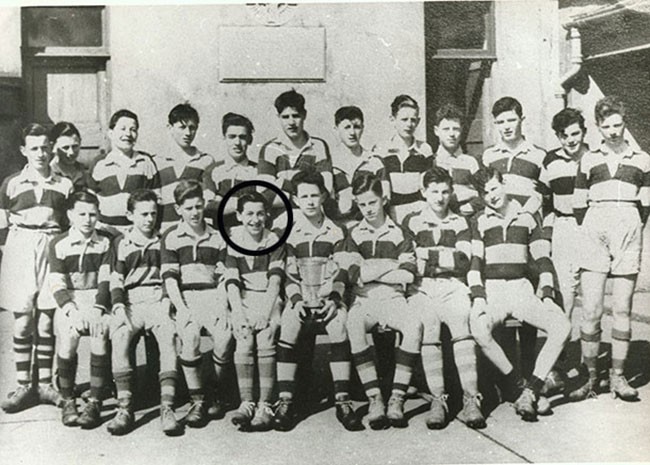
• Frank Stagg (circled) was known for his prowess at Gaelic football and handball
People from his hometown also described his skill and love for Gaelic football and handball. After leaving school, he worked for a brief period with his uncle as a gamekeeper. Frank moved to England in 1959 and secured work as a bus conductor and then as a bus driver in North London. He married Bridie Armstrong from Carnicon, Co Mayo in 1970. It was in England that Frank joined the IRA in 1972.
By April 1973, Frank had been arrested and was convicted in November for ten years on a charge of conspiracy to commit arson. These charges were secured under notorious British Conspiracy Laws, introduced during the late nineteenth century to imprison Irish activists without a fair trial.
Described as the Commanding Officer of the Coventry IRA unit, there was little or no actual evidence to connect him to the charge, when he was convicted alongside six others. He began his sentence in Albany Prison on the Isle of Wight and almost immediately insisted on the right to be treated as a political prisoner, words that would be echoed in September 1976, within the demands by Kieran Nugent when he refused to wear a prison uniform, declaring they’d have to “nail it to his back” - this followed the decision to remove Special Category Status earlier that same year.
The hunger strikers in 1980 and 1981 met with the same shameful British government intransigence, that would eventually bring the number of deaths to 22, of Irishmen that had hungered to death for justice, equality and freedom, during the course of the twentieth century, invoking the ancient tradition of troscadh, a pre-Christian Irish Brehon law and legal method used to seek justice, typically by fasting on the doorstep of the person who had committed a wrong on another.
By March 1974, Frank Stagg was transferred to Parkhurst Prison, where he and fellow Mayo man, Michael Gaughan joined others on a hunger strike, where they continued to refuse to do any prison work and set out demands that also included the right to educational facilities, the setting of a date for transfer to an Irish prison and a guarantee not to be subjected to any more periods of solitary confinement.
Michael Gaughan died in June after 64 days of hunger strike and having suffered the barbarity of forced feeding that led directly to his untimely death, in much the same way as Thomas Ashe, the first hunger striker to die 59 years earlier in Mountjoy Prison. Ashe also died as a direct consequence of force feeding while incarcerated by British jailers under Lloyd George and his government.
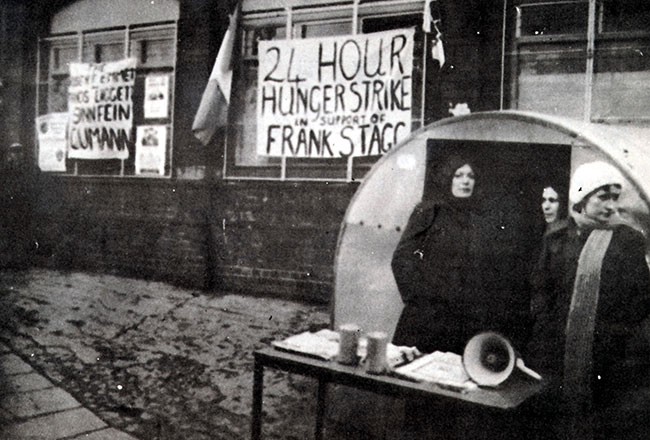
Frank came off that hunger strike after negotiations began, but by December the following year he had resumed yet another hunger strike in Wakefield Prison, having been subjected to isolation and a total denial of any personal items, including any furniture in his cell. This was to be his last act of defiance and after 62 days, Frank Stagg died from starvation on 12th February 1976.
By the time Frank drew his last breath, he would become the 12th person the British government refused to meet or listen to while on hunger strike, leading to yet another avoidable death. His last request was “to be buried next to my republican colleagues and my comrade, Michael Gaughan”.
When Michael Gaughan’s remains made their final journey to his resting place of Leigue Cemetery, also an historical and cultural site in Ballina, the high-profile funeral was accompanied with republican honours.
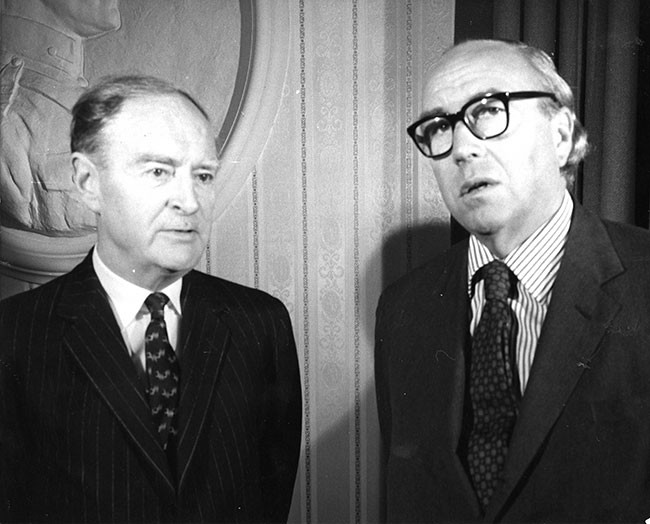
• Liam Cosgrave and Roy Jenkins, British Labour Home Secretary
The Liam Cosgrave led Fine Gael and Labour Government felt embarrassed and were determined to ‘take charge’ of the proceedings now for the funeral of his comrade Frank Stagg. Family and friends, including Frank’s widow were cynically duped by state authorities, and while they patiently awaited the arrival of his coffin at Dublin Airport, the plane was instructed to divert to Shannon, where his body was effectively hijacked by the authorities.
It was then flown by helicopter to Ballina, before being buried in a pre-arranged grave, separate from the republican plot. Six feet of cold concrete was then unceremoniously poured on top of his coffin in an act of calculated cruelty and desecration.
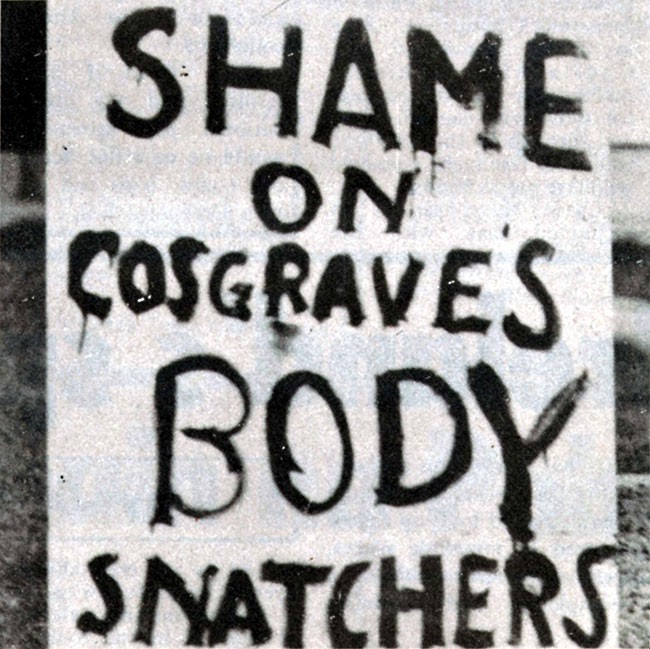
Frank was first isolated from the people he loved by the British prison authorities, and now even in death, at the hands of the 26 county state forces, thus denying his most modest and final demand to be buried with his comrades and friend. A requiem mass was boycotted by most of the family, and a 24-hour guard was put in place at the cemetery by the authorities afterwards.
The Republican Movement held its own ceremony for their fallen comrade at the nearby republican plot the following Sunday amid a large Garda presence. Nevertheless, a volley of shots was fired, following an oration by stalwart republican and former Chief of Staff of the IRA, Joe Cahill.
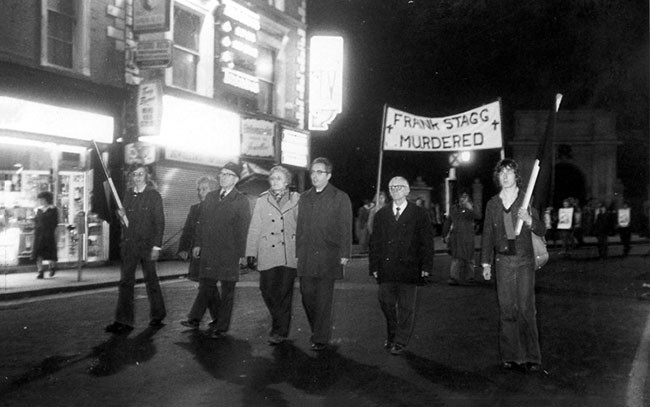
A solemn pledge was given here that the body of Frank Stagg would be reinterred to rest alongside his comrades and in accordance with his own explicit request and dying wish. An armed round the clock Garda security detail was placed in a hut within the cemetery.
It would be twenty-two months later, during a wet and windy night, and by which time an order was given to remove the armed Garda presence, that six men entered the Ballina graveyard. A vacant grave next to the one where Frank had been buried was purchased by Frank’s brother, George, and an inscription on the headstone referred to the adjacent plot stating that the ‘pro-British Irish government’ had stolen Frank’s body.
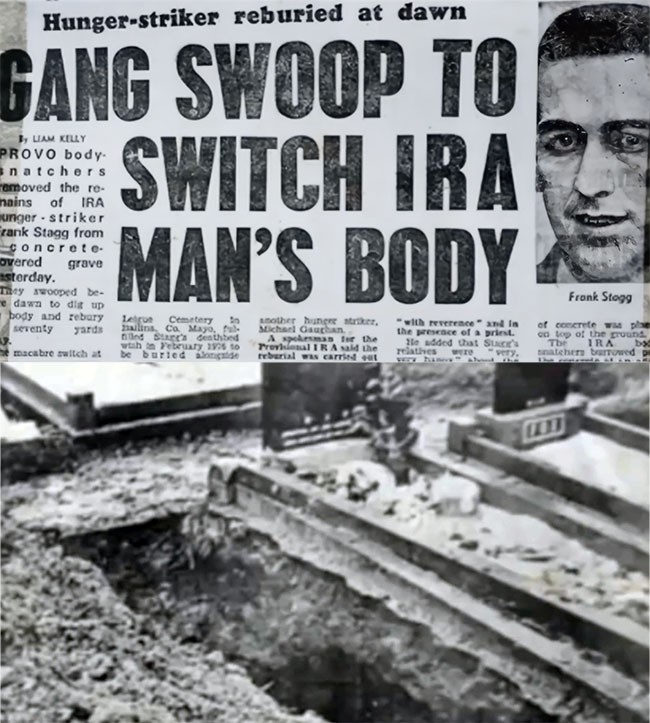
The men dug down into the grave immediately beside where Frank lay, before digging in sideways and removing the coffin, as concrete was never poured to its sides. Frank’s body was then immediately reburied in the republican plot with a quick prayer said. His name was inscribed on the monument here later.
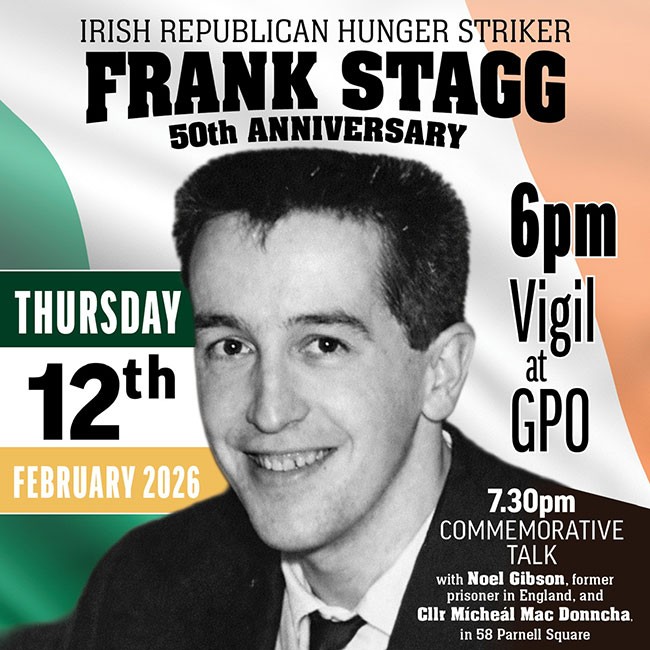
50 years have passed since the death of Frank Stagg and it is extraordinary, indeed deeply shocking, that the callousness of Perfidious Albion and its imperial mindset, continue to endure in the face of the recent hunger strike by activists for Palestine.
This only ended following announcement that a lucrative contract with Israeli arms manufacturer, Elbit Systems, would not be renewed amid mounting pressure on the British government. They were protesting at their governments involvement in directly facilitating a genocide in Gaza and standing up for human rights. The British government to their shame, refused throughout to meet with representatives for Heba Muraisi, Kamran Ahmed and Lewie Chiaramello. They were part of an original group of eight, not charged with any crimes – the largest coordinated hunger strike in protest of injustices at Britain’s door for almost 50 years.
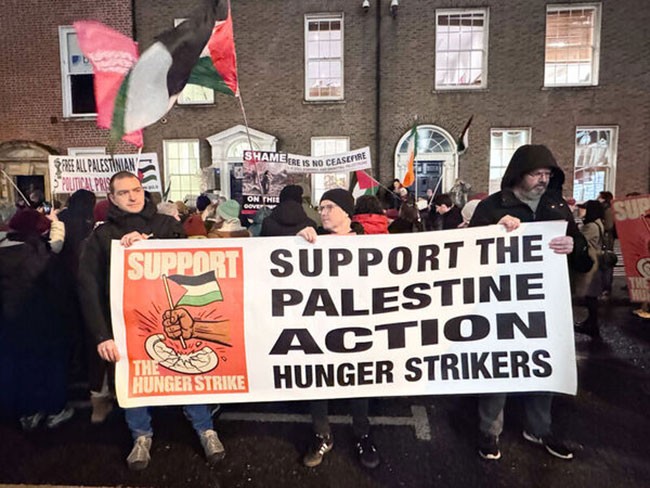

• Heba Muraisi, Kamran Ahmed and Lewie Chiaramello
Meanwhile, as many as 2,500 people have been arrested to date following controversial new British domestic counter-terrorism laws being applied to peaceful protesters and proscribing Palestine Action a terrorist group. These draconian measures, and Keir Starmer and his Deputy Prime Minister David Lammy’s total refusal to even engage by meeting with the hunger strikers has given rise to serious concerns amongst Britons and raising eyebrows far beyond. Of course, this includes Ireland, opening for many a traumatic national wound and deeply piercing into the memory of the Irish psyche.
Prepared to fervently collaborate with the Tory opposition when it comes to support for Israel, and keen to appease, if not actually endorse those of a far-right ideology into the frame, Starmer’s Britain is now morally vacuous, even conveying traits of Thatcherism, and revitalising behavioural practices of a long oppressive lineage of brutal past colonial predecessors.
This latest hunger strike once again demonstrated Britain’s failure to take responsibility for its own actions and its persistent refusal to recognise and meaningfully engage with people prepared to die selflessly, under their watch and at their door, in common cause and pursuit of ideals of humanity, freedom, peace and decency.
As Frank Stagg’s life slipped away, a message to his comrades read; “We are the risen people, this time we must not be driven into the gutter. Even if this should mean dying for justice. The fight must go on. I want my memorial to be peace with justice” – a message that carries with it, the same resounding sentiment of those prepared to starve to death today, at Britains complicity and direct involvement in oppression, ethnic cleansing and illegal occupation.
• Derren Ó Brádaigh is a Sinn Féin activist, organiser and local area representative.
Follow us on Facebook
An Phoblacht on Twitter
An Phoblacht Podcast

Uncomfortable Conversations

An initiative for dialogue
for reconciliation
— — — — — — —
Contributions from key figures in the churches, academia and wider civic society as well as senior republican figures