


4 February 2026
Hunger for Justice
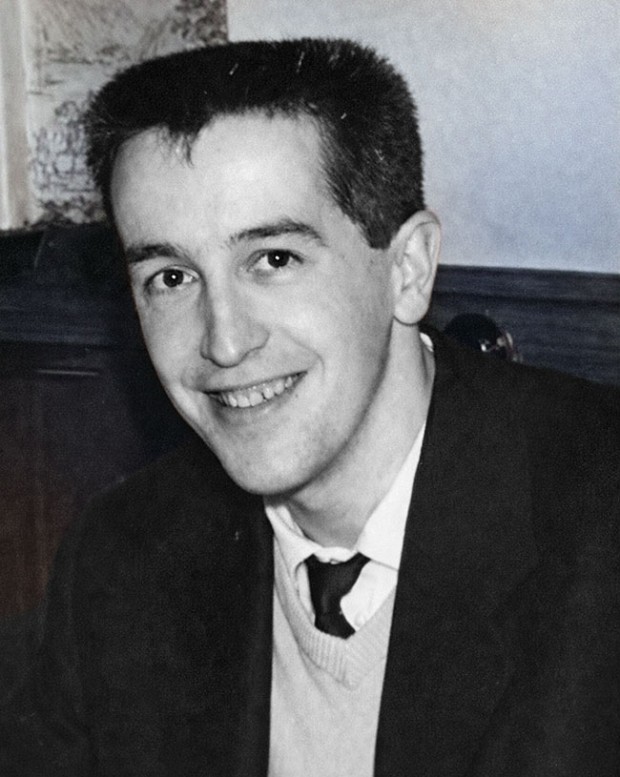
• Frank Stagg
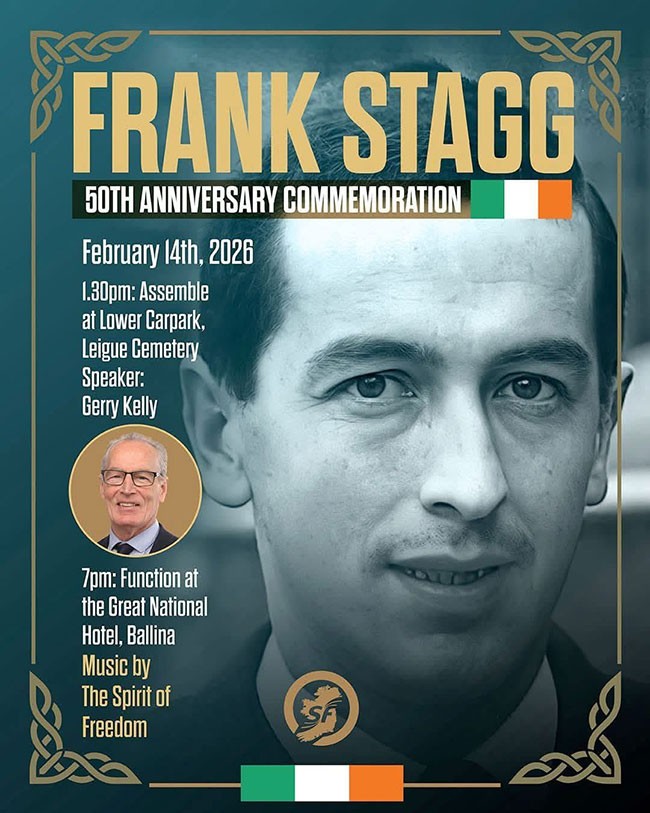
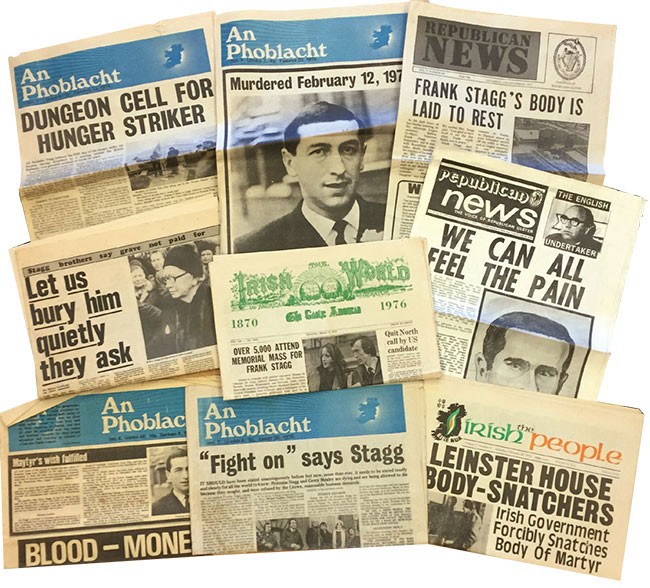
50 years ago this week Proinsias (Frank) Stagg was on the last days of his hunger strike. His protest was to demand an end to the inhuman treatment to which he had been subjected as an Irish Republican prisoner in English jails, and for repatriation to a jail in the Six Counties. His family and comrades had campaigned tirelessly for him but the British Labour government proved totally intransigent. Frank came from a Republican family in County Mayo and his elder brother Joe was foremost in the campaign. Here we republish an article by Joe first published in ‘The Irish Prisoner’ by the Prisoners’ Aid Committee in 1977. Joe Stagg died in November 2015.

“We are a risen people, this time we will not be driven into the gutter, even if this should mean dying for justice. The fight must go on. I want my memorial to be Peace with Justice.”
Last message of Frank Stagg.
HENRY STAGG told his war stories well, and his children listened intently. A ray of admiration or a shadow of bitterness could be seen going across the face of his Proinsias as the victories over the Black and Tans or the treachery of the Free Staters of 1922 were unfolded before his young mind during the winter nights of his childhood at the old homestead in Bloomfield in Co. Mayo. His father’s war songs were his war songs, and when I was home recently I felt I could hear that tenor voice ringing clearly across the wildwoods where we played in our youth:
O Father dear a day will come when for vengence I will call
I will rise with Erin’s Boys to battle one and all
I’ll be the man to lead the van ‘neath the Orange, White and Green
And loud and high, we’ll raise the cry: ‘Revenge for Skibbereen!’
Well it is now a matter of history that Proinsias Stagg did ‘arise with Erin’s Boys’. He cried out against injustice, and ultimately gave his life in that cause. His voice was heard ‘loud and high’, as his body was being taken by floundering, bankrupt politicians across the land he loved. These politicians miscalculated that the cry of a dead rebel in the hearts and ears of the people of Ireland is louder than the voices of kings.
Knowing him as I did, I was not really surprised to hear of his arrest. As the Troubles in North ‘hotted-up’ I felt he could do nothing but become involved. He had been in Coventry from the time he was 18, working as a bus conductor and later as a bus driver with Coventry City Transport Service. Eventually he wrote to somebody somewhere in Ireland. The last paragraph of that letter reads as follows:
“I am a great admirer of Sinn Féin and of the Provisional I.R.A and sincerely hope that I may be able to help in some small way in the great and gallant struggle for the freedom our country. Hoping to hear from you in the future.”
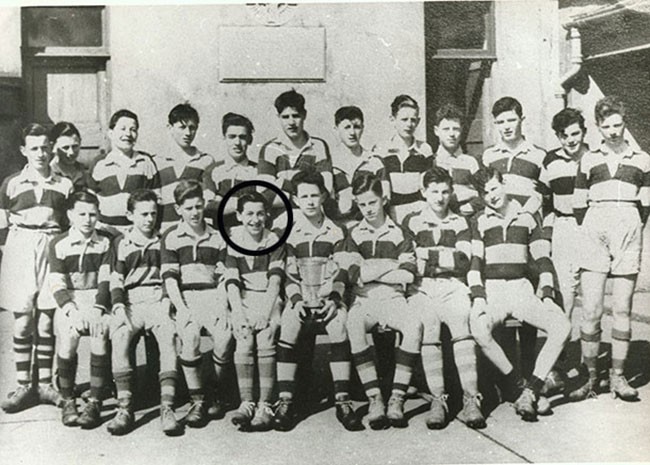
• Frank Stagg (circled) was known for his prowess at Gaelic football and handball
ARREST
It is now a matter of history that he was given the opportunity to help, not in some small way but in a way that commanded the attention of the entire world. He was arrested for the first time on the morning of 13 April 1973. He was released at 4p.m. on the same day. Although he was pretty certain that he would be rearrested, he resisted many pressures and urgings to to fly home to Ireland. He was O.C. of Óglaigh na hÉireann in Coventry, and he was not going to run out on his men. After 24 hours he was re-arrested and this time there was no release. As soon as the initial shock had subsided my first thoughts were for my father and mother. Had they heard it on the news as we did? It was imperative to telephone immediately.
After being charged with various charges of conspiracy, Proinsias was held in Winson Green Prison with the rest of the Coventry Seven. Prison came hard to this young man that loved the wild outdoors of his own Mayo. From his Birmingham cell he wrote:
“But I am far from the Robe today, far from Coillte Roiste, and the Yon Bog Road. I am here in a solitary cell in a rotten English jail. Still my spirit can escape and be free to taste the freshness of every new born flower that grows in Clooncormack. My captors have never tasted such sweetness’.
Diarmuid O Súilleabháin wrote the following lines In tribute when Proinsias died. They were much in keeping with Proinsias’s character.
Not for Rees, Wilson or the Saxon Jenkins
The quiet clear cup of courage
Distilled to Life’s last wilful drop
Ever merging with the sparkle of Mayo streams
And the gentle shedding of her weeping yew and heather
The fuchsia tears beloved by Pearse and Mellows
All to the bright inexorable river
Sing the Phoenix song of centuries
Freedom’s song, louder than ever.
The security put into effect at the October sitting of Birmingham Crown Court was totally unnecessary, was of frightening magnitude, and was clearly designed to intimidate the jury, to terrorise the population into feeling that there were terrible terrorists locked up and they would break out and kill everyone if they weren’t well guarded. The ten year sentence handed to Proinsias and the 12 years to Fr. Fell stunned the civilised world as did the recalling by the trial judge of a detective inspector to give his ‘opinions’, a major facgtor in deciding the sentences.
HUNGER STRIKE
The long hunger strike which Proinsias endured with Michael Gaughan was slow to gain momentum, because of the fact that there was another hunger strike involving the Price Sisters, Hugh Feeney and Gerry Kelly in progress at the time. For Michael Gaughan that hunger strike ended in death, for Proinsias it ended with the hope that he would be granted the same concessions as Dolores, Marian, Hugh and Gerry. But Proinsias never got any concessions.
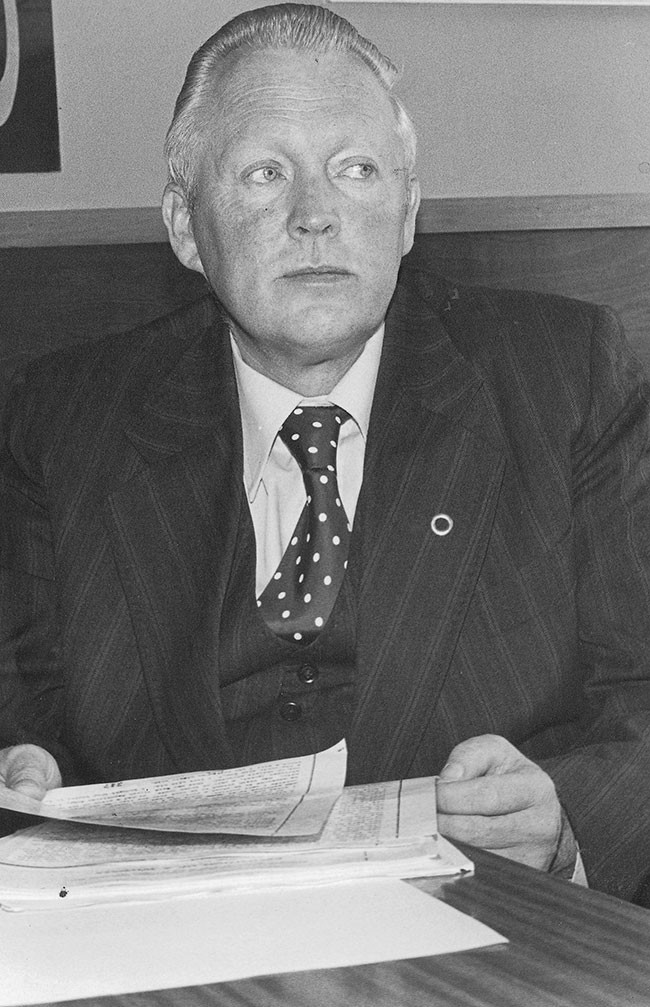
• Frank Maguire MP
On recovering from hunger strike at Parkhurst he was transferred to Long Lartin, where he was soon in punishment in solitary again on his refusal to work. This refusal to work was a basic principle, of his throughout his prison life, a principle in which he believed so fiercely that he sanctified it with his own death. His re-incarceration in solitary, coupled with humiliating body searches on himself and his wife and sisters on the occasion of visits, caused him to embark on the awful agony of hunger strike once again. On this occasion he was without food for 34 days. Finally the matter was resolved with the Governor after representations were made to him by Mr Frank Maguire MP. Proinsias or his friends would not be strip-searched and he would not be asked to work. The Governor was almost immediately transferred. Weak and worn, and very clearly suffering from an acute kidney complaint following his two hunger strikes totalling 100 days without food in a year, Proinsias was bed-ridden for the rest of his stay in Long Lartin. Frail though he was now, his determination and loyalty to the Republican cause grew in strength, and we find him on a week’s hunger strike again in a token of solidarity with Pat Ward and Colm Dalton and their comrades when they were going without food in protest against inhuman conditions in Portlaoise jail.
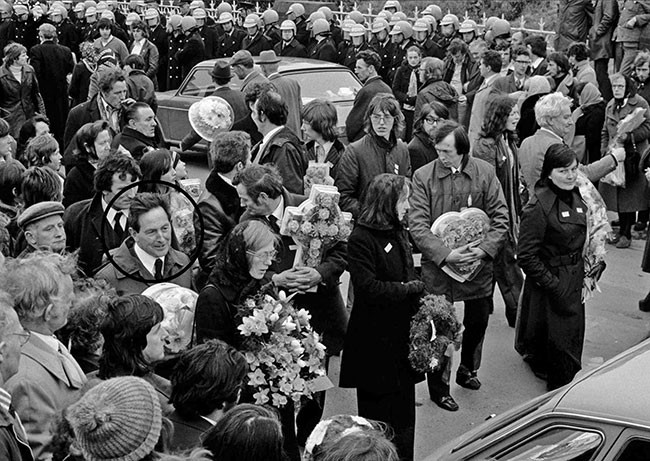
• Joe Stagg (circled) Frank's funeral in Ballina
ILL
At this stage my father became seriously ill. It was apparent to all of us that he was going to die. Proinsias, now in a very weak state had been transferred to Wakefield. The week’s hunger strike had taken a very heavy toll, after two long hunger strikes in one year. In spite of this run-down condition, which caused him to be depressed at times, he accepted his father’s dying condition as God’s will. When he did die he remained brave. He was refused, as were Dolours and Marian Price, even one day’s parole for his father’s funeral.
Soon afterwards at Wakefield work was demanded of him again. As always he refused. He was promptly put down the block and back into the now familiar solitary confinement. He was in that situation for the entire warm summer of 1975. Because there was a truce on between the IRA and the British Army in the North of Ireland, he suffered in ‘low profile’ in the hope that peace with justice might emerge. Repeatedly he was brought before the Visitors’ Board and repeatedly they tried to break him by taking large slices off his remission, by removing all his frugal comforts, one by one removing watch, his radio, his papers, his mattress and finally taking down the door of the toilet in his cell. Exercise periods he had to give up, because it was arranged by the authorities that some of the hardened criminal types, eager for favours, would, throw slops on top of him from the upper storey of the prison.
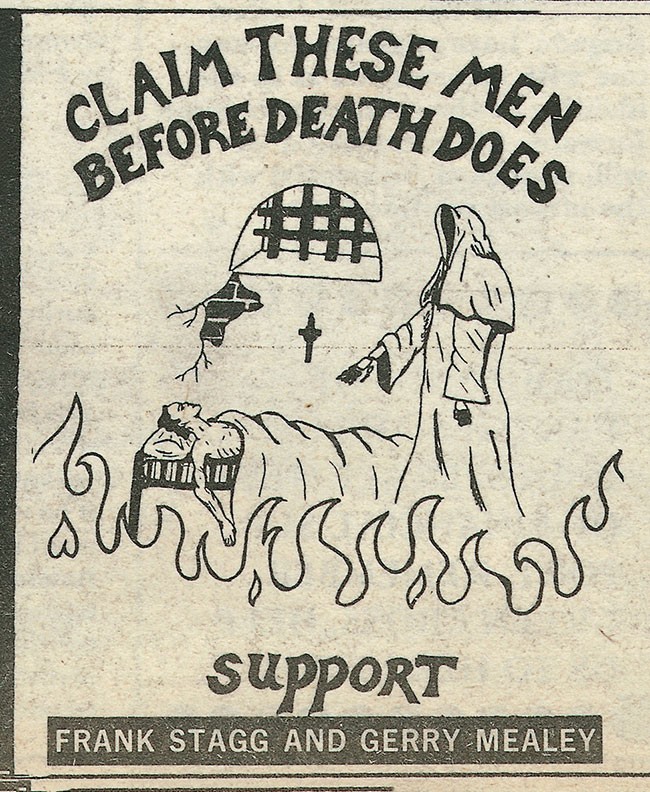
On 14 December 1975 Proinsias Stagg, Gerry Mealy from Dublin and a number of other Republican prisoners went on hunger strike. There had been a lot of harassment of Republican prisoners and their visitors. I remember going home that evening and being told the grim news. I pronounced Proinsias dead, without hesitation. Why? Because [British Labour Home Secretary] Roy Jenkins had stated in the course of the debate on hanging that while he opposed hanging because it would be unacceptable to the British people, he would see nothing wrong with policemen shooting down suspected subversives, in the course of trying to arrest them. I also knew that Proinsias would not back down in any way whatever.
While everyone fought to the last for him right through that awful two months, I think most of us knew that it was inevitable that he would die. The absolute refusal of the Dublin Government to make any public protest on behalf of an Irishman who was in almost continual solitary confinement for two years, and who would be, had he lived, in solitary confinement for a further eight years, and while in the custody of the British authorities, gave us the general feeling that there was a conspiracy between the two governments to make certain that this man was going to die. However, many people tried hard and did much. After hearing the full background story ‘The Irish Press’ undertook to cover the hunger strike every day and they did. The sub-editors of the ‘Irish Independent’ were called together and instructed not to publish anything about the hunger strike and this policy was observed until the Government propaganda machine deemed otherwise when well-timed untruths were launched onto the public as death became more imminent, so as to swing away any public sympathy from a man they feared would become a hero as soon as he died.
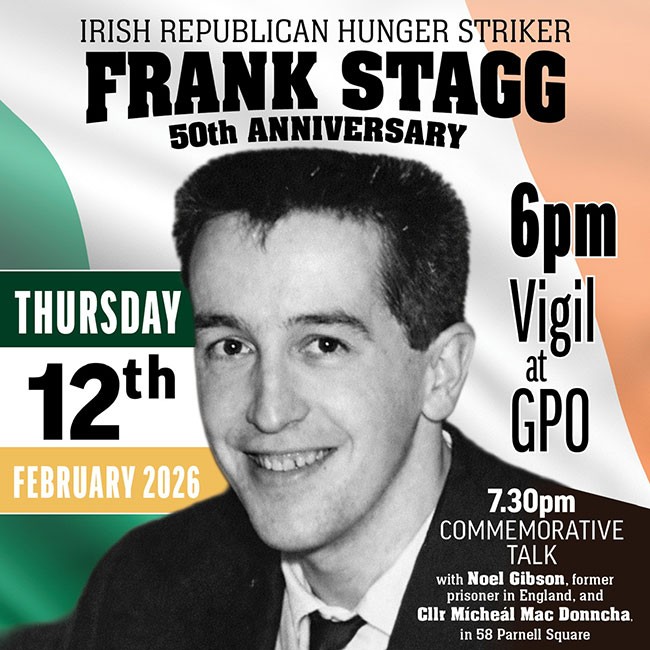
In reply to several approaches from public bodies and private individuals to have approaches made to the British Government level by Foreign Minister [Garrett) FitzGerald there was the incredibly stupid excuse that “as the Irish Government had always taken a firm stand against hunger strikers, no such representations could be made. Nobody had ever been conceded anything in an Irish prison by going on hunger strike.” A strange statement coming from a government minister only a few months after his government had unconditionally released two hunger striking prisoners, Colm Dalton and Paul Ward.
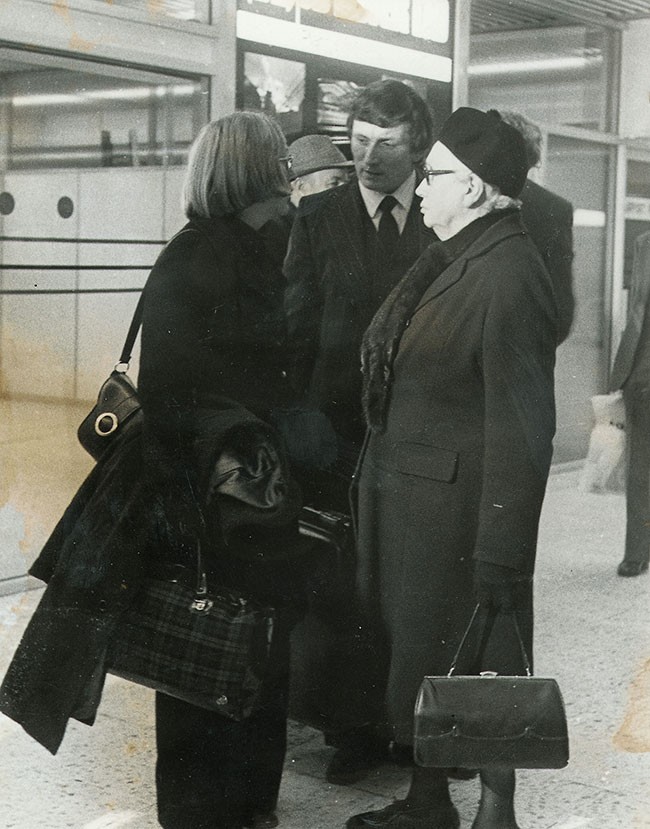
• Mary Stagg, Frank’s mother (right)
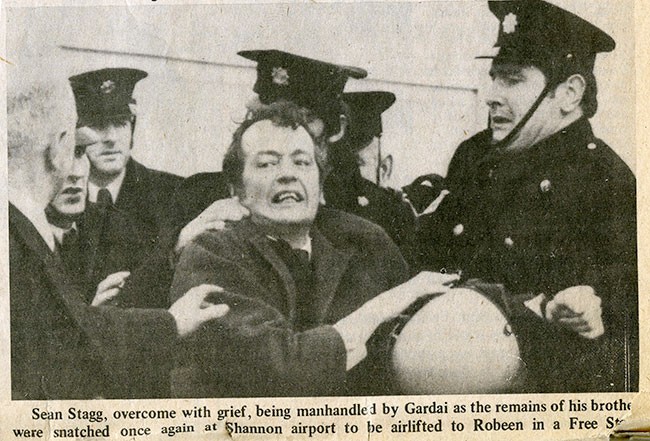
• Frank's brother, Seán manhandled at Shannon Airport
FAMILY
And as the end came nearer still some members of the family were coaxed into the House of Commons and once there the propaganda machine started vomiting again, and this time that the Stagg family had been given a ‘package’ from the Home Secretary, and were now on their way to Wakefield and it was expected Proinsias would be off his hunger strike by morning. The only ‘package’ the Staggs ever got from Jenkins was “a piece of kind advice to use our influence with our brother to get him to resume taking food”.
In order to have everything recorded properly, Proinsias had a solicitor in on two occasions to (1) state the conditions for coming of hunger strike and (2) to state his requested funeral arrangements. The conditions for coming off hunger strike were (1) that he would be taken out of solitary confinement immediately; (2) that be would not be required to work in me future and (3) that when he was well enough he would be transferred to a prison in Northern Ireland. He willed that the late Mr Derek Highstead should take charge of his funeral should he die before his demands were met. He further requested military honours and that he be buried beside his comrade Michael Gaughan in Ballina.
In spite of every diplomatic and political avenue having been traversed and re-traversed over again by the Association of Legal Justice, Mr Frank Maguire MP and many more tireless, selfless people to whom we will be for ever grateful, Proinsias Stagg died in the arms of his wife and mother at dawn on the morning of 12 February 1976.
The Dublin Cabinet met immediately. They decided that having disowned this man in life they would dishonour and defile him in death. They decided that to implement their devilish plans they would call on the Roman Catholic Church as their collaborators, and they would brainwash susceptible members of our family to ‘front-up’ for them in their fiendish plan, convincing them all along the way that Proinsias could only be honoured by having his last wish denied. It has all now gone into the sad pages of Irish History, how the Dublin Government hi-jacked the aircraft coming in with the remains, having it diverted to Shannon, leaving my mother with the vast majority of the family standing at Dublin Airport in the bitter cold of a February morning, how they stole the body for their own sordid purposes. What were the men with white coats and containers doing from 3am to 7 am in the morgue at Shannon? Your guess is as good as mine. The memory of the body snatching by helicopter from one end of the West of lreland to the other is a blot of shame that the Irish people will not be able to explain away to their children. The Catholic Church will find it even more difficult to explain to a questioning rising generation why they allowed the Church of Our Lady of Sorrows at Robeen to be used as a military fortress with a padlock on the gate. The true answer to such a question is of course that the Established Government were in political fear of the man who was lying dead before the altar, and it is a proven fact of history that the church will always shelter the Established Government despite being loud in its condemnation of the members of such a government, whenever they were on their way to power through the process of revolution.
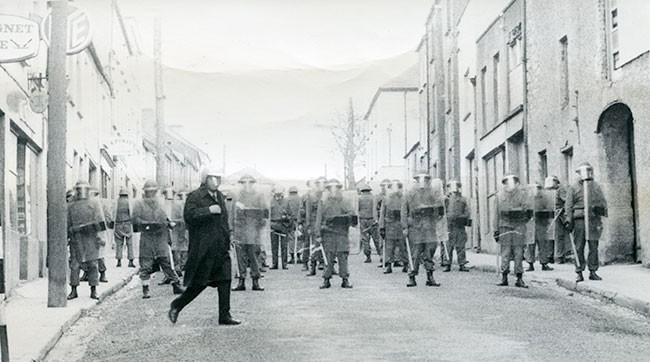
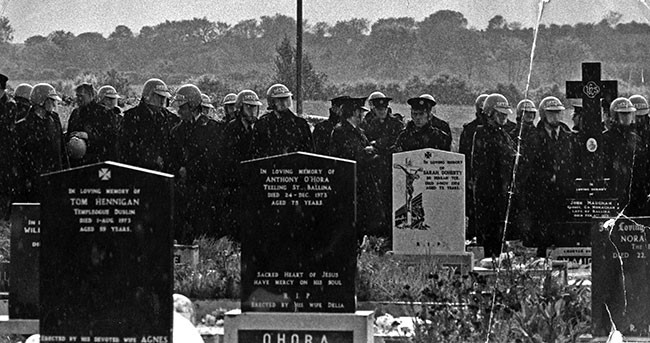
• Military and police presence in Ballina
From Robeen the remains removed to Ballina with a display of military and police that was admitted to have cost £250,000. They buried him in a grave dug by police. My mother and ten members of the family refused to take part in any of these ceremonies which were politically hypocritical and constituted a defiance of the expressed wishes of the dead.
And now they have sealed this grave with a hunk of steel reinforced mortar. They think this will silence the protest made by Proinsias in his life and in his death. What they forget is that for someone with ideals and aspirations like he held, there is no death. Instead there is Life and Truth and the like of which they never knew. A form of Life and Truth that will endure in the hearts of the children of Ireland, when the Untruths of the oppressors will have been liquidated in the Sea of Time.
Follow us on Facebook
An Phoblacht on Twitter
An Phoblacht Podcast

Uncomfortable Conversations

An initiative for dialogue
for reconciliation
— — — — — — —
Contributions from key figures in the churches, academia and wider civic society as well as senior republican figures