


11 December 2025
Justice for the Forgotten disputes Denton finding that UVF acted alone
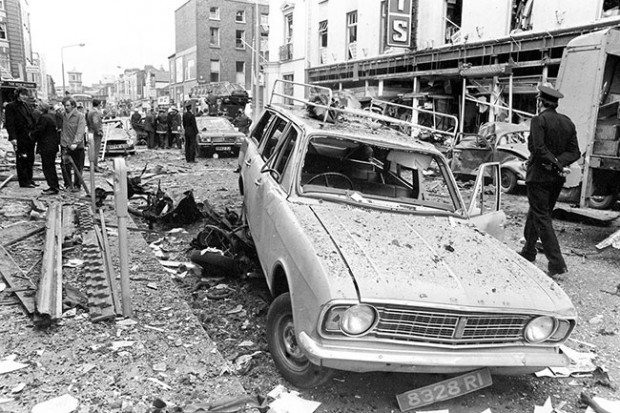

Justice for the Forgotten, which represents the bereaved and the survivors of the Dublin and Monaghan bombings of May 1974 and other fatal attacks in the period, has disputed the claim in the Operation Denton report that the UVF was capable on its own of carrying out the three co-ordinated Dublin car-bomb attacks which killed 27 people.
A summary of the findings of Operation Denton which examined the activities of the Ulster Volunteer Force (UVF) and the Glenane Gang, was published this week as part of the wider Kenova Report. It focussed on the bombing of Dublin and Monaghan on 17 May 1974 when car-bombs on Parnell Street, Talbot Street and South Leinster Street killed 27 people, while seven people were killed by the bomb in Monaghan town. Over the past 50 years evidence has steadily mounted concerning widespread and systemic collusion between loyalist paramilitaries and British state forces in 1974 and subsequently.
The Denton summary claims that there was no evidence of direct British state collusion “albeit that this cannot be categorically excluded”. It goes on:
“The review found in a number of individual cases, clear evidence of the active involvement of the security forces with loyalist paramilitary groups. This collusion involved extremely vicious and serious criminal activity, including bombing attacks and murder.
“Further, security force intelligence assessments indicate that paramilitary groups were regularly supplied with intelligence by members of the security forces and that UVF members and sympathisers existed within the UDR, the RUC and RUC Reserves and the Territorial and Army Volunteer Reserve (TAVR).
These cases and assessments undoubtedly evidence collusion.”
The report claims that the UVF was capable independently and without British state forces’ involvement of bombing Dublin in the manner they did. Margaret Urwin, on behalf of Justice for the Forgotten, disagrees:
“We dispute their finding that the UVF was capable of carrying out the bombings without assistance. They were certainly capable of carrying out the Monaghan bombing - that bomb was contained in a beer keg but the Dublin bombs were a different story. Also, the RUC failed to make arrests even though 22 names of perpetrators were passed to them.”
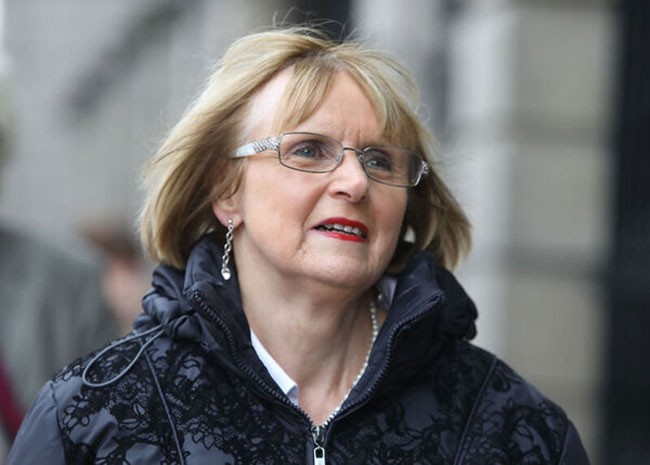
• Margaret Urwin
Margaret Urwin, who has probably studied this case in more depth than anyone over the past five decades, assesses the latest report:
“The most striking thing about their findings is that there is a huge dearth of information concerning the bombings. There is a wealth of information around the loyalists involved, their meeting in Rumford Street Loyalist Club on the morning of 17 May 1974, the allocation of tasks, the procurement of the three cars for Dublin. Then there is silence.
“There is no knowledge after that point. Denton has been unable to discover anything about the bombs - who made them, where they were made, what their components were, where they were stored, where they were collected from, etc. They have no idea of what route(s) were taken to Dublin. So, when they say they have no evidence of collusion, that certainly does not mean there was no collusion.”
The full report of Operation Denton is due to be published at a later date. “I'm not at all sure that the final report will deliver more of the truth,” states Margaret Urwin. She also highlights the fact, incredible as it seems now, that the UVF was unbanned by the British government at the time of the May ‘74 bombings:
“An important point is that the bombings coincided with the de-proscription of the UVF. A British minister (Stan Orme) and senior Northern Ireland Office staff held a meeting with the UVF leadership two days before the bombings, on 15 May. This included the Chief of Staff who authorised the bombings and another Brigade Staff member who was involved in the bombings. The order for the de-proscription was signed on 16 May and Dublin/Monaghan was bombed on 17 May. The de-proscription legislation was allowed to come into effect on 23 May. Further meetings were held between the NIO and the UVF after the bombings. We will discuss this more fully when the final report is published.”
On what needs to happen next, she says: “I think MI5 needs to disclose all the information they hold to the Denton team, that is, of course, if it has not already been destroyed.”
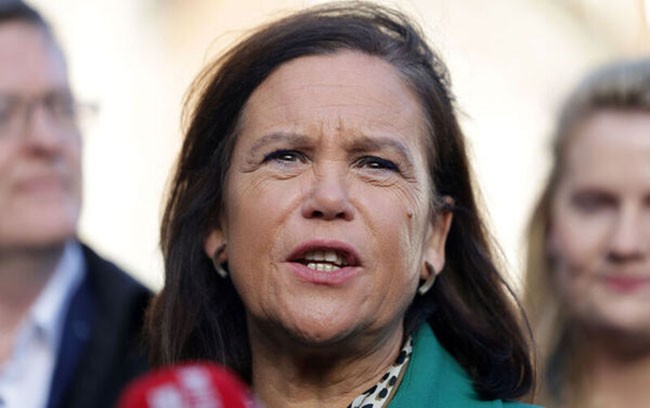
• Sinn Féin president Mary Lou McDonald TD
Commenting on the release of the report, Sinn Féin president and Dublin Central TD Mary Lou McDonald said:
“While today’s report references collusion throughout, the complete extent of British involvement in the Dublin and Monaghan bombings has not yet been revealed. The failure to explicitly recognise the strategic nature of collusion will disappoint many families who have fought for decades for truth and accountability.
“The continued obstruction by British agencies, the withholding of files, and the refusal to face up to their role in the murder of Irish citizens casts grave doubt on the British Government’s commitment to dealing honestly with the past. Their proposed Legacy legislation will deepen impunity, not deliver justice.
“What is needed – and what victims and families deserve – is a fully independent, Article 2 ECHR-compliant, victim-centred truth and accountability process. Nothing less will meet the needs of families or the standards of justice.
“Today must mark a turning point. The days of denial must end. The British State must finally confront the truth of its actions in Ireland.”
Follow us on Facebook
An Phoblacht on Twitter
An Phoblacht Podcast

Uncomfortable Conversations

An initiative for dialogue
for reconciliation
— — — — — — —
Contributions from key figures in the churches, academia and wider civic society as well as senior republican figures