

25 November 2025
Honouring our past: shaping the future
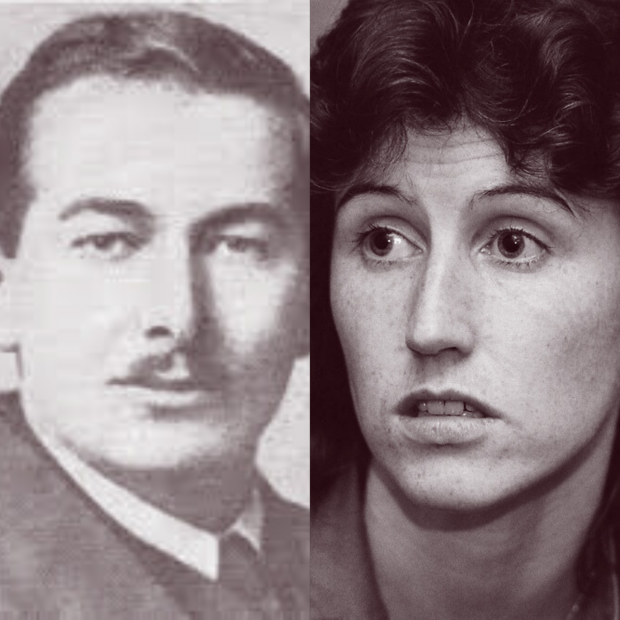

A few days ago I came across a podcast by Irish historian Dónal Fallon which outlined the history of a particular commemoration to the IRA freedom fighter Seán Treacy, who was killed during a gun battle with British forces in Talbot Street, Dublin in October 1920.
Treacy was a legendary Volunteer from Soloheadbeg in County Tipperary. Every year since 1923 when that county has reached an All-Ireland Championship final, the supporters from Tipp’ gather at Talbot Street to honour Seán Treacy’s legacy. And they did so again last July when Uachtarán Chumann Lúthchleas Gael (GAA), Jarlath Burns delivered a powerful oration.
It’s worth listening to Fallon’s podcast, because it reminds us about the importance of remembering our republican patriot dead, and what they stood for, down through the decades.
Two weeks ago I was honoured to speak at the Edentubber Martyrs commemoration.
68 years ago on 11 November, Edentubber Mountain was rocked by an accidental explosion which demolished the cottage belonging to Michael Watters.
Michael was a republican who had provided his home as a base for the IRA.
He, and four IRA Volunteers were all killed: Paul Smith, Oliver Craven, George Keegan and Patrick Parle.
Their deaths represented the single biggest loss of life for the IRA since the Civil War, 35 years earlier.
The Edentubber Martyrs were killed in the middle of the IRA’s Border Campaign.
Partition had been imposed in 1921.
The British continued to occupy the Six Counties and prop up the creation of a sectarian, unionist, apartheid state.
The launch of the Border Campaign was the most coordinated IRA offensive against British occupation in Ireland since the Tan War.
It mobilised Volunteers from all over Ireland.
In the same period Sinn Féin contested British general elections in the north in 1955 winning two seats. Later in 1957, the party won four seats in Dáil Éireann.
Michael Watters, Oliver Craven and Paul Smith were local men.
George Keegan and Patrick Parle came from Wexford.
Following a joint requiem mass and the departure of Patrick and George’s remains for Wexford, Sinn Féin TD John Joe McGirl delivered a graveside oration.
He said:
“The tragedy which brought to an end the lives of five great Irishmen is a tragedy of the Irish nation.
“The tragedy of an Ireland that is unfree and divided.
“Michael Watters was symbolic of the mass of the Irish people who have borne the brunt of the struggle for Irish freedom.
“The road they travelled was the hard road but the signposts were unmistakable.”
Those signposts reached back to the resolve of the United Irishmen and women, and successive generations up to the Proclamation of the Irish Republic in 1916, and beyond.
Signposts of unbreakable endurance and determination to end the connection with Britain and its occupation of our country.
In 1957, the men who died on the side of Edentubber Mountain were the latest generation of Irish patriots inspired by the vision of a national Republic.
They knew partition was wrong. They believed the British government had no right to impose an occupation or to claim jurisdiction in any part of Ireland.
The British state has never had a right to claim jurisdiction in any part of Ireland.
That is the unambiguous position of Irish republicans today.
We will never accept the British state and any of its governments in our country.
Today, the Edentubber Martyrs rest among the pantheon of our republican Patriot Dead, alongside Seán Treacy, and thousands of others who have embodied the Irish spirit of freedom.
Those who represent the continuity of struggle; who refused to conform to the imposition of foreign colonial rule.
Who stood in the Bearna Baoil (the gap of danger)
throughout the 1800s, 1900s, until modern times.
The achievement of the Good Friday Agreement means that peace prevails.
But it is a peace settlement, not a political settlement.
Today, while Ireland is transformed, many challenges remain.
The Republic has still to be achieved.
We recognise that the past remains deeply contested.
So too are forms of commemoration and remembrance.
Sinn Féin believes that the dead from all traditions should be afforded the right to respectful commemoration.
That extends to our republican Patriot Dead.
We make no distinction between the men and women of 1916, the Tan War, and those who died during the Border Campaign, and here at Edentubber.
I told the large crowd which gathered at this year’s commemoration in Edentubber that republicans today unapologetically assert the legitimacy of honouring the Patriot Dead from recent generations, including, among so many others, murdered Sinn Féin Leas Uachtarán Máire Drumm; the heroism of South Armagh hunger strike martyr and POW, Raymond McCreesh, and Volunteer Mairéad Farrell, shot dead on active service in Gibraltar; and also, the timeless leadership example shown by our comrades Kevin McKenna and Bobby Storey.
Their memories and legacies continue to inspire.
Every side has the right to honour the memory of their dead with respect and dignity.
No one should be diminished by acknowledging that reality.
None of us can undo the past, but we can work for a better future.
That is why Sinn Féin leaders have consistently sought to heal divisions through efforts to build trust and foster reconciliation.
Often that has meant stepping beyond traditional comfort zones.
Earlier on the same day of the Edentubber commemoration, Michelle O’Neill again attended the Remembrance Sunday ceremony at Belfast City Hall, as an expression of her commitment to be a First Minister for all.
Sinn Féin recognises that serving as a First Minister for all means adhering to the spirit and requirements of the office.
There is no doubt such decisions are challenging for republicans, and the families of those killed by British state forces and its agents.
But our republican world view includes the importance of showing respect for the experiences, traditions and different political narratives of all sections in our society.
Our party accepts that this extends to respect for those dead from Ireland, and their loved ones, who served in British forces, during wars fought by Britain - notwithstanding our principled republican and anti-imperialist position on those colonial and other wars, both in the past and more recently.
We are future focused.
The decision to attend at the Cenotaph ceremony by the First Minister, with our party’s support, was the right thing to do.
Political leaders must show example.
Today Irish unity is closer than ever before.
The end of partition is in sight.
The momentum in the conversation about constitutional change and a date to be set for a unity referendum is unprecedented.
The political arrogance of Labour government ministers, who fly in and out of the north, blinds them to this fact.
But it is not for English politicians to determine the destiny and
self-determination of our country.
For them to imagine otherwise is delusional.
We are in a new political space.
It is time for a new chapter to be written.
That’s why a date for a unity referendum before the end of this decade must be set now.
The Good Friday Agreement has given us a peaceful, political and democratic path to bring about the legitimate aim of a united Ireland.
This British government has a responsibility to help manage the transition.
That is why it makes sense to plan and prepare now for that transition.
The position of an Taoiseach makes absolutely no sense.
His hostility to Irish unity is absurd and an absolute disgrace to national democracy.
He should remember that the Good Friday Agreement is not an end in itself.
Instead, it is the means to fulfil the constitutional obligation placed on the Irish government, by Bunreacht na hÉireann, to advance the reunification of our country.
An Taoiseach is out of touch with the grassroots of his own party, and he’s out of step with popular opinion.
Two days after the commemoration Catherine Connolly was inaugurated as Uachtarán na hÉireann.
Her election campaign was momentous.
In an Ireland and a world in which there is so much despair, disadvantage and inequality, she spoke about hope, and showed that change is possible.
The coalition of left and progressive parties, independents, and civic society organisations which came together during her campaign rocked the Irish establishment.
More change is possible if progressives and democrats continue to work together and build alliances.
Now we can see the potential for a pathway to form a left republican government in the south of Ireland.
One which ends the monopoly in government by political parties who have only represented the interests of the few, regardless of the needs of the many.
The lessons of this presidential election campaign should be applied to not only removing the current government, but to continue growing popular support for reunification.
We need to translate that momentum into a mass movement for Irish unity throughout Ireland.
A coalition which brings together all strands of political and civic opinion which can make consensus on the national democratic question, and the demand for a unity referendum.
A structured national dialogue should be convened among all political parties who agree on the need to plan and prepare for Irish unity.
No single party can bring about a united Ireland on its own.
The national democratic project is a collective responsibility.
Preparing for Irish unity should be embraced by all political parties, in government or in opposition, both north and south.
It should be done in association with the Irish trade union movement; the business community; Cumann Lúthchleas Gael and other civic and grassroots organisations.
Irish unity is the defining issue of our generation.
And that ambition belongs equally to citizens from the northern Protestant tradition who are rightly appalled by the negativity of the DUP.
That party continues to make power-sharing difficult, by opposing equality and parity of esteem in the north of Ireland. It is hostile to the very existence of the Irish national identity; it opposes bilingual street and road signs; treats minorities, including our gay sisters and brothers with disrespect; and, following the lead of the US presidency, is in denial of the global climate emergency.
I regularly meet citizens from this section of the Protestant tradition. They are progressive people seized with a vision of the need for something better. I say to them that the future is theirs to shape along with the rest of us.
The new Ireland belongs to the protestant tradition also.
So, let’s create it together.
It presents us collectively with new opportunities and horizons.
We can be the change makers in Ireland’s national journey.
To move beyond the tragedies of the past.
To shape a positive future for present and new generations.
And, to construct a new constitutional settlement, built upon national unity, equality and social justice.
I asked my comrades and friends to leave Edentubber seized with this ambition:
To be committed to realising a new national Republic, for the many, in our time.
Tapaimís an deis. Beirimís bua.
• Declan Kearney MLA is Sinn Féin National Chairperson
Follow us on Facebook
An Phoblacht on Twitter
An Phoblacht Podcast

Uncomfortable Conversations
An initiative for dialogue
for reconciliation
— — — — — — —
Contributions from key figures in the churches, academia and wider civic society as well as senior republican figures