



30 May 2024 Edition
Community gardens are good for us all!
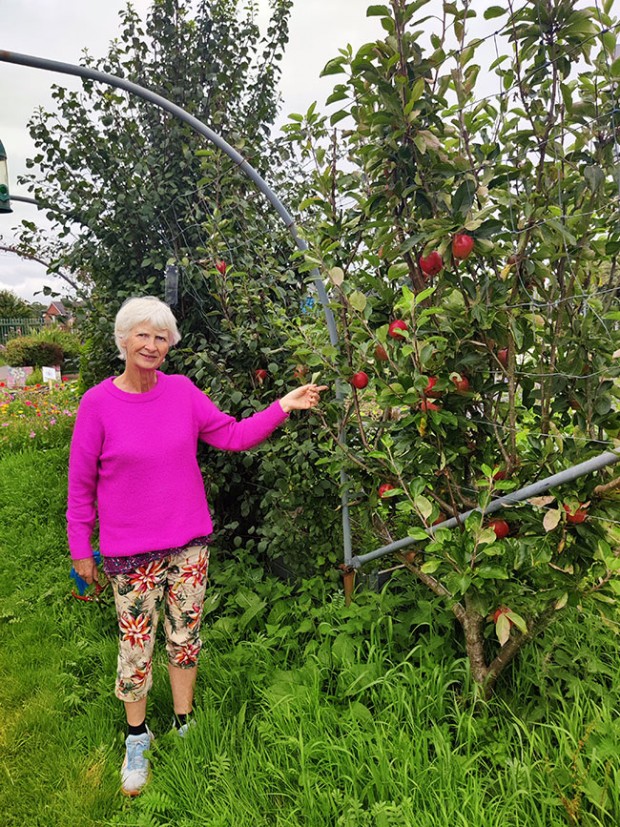
• Bernadette Colgan
I worked across from a Community Garden for years, but it wasn’t until I retired that I noticed it was there! That was five years ago when I popped in to see what was going on behind the green railings. One session later of weeding our potato plot and I was hooked.
Notice how I say ‘our potato plot’, because that is what happens. One gets such pride in growing and developing the various plots of onions, broad beans, beetroot, peas, garlic, and the fore mentioned potatoes that you take ownership as you watch the plants grow from seed.
Weeding is a necessary chore, but getting down and dirty whilst weeding helps you to forget your other life distractions for a few hours. Your head goes into a different space and then you are planning for the next set of tasks over the coming weeks.
Community gardens are a place where people from the entire social economic spectrum, irrespective of race, gender, religion or age hang out to learn from each other. Once you are in that garden, regardless of your day job, you become one and the same with a common goal of being in the moment. It is a green area of refuge with enough space, often donated by the local council of derelict or waste ground, reclaimed by enthusiastic workers to bring it literally to fruition.
The gardeners share the work and during the growing season, the best bit of all, we share in the produce. This community amenity is then put to great use to serve the locality and the people of the area. It might take a season or two to break up the rough ground, dig out boulders, shift stones, and add fertiliser, in our case seaweed, before you see the rewards, but by golly then you know it has been worth the sweat and hard digging.
A community garden is a place where you meet like-minded people to learn how to grow fruit, vegetables, and herbs. We are all learning from each other and we are open to trying new crops. Sometimes it works and sometimes it doesn’t!
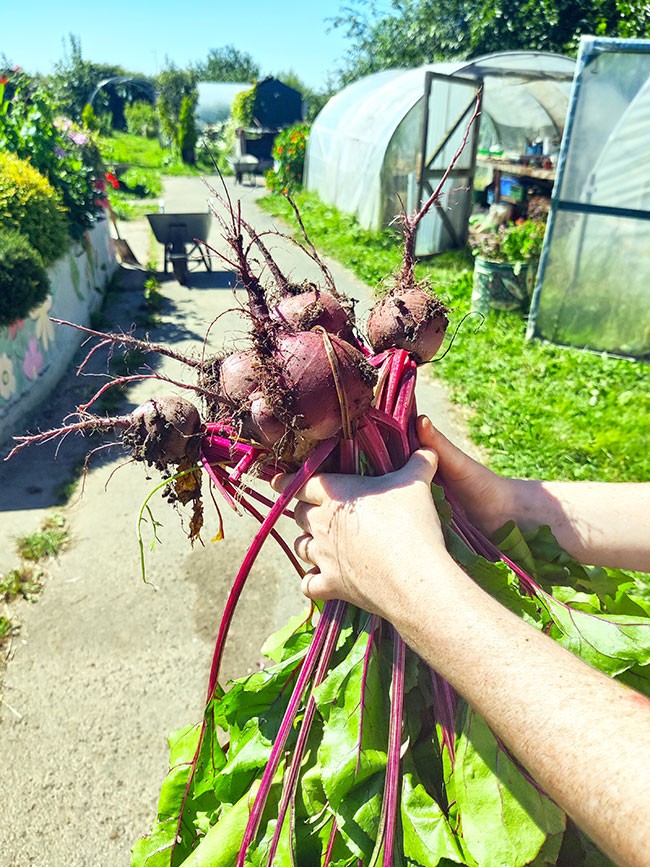
• Ballybane beetroot. Every kilogram of vegetables grown reduces C02 emissions
Last year, we planted what we thought were courgettes, but turned out to be pumpkins! One grew so large that we donated it to the local Library who used it for various occasions. It was used as a pumpkin for Halloween, a Grinch at Christmas, a Valentine heart and as a green monster for St. Patrick’s weekend. The bet is on to see if we can grow a bigger one this year!
Of course, there is more to the community garden than all this growing. Courses are run for participants on herb growing and their uses. Cooking courses, foraging, exploring other community gardens, making accessories for the garden, like bird feeders (entice the birds in and they will devour grubs, aphids, slugs, and snails) are some of the many educational and fun things to do to enhance the garden as well as ongoing education for participants.
These bird feeders, Christmas wreaths, plant supports and hanging baskets can all be made from the willow plants grown in the garden. A huge plus for the gardeners is that the ‘home’ grown produce is shared amongst the volunteers, so it is a win, win situation.
The social aspect of any community garden is also very important. Sitting around a bench, sharing tea and biscuits, sometimes a pumpkin cake spread with homemade jam from the gooseberries or strawberries that have grown in the garden, with fellow gardeners and having the chit chat is great fun and supports us all.
This green space is a positive for local communities. It was a safe place to venture during Covid as it was easy to stay two metres apart from each other and be able to talk to someone else outside the home. It is a place for organised school trips so children see that vegetables and fruit don’t grow in a bag on a shelf in the shop. They can participate in growing their own seeds, sunflowers being a popular choice.
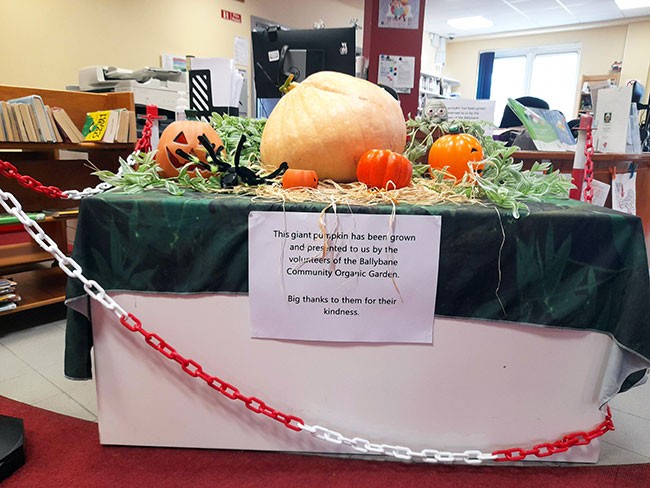
• The famous Ballybane Garden Pumpkin
Visitors on open days learn about the nutritional benefits of the produce that comes from a soil that has been nurtured with seaweed and homemade compost from organic waste of the previous year’s weeds and vegetable cuttings.
Community gardens lead to community development. Volunteers are in the open air with weekly tasks. A person soon discovers their strength and capabilities in working in the garden. I particularly like weeding! There is great pleasure standing back and seeing your plot clear of weeds and the plants growing freely. There is a great sense of achievement. I am only coming to the end of my garlic hoard from last June.
The national organisation for community gardens has been in existence since 2011 and is growing. They support and promote community gardening in Ireland and the North of Ireland. The evidence-based benefits from the gardens are many, from the proven physical, mental health and wellbeing benefits to educational, environmental bio diversity and cultural gains.
It is a place for all nationalities to mix and learn from each other. It can contribute to reducing anti-social behaviour and therefore making communities safer. They reduce CO2 emissions with estimates of between 2kg and a 5kg reduction for every kilogram of vegetables produced.
So now that you have read this, maybe you would like to get involved? It is easy. You will find your local Community Garden through your Local Council by asking them for a contact person’s information.
Bernadette Colgan is a committed weeding enthusiast!