

30 May 2024 Edition
Remembering Volunteer Julia Morrissey
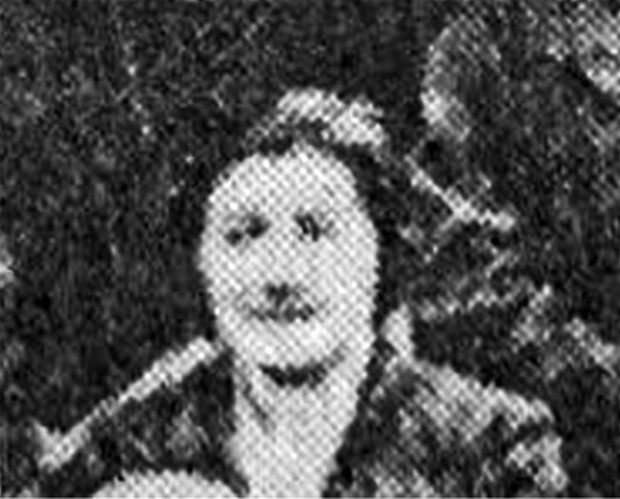
• Julia Morrissey
The key involvement and contribution by many Irish women in the revolutionary period is being reclaimed. Maeve Arbuckle profiles Cumann na mBan Commander Julia Morrissey

All republicans will recognise the iconic opening line of the 1916 Proclamation.
“IRISHMEN AND IRISHWOMEN: In the name of God and of the dead generations from which she receives her old tradition of nationhood, Ireland, through us, summons her children to her flag and strikes for her freedom”.
Revolutionaries of the Rising were fighting in no uncertain terms for a republic based in gender equality. This was the banner under which Julia Morrissey, commander of the Galway branch of Cumann na mBan, led a group of 50 women during the Galway Rising in 1916 when she was just 24 years of age.
Morrissey was staunchly committed to her republican ideals and opposed the Treaty which partitioned the country. She was a close friend and comrade of Liam Mellows. Mellows lived for a time in Morrissey’s house in Athenry and it was from there that he was arrested in 1916.
However, the revolutionary rhetoric of gender-based equality espoused by the leaders of 1916 faded from the conversation as the status quo of Partition was institutionalised by the Free State and subsequent Governments.
Indeed, in the period following the Easter Rising, the contributions to the cause of freedom by many Irish women were kept in the shadows, and eventually fell out of the collective memory of the revolutionary period.
Julia Morrissey is one woman whose memory has been subjected to this indignity. And sadly in Morrissey’s case, it is not only her memory which suffered indignities.
She was devastated by the loss of her comrade Liam Mellows following his execution in 1922. Morrissey had no immediate family in Galway, and less than 20 years after she founded Galway Cumann na mBan, she had been committed to the asylum in Ballinasloe due to mental ill-health, where she lived out the rest of her days until her death in 1974.
Galway historian Dr Conor McNamara says, “Julia’s later life reflected a society in which the unwell, the unwanted and the unlucky frequently fell through the cracks”.
This would characterise the experience of many Irish women throughout the 20th century. Women’s freedoms were strictly policed with limited economic opportunities, lack of access to divorce, contraception and abortion, and the underlying threat of coercive confinement in institutions such as laundries and asylums.
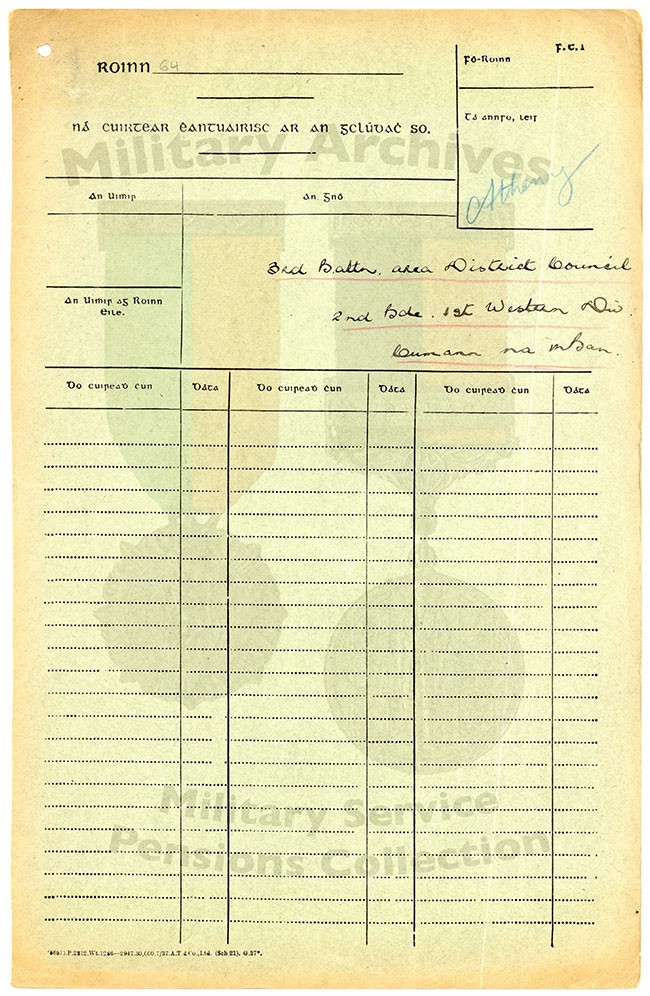
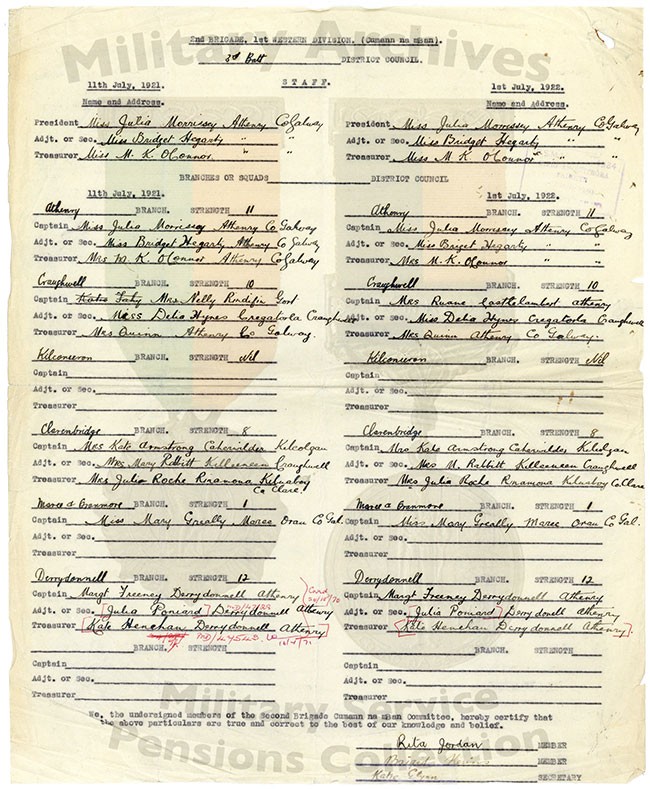
• Some of Julia Morrissey’s activities listed in the Military Archives - Military Service Pensions Collection
We do not have a record of what Julia’s experience of life in Ballinasloe asylum was like, but we can speculate based on the stories that have come out of these psychiatric institutions since. In the middle of the 20th century, Ireland locked more of its citizens away in institutions than any other country per capita. Conditions were overcrowded and gruesome. Asylums hid people’s problems away from the rest of society, rather than actually treating them.
A single woman without family in the locality, Morrissey was in a vulnerable position and at the mercy of the asylum system. Records show that an application for a military pension was posted to her in Ballinasloe, but was not returned. It is not clear if Morrissey was not able to complete the application herself, or if she, like Elizabeth O’Farrell, took a principled position to refuse the pension on the grounds that she did not recognise the State.
Not only are we limited in detail of Julia Morrissey’s life after being committed to the asylum, we also have very little focused research on her life as an active republican. Even in the collections of stories about Cumann na mBan in Galway that Galway County Council published in 2015, she is not featured prominently.
Some of Julia Morrissey’s activities were described in two of the first-hand accounts given in the book and she is noted as the President of the 2nd Brigade, 1st Western Division of Cumann na mBan 3rd Battalion and the President of the Athenry Branch.
Morrissey is often mentioned only as a footnote to Liam Mellows as they were such close comrades. It’s clear that this is not a full representation of what she gave to the republican movement.
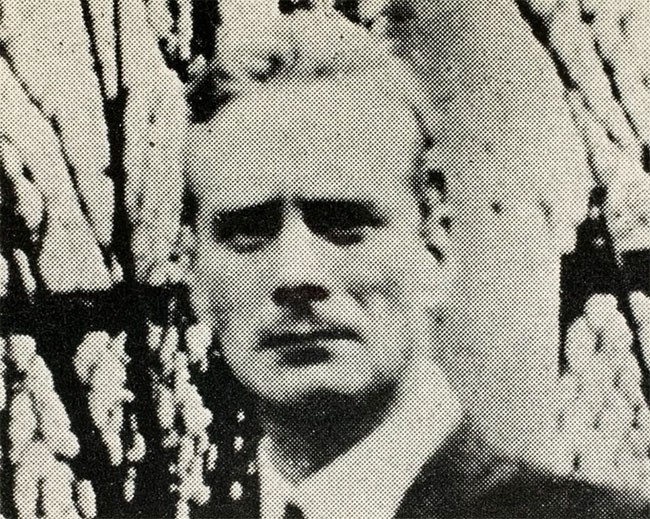
• Liam Mellows
In the months and decades following 1916, women who were active in the rebellion were sidelined into more ‘acceptable’ roles in retellings of the Rising. Women have been remembered for their roles as caregivers, nurses, and assistants in republican activity, when they are remembered at all.
We do not have to continue to accept the marginalisation and stereotyping of women’s contributions to history.
In 2017, Julia Morrissey’s grave was properly marked with a plaque recognising the role she played in 1916. On the 50th anniversary of her death this past March, we gathered at her gravesite in Athenry to honour her memory and reflect on our own role in bringing about the type of republic that she fought for over a century ago: one based on the goals of the Proclamation, rooted in equality, regardless of gender or background.
Maeve Arbuckle is Cathaoirleach of the Joe Howley Sinn Féin Cumann in Oranmore, Galway