


29 February 2024 Edition
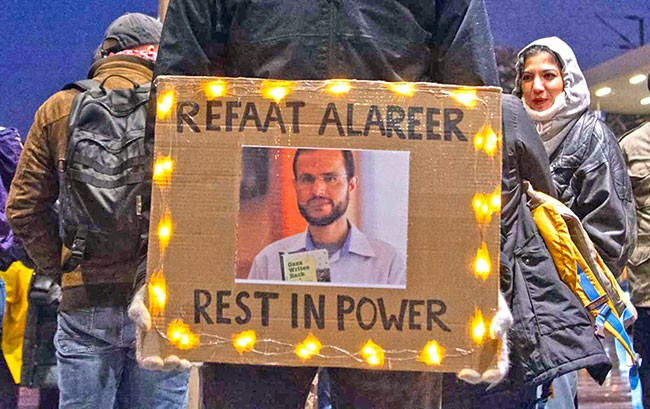
Remembering Refaat Alareer
Writer, teacher, thinker, intellectual, community worker and leader
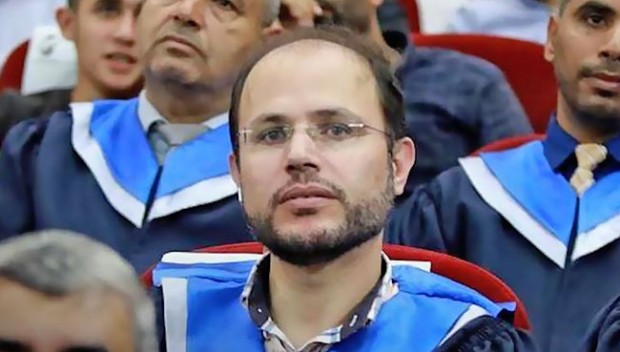
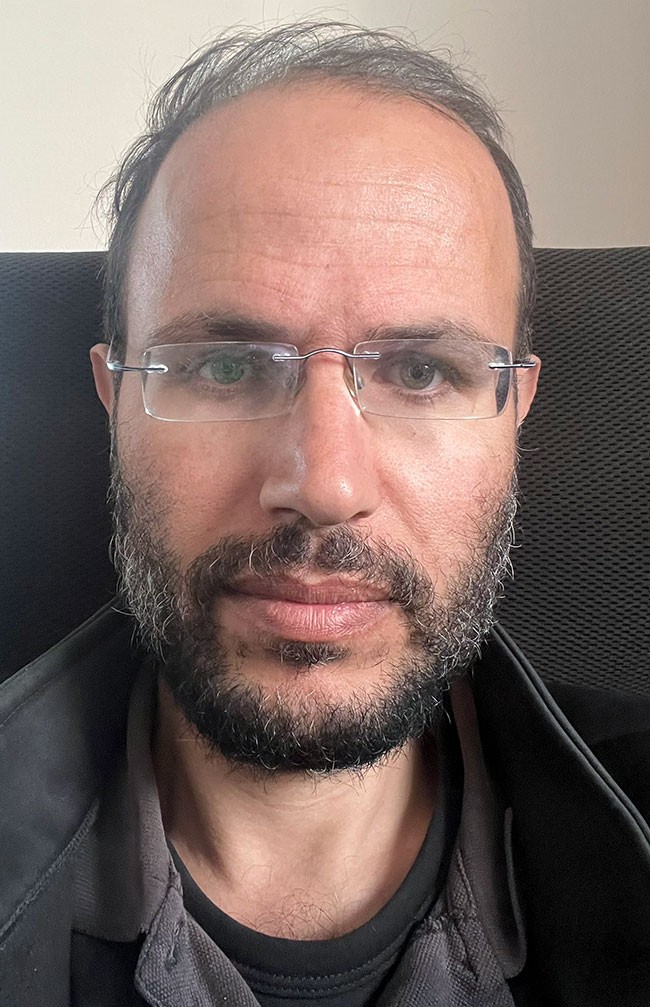
• Refaat Alareer
When Dr Refaat Alareer was assassinated on 7 December, the Israeli war machine took from the people of Gaza a man whose legacy will remain a living inspiration to Palestinians and the oppressed everywhere. The Israeli armed forces savagery that scars humanity rages on, with western funding, bombs, and political complicity. The response far and wide to Refaat’s death shows that it is Israeli barbarism which is losing. The reality of its brutality is now understood by more across the world.
The people who struggle the most have the most to say, their experiences forged through resistance in stories that the powerful don’t want to be heard. Some generations are blessed with those with special talents, who lead and inspire. Refaat was one such shining generational jewel for the Palestinians.
The Israelis knew his brilliance too, and so targeted and assassinated him. With their customary arrogant cruelty, they warned him online and by phone several times that they planned to kill him. He had been sheltering in a school, but fearing his presence would endanger others, he took refuge in his sister’s apartment in Shajaiya, a stronghold of Gaza’s resistance and the place where he was born.
The strike killed Refaat, along with his sister, her four children, and another brother. Refaat, 44, leaves a wife and six children, aged 7 to 21. Compare the poet and his killer; the Palestinian writer, teacher, thinker, intellectual, community worker and leader who inspired a generation – and an anonymous Israeli military moron mass-killer, directing a drone with a computer mouse to destroy life and beauty in a click.
Son of a labourer, Refaat’s academic brilliance shone early. A journey of study took him from Gaza, to London and Malaysia where he gained a PhD in English literature, then back to Gaza where he became Professor of Literature at the Islamic University of Gaza.
English he saw as providing a bridge between his beloved Gaza and its people to the wider world. For many, Refaat became the voice of Gaza through his writing and lectures and prolific presence online.
An intellectual powerhouse with the deep political cultural and understanding of Gaza, his skills could interpret for the world the experience and emotions of the Palestinian people. Refaat, I doubt ever held a gun, but his weapon of choice was the written and spoken word and his ammunition his intellect, eloquence, and beautiful writing. English gave him a much larger stage, helped by the internet.
Gaza produces legions of doctors, engineers, and thinkers. Every one of their academic achievements an expression of resistance in itself, given the obstacles they face from Israeli policies and aggression seeking to destroy them.
For that reason too, universities and schools have been destroyed by Netanyahu’s barbarians, soldiers cackling like jackals as places of learning and study are felled in controlled explosions by the yobs in uniform. While attacks on education in Afghanistan are condemned in the West, there’s silence about Israel using western-supplied weapons to do the same in Gaza.
Just as Ireland’s culture has been a well of inspiration for us, Gaza boasts its own rich and distinctive traditions too, in storytelling, music, and dance. The Dabke for example like a big céilí or set-dancing to jigs, reels and slides. From this rich culture, Refaat empowered many other young Palestinians in a community where education is nurtured and treasured.
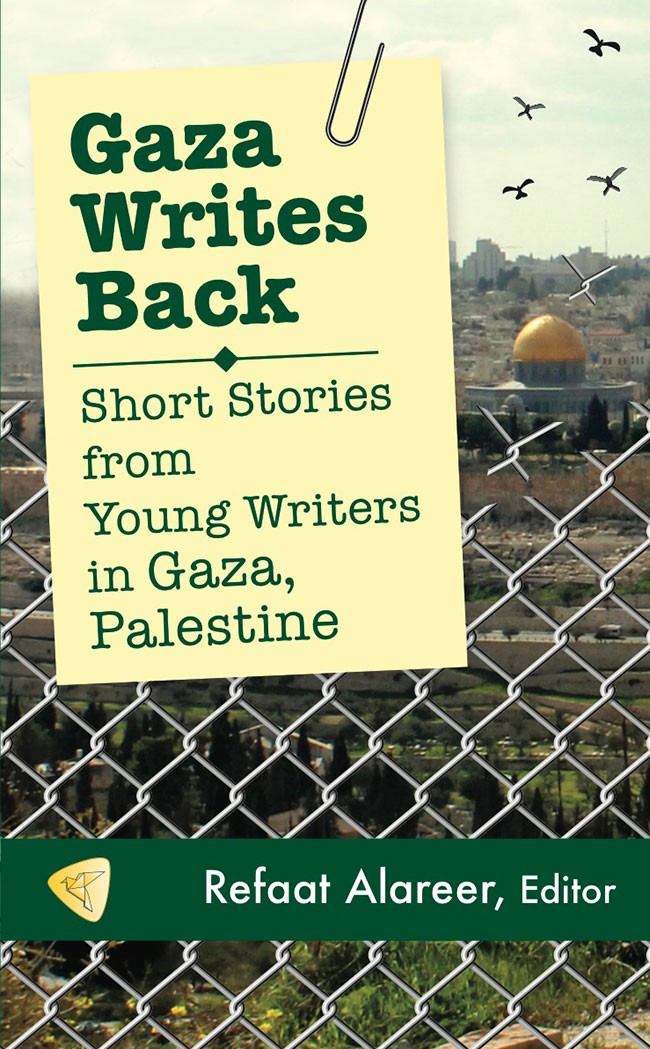
A master of the craft of writing and teaching, his brilliance will live on through his lectures and writings, but Refaat’s mission was to empower others. In the book of short stories, ‘Gaza Writes Back’, which he edited in 2014, Refaat contributes some of his own, but allows others to shine from its pages.
The book brought to the world the inspiring talent that has been forged in the written word by a community where resistance runs everywhere. In a place where simply existing has become in itself an act of defiance in the face of brutal genocidal war, the creative beauty of the stories written by his students is a supreme expression of resilience. Every word and line of each story shows how the Palestinian spirit burns, despite the western-sponsored Israeli brutality.
The book has more by women writers than men. “For the first time in the Palestinian struggle for independence, the young women take the lead in this form of resistance as female writers outnumbered male writers”, wrote Refaat, “Those young female writers who started as bloggers believed it was time to have their say and contribute to standing by their people against the cruelty of the occupation by any means possible.” Writers can therefore become warriors – harnessing the power of the mind as a weapon against oppression.
Refaat’s articles were published widely, and he was a writer for the Electronic Intifada, the resistance website with a wealth of information, news, and discussion essential for those interested in the Palestinian people and their struggle.
A commemorative online session it hosted for Refaat days after his death ran for hours. Tributes of wonderful eloquence in the English language flowed. The words of his many former students a living testament of Refaat’s life’s work. As one young writer said so powerfully, “When they killed Refaat, they created thousands of new Refaats”. People like him inspired by Refaat to write, the soul and spirit of Gaza speaking to the world with a voice heard above the language of Israeli government aggression, which speaks with missiles and 2,000 pound bombs.
My own contact with Refaat began via a friend in Gaza after reading a stunning piece he wrote for the New York Times on Israel’s war in 2021. I needed that day an essay of around 1000 words to describe the situation there for a radio programme. Telling me he’d never done a piece for radio, I was nervous with the deadline later that day. I need not have worried, an email came back just a few hours later with an essay of the most beautiful, exquisite writing, a master at work. He recorded his piece into an iPhone and sent it by email.
“It’s the Blitz all over again. It’s a tsunami. This is Gaza. After 11 days of Israeli nonstop bombardment, it is quiet now in Gaza. We can hear the sparrows. The stray dogs, the street vendors, and the Israeli drones ploughing their way into our nights and thoughts,” his piece began, his voice heard across Ireland and beyond.
I read it back just this week. That war provoked serious international concern, but the casualties then for that entire war – 256 – are now often exceeded in just a single day, a measure of the barbaric racist violence Israel is inflicting on the people of Gaza.
When we spoke, he had deep knowledge of Ireland, saying Irish history and solidarity from Ireland for Palestine gives strength and inspiration to his people. He told me that he was inspired by Ireland’s “rebel songs” and the defiance they express. During air raids back then, his family played the songs at home as Israeli bombs and missiles fell nearby. I asked him his favourite, “Go on home, British soldiers. Go on home”, he replied. “The Brits are replaced with Israelis in the Gaza version,” he laughed.
We kept in touch, and I’d send him links or photos of Irish-Palestinian solidarity. But when the present war began, there could be long silences before he’d respond, an experience I have had with other friends there too, not least due to Israel shutting off internet communications to Gaza.
At times I feared the worst, particularly after online rumours early in the war that he’d died when a relative’s house was targeted. But then he reappeared, like the spirit of Palestinian resistance which cannot be extinguished. So, when more reports swirled online in early December, I hoped it would be the same, but this time, the dreadful rumours were true. “They have taken Refaat from us,” wrote one, as the tributes began to pour in online.
Refaat was a volunteer at the Gaza Zoo - his final appearance on television was in an Al Jazeera report about the animals there, in which he described how many had died or had become demented or were starving due to Israel’s war.
My last message to him – a fine piece in the Clare Champion by Dr Tomas Mac Conmara about the Palestinian cause – was sent on the day he died and was unopened (This article is also carried in this issue of An Phoblacht see page 26).
The dream of one day bringing him to Ireland will not now happen, but his spirit lives with us. He knew his writing put him in the crosshairs of murderers, and penned a poem about what we should do if he died. ‘If I Must Die’, recorded online by Scottish actor Brian Cox, says it all. Let it be a story. Ar dheis Dé go raibh a anam dílis.
'If I Must Die'
by Refaat Alareer
If I must die,
you must live
to tell my story
to sell my things
to buy a piece of cloth
and some strings,
(make it white with a long tail)
so that a child, somewhere in Gaza
while looking heaven in the eye
awaiting his dad who left in a blaze —
and bid no one farewell
not even to his flesh
not even to himself —
sees the kite, my kite you made, flying up above,
and thinks for a moment an angel is there
bringing back love.
If I must die
let it bring hope,
let it be a story.