


31 August 2023 Edition
Ireland needs an energy revolution
• From 2001 the ESB shifted from being a socially-minded provider of an essential public good to a profit-oriented enterprise
In the midst of a climate and biodiversity crisis, and at a time when there have been repeated amber alerts on our electricity grid, when energy prices have been brutally high and when rates of energy poverty have been at unprecedented rates, it is clear that transformational change is needed in the Irish energy system.
Market-driven chaos has reigned for far too long. Over the last 18 months, war in Ukraine and the energy crunch in Europe have exposed the danger of market vagaries combined with an almost absolute dependence on fossil fuel imports.
It is now more urgent than ever that we need to wean ourselves off fossil fuels and on to clean, green, renewable energy. It is more urgent that ever and more apparent than ever.
We in Sinn Féin recognise the importance of this energy transition from fossil fuels. It is an essential part of our climate obligations and it makes absolute sense for our country – socially, economically and environmentally.
We need an energy system that rapidly reduces emissions and that meets the demands of local communities and industry. We must ensure the lights don’t go out. Equally importantly, from our perspective, we must ensure that ordinary workers and families can afford to turn the lights on in the first place. Better again, we must ensure that those same workers and families are a primary focus – in terms of inputs and benefits – of our new energy system. This energy transition must be ambitious and it must be just.
Sinn Féin would ensure that the move from fossil fuels to renewables on our energy system delivers long-term social and economic benefits for all in Irish society, ensuring that natural resources are translated into national wealth.
We know this transition will require significant public and private investment. This investment must be leveraged in a manner that delivers for families and communities across the island.
Our abundant offshore wind resource alone, if properly developed, will meet our island’s total energy demand many times over, meaning we can export surplus (most likely in the form of hydrogen, ammonia or through interconnection). Sharing the benefits of the energy transition and delivering more affordable energy is at the heart of our ‘Vision for Renewable Energy’ plan to deliver a just transition and to secure our energy into the future.
‘Rip-off Ireland’
Recent figures released by Eurostat show a continued slide in Irish living standards compared to other European states, a downward trend beginning in 2011 when Fine Gael entered government. Workers and families are struggling to cope.
Alongside the crises in housing, health and elsewhere, the cost-of-living crisis continues to rage. Sky-high energy bills are a major part of this.
Household energy costs have more than doubled over the last two years; the average home now pays around €2,000 a year for electricity alone. In the 12 months to March, overall energy consumer prices rose by an eye-watering 72%. Over the same period, wholesale energy prices decreased by 50%. Compared to European counterparts, the picture is even more bleak.
Last year, Ireland had the 7th highest electricity prices in Europe. Since then, we placed 3rd highest in the EU, with prices having shot up by 41%. They now stand a staggering 48% above the European average.
Unsurprisingly, the number of households in arrears has risen dramatically. Between February and May this year, they rose by over 10%, from 364,131 to 405,997. Consequently, energy poverty now impacts a devastating 1 in 3. SVP reported a 40% increase in energy related requests in 2022, rising to a 50% increase so far in 2023.
How did we get here?
One reason lies in energy system mismanagement by successive governments. This has not only jeopardised an ability to take advantage of our renewable energy opportunities, it has also resulted in energy security and affordability being decimated and national wealth sold off.
The failure to sufficiently invest in clean, indigenous energy – in onshore and offshore wind, and solar at residential, community/industry and utility scale, for example – has left us dependent on imported fossil fuels and excessively exposed to the negative impacts of global market shocks.
Likewise, excessive reliance on the private sector fails to ensure that the benefits of the energy transition will be adequately translated into long-term benefits for Irish society. While successive governments pursued data centre expansion instead of investing in state-owned renewables and enhancing grid capacity, they also implemented an aggressive privatisation of the energy sector here. This liberalisation has had a disastrous impact on ordinary workers and families, resulting in the decline in the social value, affordability, and security of energy resources.
Household electricity prices in the 26 Counties, excluding taxes and levies, gradually went from being one of the lowest in Europe to amongst the highest. Further, post-liberalisation, the ESB’s dwindling market share resulted in a radically decreased surplus available to invest in public services.
The ESB shifted from being a socially-minded provider of an essential public good to a profit-oriented enterprise. To bring about a ‘free’ market in electricity, the ESB was forced to artificially inflate its prices to attract competitors into the new market. Its statutory requirement to operate on a not-for-profit and break-even basis was repealed in 2001, translating into sky-rocketing energy prices and increased disconnections.
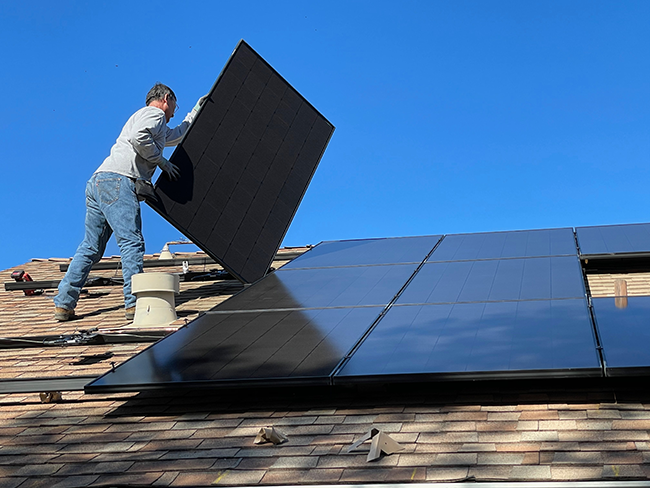
• We have the potential to become a world leader in renewables, to be entirely self-sufficient, independent and more, to be a major exporter in clean energy
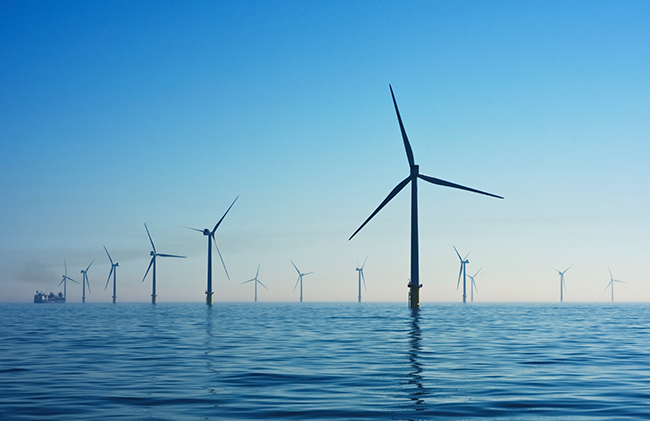
Market liberalisation furthered the interests of private enterprise. The ESB went from owning and operating 96% of the installed generation capacity in 2001 to 54% by 2013. ESB now holds less than a third of the share of generation in the all-island market, falling from 33% to 31% in 2021-22.
Systematically selling off national assets was presented as an EU requirement and means of delivering more affordable electricity. Neither is remotely true.
If this rampant privatisation wasn’t bad enough, successive Fianna Fáil and Fine Gael-led governments have also failed to develop our incredible indigenous renewables potential in wind and solar. A long list of missed opportunities means we’re behind our international counterparts in developing a secure and clean energy supply.
The state’s energy security is further threatened by significant gaps between energy supply and demand here. Data centres, as a particular and notable case, have increased their power consumption by an astounding 31%, meaning they now consume almost one fifth of all electricity generated. Seven years ago, this figure stood at 5%. To put this into context - overall energy consumption has risen by 20% over the past seven years whereas for data centres, consumption rose by an eye-watering 400%. Unsurprisingly therefore, there were more amber alerts on our electricity grid in 2022 than in the previous five years combined!
Despite the dire situation, the government seems determined to continue a ‘business as usual’ approach. They act as mere commentators when energy companies do not pass on wholesale price reductions despite them coming down among other EU states. (Even the Central Bank and the ESRI have referenced Ireland’s lag.) Opposition to holding energy companies to account remains steadfast. Apathy and lethargy similarly define progress on renewables and electricity generation. Targets, even ambitious targets, are set, yet the fundamental building blocks in grid, ports and planning reform remain undelivered. Ireland deserves better.
Realising an unprecedented opportunity through fundamental reform
With spectacular natural resources, particularly in offshore wind, Ireland has the potential to become a world leader in renewables, to be entirely self-sufficient, independent and more, to be a major exporter in clean energy. Unlike, Fianna Fáil, Fine Gael and the Greens, Sinn Féin would not squander this opportunity. The potential for a United Ireland to be energy secure and independent is immense. Reduced emissions, quality jobs in every corner of Ireland, new export opportunities, new local energy economies, and lower electricity costs for workers, families and businesses are just a handful of the reasons we need a step-change.
Increased community, state and domestic-owned renewables
Sinn Féin would fundamentally reform our liberalised energy sector. We would increase community, state and domestic-owned renewables. We would reform the current, regressive, public service obligation (PSO) and increase direct state investment in renewables. This would allow us to meet climate targets while delivering wider social and economic benefits for workers and communities. We would democratise our energy system. Such ownership models better retain, recirculate, and reinvest wealth generated within the state and local communities, rather than siphoning off profits abroad or to corporate shareholders. We would increase the target of community owned renewable energy projects to at least 10% of new capacity by 2030.
Empowered semi-states
Sinn Féin would also revise the dividends policy of energy sector semi-states. We want to increase the level of reinvestment into renewable energy in this decade. This would strengthen our semi-states and allow them to capture a larger share of overall new green energy production, improving our energy security. It would also position these companies to return dividends to the taxpayer from green energy generation in the future.
Solar – power to the people
From the publication of the Microgeneration Support Scheme Bill in 2017 by then spokesperson Brian Stanley TD, to the Planning and Development Regulations (Amendment) (Solar Energy for Schools and Community Buildings) Bill and the proposal for solar for schools in our Alternative Budget last year, Sinn Féin has consistently set the agenda on solar energy.
Sinn Féin would realise Ireland’s solar energy potential to generate long-term benefits for workers and families – making solar accessible to all, delivering reduced bills and allowing people to positively contribute to the electricity grid (and to make some money while doing so). As part of our ‘Fairer Retrofit Plan’, we would increase the budget for solar PV and introduce tiered grants, ensuring those on lower incomes have full access to benefits.
A fit for purpose planning and regulatory system
To address Ireland’s stubbornly high energy prices, Sinn Féin would strengthen the staffing, resources and mandate of the utility regulator, the CRU. An urgent review of the hedging strategies and standing charge policies of energy companies is required, for example. We would ensure that the CRU has the capacity to regulate these practices, so energy companies cannot profiteer while households suffer.
We would also rapidly reform the planning system. We live in a democracy and recognise that the planning system must always protect citizens and communities. Our current system is slow, adversarial, and racked with uncertainty, however. Planning authorities lack adequate staffing and resources.
To address this, Sinn Féin would properly resource state bodies and stakeholders involved in the environmental planning process, ensuring that they can effectively carry out their responsibilities. We would also establish a dedicated Environmental Court to ensure that legal challenges are dealt with in an appropriate time frame.
Ireland cannot afford more delays, stops, and starts or stunted progress. The destination is clear, and Sinn Féin has the roadmap to get there. This process will not be without challenges, but it also provides us with immense opportunities. We must seize Ireland’s potential and become a world-leader in renewables and leverage it to deliver just and equitable outcomes for all.
• Darren O’Rourke is a Sinn Féin TD for Meath East and is the party’s Dáil spokesperson on Environment & Climate Action