

31 August 2023 Edition
Back to school costs – crippling families across Ireland
Across Ireland, families are sending children back to school this month and worrying about the range of hidden costs in what is supposed to be a free education system. Pat Sheehan, Sinn Féin Assembly spokesperson on Education, outlines the steps that could be taken to tackle and significantly lower uniform costs in the Six Counties. He highlights the possibility of Sinn Féin legislation to reduce costs if the Assembly is restored.
Sorca Clarke is Sinn Féin’s Dáil spokesperson on Education. She outlines the motions and actions the party has taken over the last two years to tackle a range of education cost issues including uniforms, school transport, and school meals.
• — • — • — • — • — •
School policies must make uniforms affordable
By Pat Sheehan
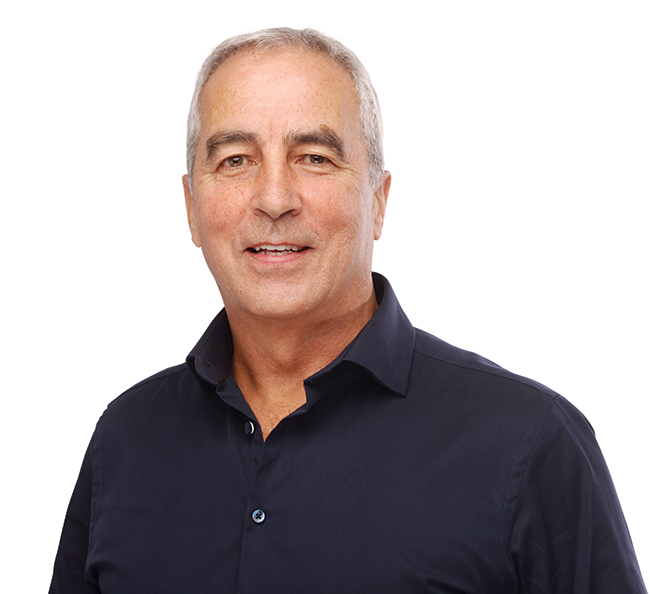
• Sinn Féin Assembly Education spokesperson, Pat Sheehan
In the last weeks of summer, hard-pressed parents, already struggling with the cost of living crisis, will face further financial hardship trying to afford back to school costs.
In its annual ‘School Costs Survey’, the Irish League of Credit Unions (ILCU) found that 20% of parents say they sacrifice spending on food to cover the costs of their children going back to school. The ILCU survey also found that uniforms are the single biggest expense for parents during the school year followed by lunches and then transport.
Research from the Parent Engagement Group in the summer of 2022 found the average cost of a post-primary school uniform in the North was £378. With inflation running at around 10% over the last year, parents are facing a significant increase in the cost of a uniform that will have a considerable impact on household budgets and family life.
The means tested uniform grant available from the Education Authority amounts to £61.20, a fraction of the average cost, for post-primary students under 15. This falls well below uniform grants that are available to parents of post-primary school children in other jurisdictions on these islands.
The outworking of all of this is that families who are already suffering most as a consequence of the cost of living crisis will be most heavily impacted by back to school costs.
Currently, the responsibility for uniform policy in individual schools lies with Boards of Governors, albeit in the context of non-statutory guidance from the Department of Education. However, in many instances, Boards of Governors choose to ignore the guidance from the Department in regard to uniforms. In some cases, they have included items on their uniform lists that are totally unnecessary.
Compounding this problem, some Boards of Governors direct parents to use a single supplier of uniforms, leaving them no choice of purchasing cheaper alternatives on the high street. Moreover, some schools, particularly - but not exclusively - in the grammar sector, insist on branded PE clothing. This not only adds additional expense, but also acts as a barrier to some young people attending particular schools because parents know the cost of uniforms and PE gear would be beyond their reach. Schools should be adopting uniform policy that aims to make uniforms as affordable as possible and avoids expensive add-ons.
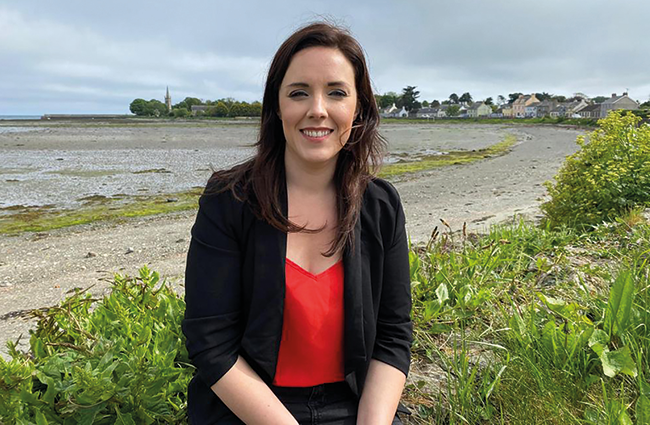
• Sinn Féin MLA Cathy Mason is working on legislation that would make school uniforms and PE gear more affordable for all families
Instead of Boards of Governors having the prerogative to ignore departmental guidance, we want to see statutory guidance that requires schools to have competitive tendering processes, to remove the use of unnecessary branded items, and to permit the use of cheaper high street alternatives.
Sinn Féin MLA for South Down Cathy Mason is working on legislation that would do this and make school uniforms and PE gear more affordable for all families. It is our intention to progress this legislation once the Executive is re-established.
We also want to see the Education Department’s review of the current uniform grant delivered urgently. No family should have to suffer financially in order to send their children to school or to ensure they can access the education they deserve.
• Pat Sheehan is a Sinn Féin MLA for West Belfast and Assembly Education spokesperson.
• — • — • — • — • — •
Free education is a myth
By Sorca Clarke
There is not a household with school age children who aren’t looking at the back-to-school list and wondering where exactly is the free education espoused in the Constitution and under legislation.
The reality is profoundly different. In short, free education is a myth. What is not myth is that those same families, back-to-school list in hand, are also juggling sky high rents, mortgage interest increases, and an inflation rate, viewed over a five-year period, that has risen by 12.9%.
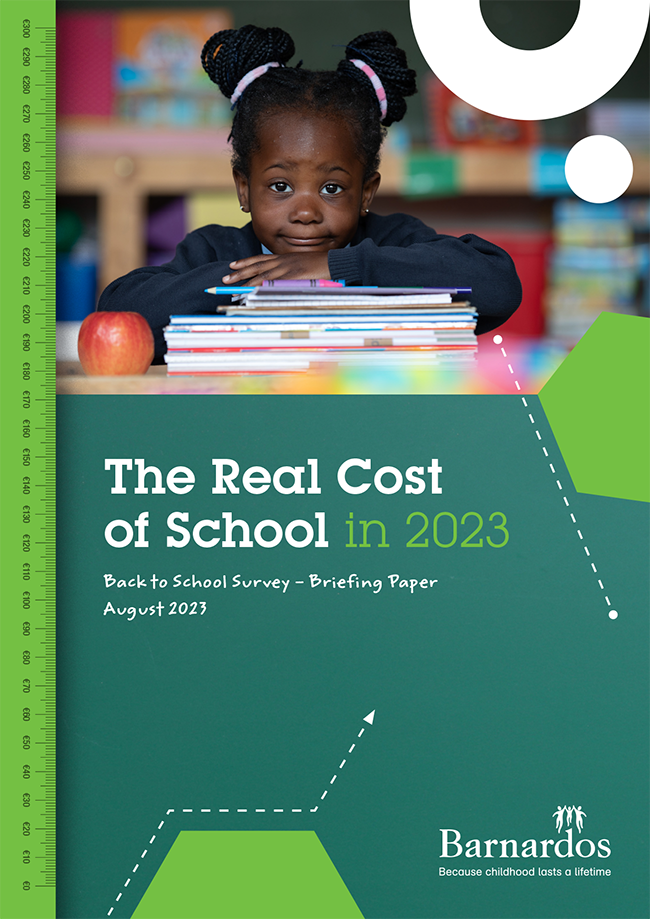
This is at a time when the 2023 Barnardo’s Back to School survey highlights the average cost of the basics needed for a fourth-class pupil is €320, a first-year pupil is €972, and a fifth-year pupil is €863. Each and every one of those costs will be felt sharply, putting already hard-pressed parents to the pin of their collar.
In the months since becoming Education spokesperson, I have met with the wide spectrum of stakeholders in the sector, from students and parents to education providers and teacher representatives. While each stakeholder brings to the table their own priorities as expected, there are many commonalities, one being the need to ensure that every child has equal access to education.
There is an appalling legacy of underfunding by successive Governments in the education sector and it is this political refusal that has led to our schools becoming over-reliant on parental funding to bridge unacceptable gaps.
This year alone, schools have seen their funding schedule change numerous times with one particular grant, the ICT Grant to improve schools’ digital technology infrastructure, disappearing entirely and unlikely to be provided to schools until January 2024 despite expenditure having already been incurred by many schools.
Last October, the OECD’s ‘Education at a Glance’ report stated clearly that this state lags way behind when it comes to investing in education as a measure of GDP. This is beyond shameful.
In June, Sinn Féin introduced a Dáil motion on education costs, calling on the government to expand the Schoolbook Grant Scheme to post primary schools in Budget 2024. We welcomed that the government did not oppose this motion,
Our ‘Education (Inclusion of Persons) Bill 2023’ would require the National Council for Special Education and the Department of Education to properly forecast and plan for the number of school places needed for children with special educational needs.
It will also require school management boards to consider how to support children with special educational needs, and for board members to undertake training in disability rights.
Last year, Sinn Féin introduced the ‘Affordable School Uniform Bill 2022’ to address one of the biggest back-to-school costs for families. It is illogical to think that sewn-in crests result in better learning outcomes compared to a sewn-on crest.
We also introduced the ‘Education (Voluntary Contributions) Bill 2021’ to ensure that no child is stigmatised or denied opportunities because their parents are not in a position to make a contribution. Our aim is to eliminate parental contributions through higher capitation directly funding schools. To do that effectively, this Bill would see the Comptroller and Auditor General report on how effective exchequer spending alone is in meeting all reasonable operating costs of schools.
Crucially, the Voluntary Contributions Bill sets out a pathway for bringing about an end to voluntary contributions for good once capitation levels are adequately restored by Government and ensure transparency during this phase by placing an obligation on schools and the Department of Education to publish the total amount collected in voluntary contributions, and how this has been spent in each school.
The Governments review of the School Transport Scheme has been ongoing since February 2021 with no end in sight. Every year, the scheme is significantly oversubscribed and instead of harnessing this demand, thousands of children are turned away, which is totally at odds with our climate ambitions, and results in thousands of extra private car journeys to and from school each day.
For those in rural Ireland, where public transport can be essentially non-existent, this causes huge problems for families who are trying to juggle their work commitments.
With a modern school transport system, we can cut transport emissions and reduce dangerous traffic congestion outside schools, all while providing a convenient method of transport for children - a win-win for parents, guardians, students, and for the environment.
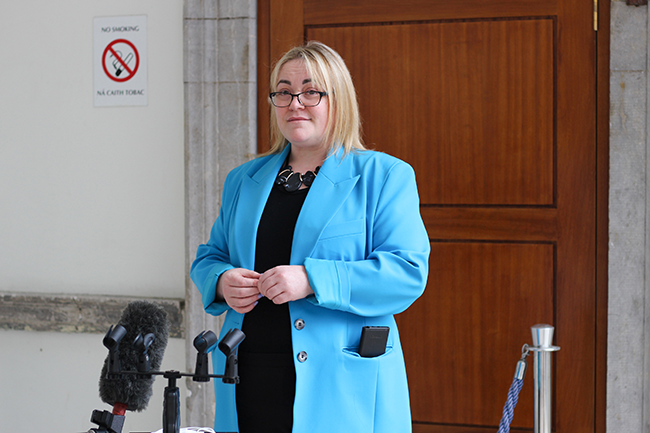
• Sinn Féin Dáil Education spokesperson, Sorca Clarke
We also need to address the pupil-teacher ratio. Sinn Féin wants to abolish all classes of over 30 kids and never allow them to return, and work towards attaining the EU average of 20 children per class. The INTO has continually campaigned for a reduction in average class size and evidence shows that pupils do better and are better served with smaller class sizes.
Teaching methods have changed substantially in recent years and when class numbers are more reasonable, modern teaching methods work more effectively and teachers can spend the time needed with children. This is particularly important for children with additional needs and those from disadvantaged communities.
There are many challenges facing the Education sector, none of which are insurmountable with the political will. However, this and previous governments have shown that they are simply not up to the task.
Sinn Féin is clear on what we would do to ensure that education is free, accessible and that schools are properly funded. We would introduce affordable school uniforms, expand the School Transport Scheme, ensure that every child has access to a hot meal in school, extend the School Book Grant Scheme to post-primary schools, and stop families being pressured into paying voluntary contributions.
• Sorca Clarke is the Sinn Féin TD for Longford-Westmeath and Dáil Education spokesperson