

26 March 2020 Edition
Football freedom fighters
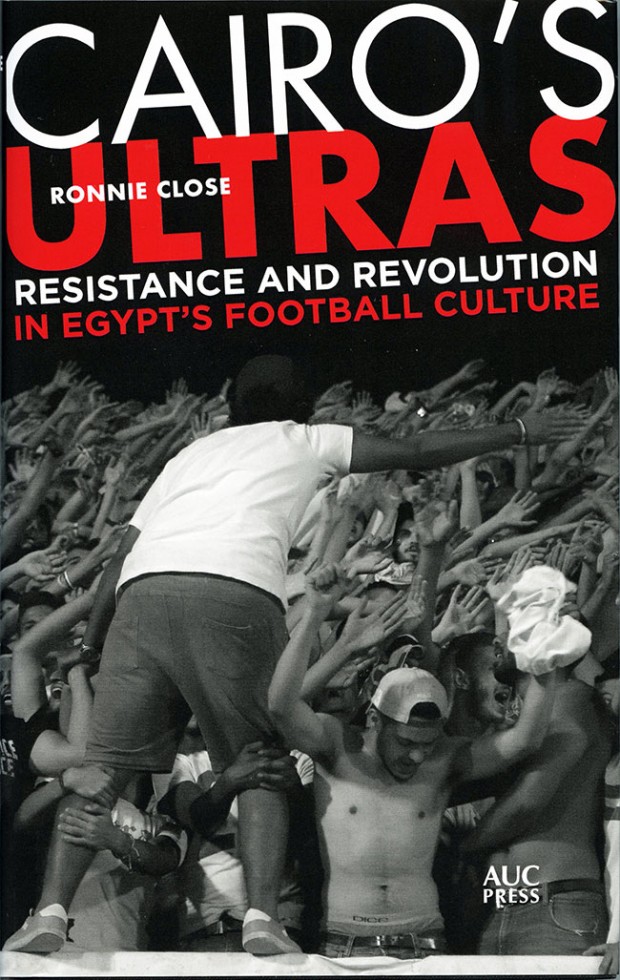

Cairo’s Ultras: Resistance and Revolution in Egypt’s football culture
By Ronnie Close. Published by the American University in Cairo Press, €29.95.
The first inescapable conclusion from reading Ronnie Close’s Cairo Ultras was the need to rethink the idea and meaning of being a football fan. I know many diehard soccer fans, from Sinn Fein councillor Larry O’Toole’s devotion to Bohemians and some friends and colleagues who are waiting in expectant righteousness for Liverpool’s first premiership. And then there are the myriad of republicans who have an unconditional support for Glasgow Celtic.
But, accompanying this is a parasitic commercial soccer corporate business culture, which has built in some leagues multi million euro profits from merchandising and marketing a sanitised soccer fandom to the masses. We can buy the replica kit and pretend from afar to be a fan. And then there are the actual fans who turn up in victory and defeat, on the rainy cold winter days to support their team.
Cairo’s Ultras is a story delicately unwrapped by Dr Ronnie Close, who in full disclosure, was An Phoblacht’s photographer in a previous life. The book tells the story of soccer fans who have been beaten, murdered and suppressed by the political regime in Egypt. There is also some great photo documentary work by Close in this book.
These soccer fans show a resilience and belief in their teams found increasingly less in the sanitised football culture of EUFA and FIFA, where any display of politics or overt fandom is deemed unacceptable.
Close tells the short history from 2007 to 2018 of two groups. They are Ultras Ahlawy and the Ultra White Knights fans of the al-Ahly and Zamalek soccer clubs. These clubs have a complicated history. In particular, al-Ahly played a role in the emergence of Egyptian nationalism and an independent state in the 29th century. The two groups share a soccer ground in Cairo.
For many of us, the story of Egyptian domestic soccer exploded into life with the massacre of 72 al-Ahly fans on February 1st 2012. Close goes into depth on the days leading up to this incident and the repercussions afterward when the allegations of state collusion in the killings grew. He sums this up writing, “for many ordinary Egyptians Port Said symbolised the disintegration of the ideals that came to life with the 2011 uprising”.
According to Close the Cairo Ultras had played a significant role in the Tahir Square protests that symbolised the Arab Spring reaching Egypt. The Ultras had protected the protesters from the Egyptian police and military and ultimately helped, albeit temporarily, to topple the corrupt brutal regime of Hosni Mubarak.
From the early days of the Ultras emergence in 2007 they were met with hostility and repression by the Egyptian state. Their chants, posters and banners were perceived as a threat. They had in the years up to the Tahir protest experienced frequents beatings, imprisonment and torture by the Egyptian police. In 2015, new emergency laws prohibited the public assembly of the Cairo Ultras and the groups were reclassified as a ‘terrorist’ organisation.
Close’s book is a great read and jumps between excellent telling of the history of the Cairo Ultras to the analysis of football sub-cultures. This is where for me the work shows incredible depth in the analysis. Close weaves in the theories of a range of philosophers and writers on culture, sport, contemporary society and repression to create an excellent piece. He creates an alternative version of Ultra culture, very different from the views we get in western media.
He sums this up with a quote from Isaiah Berlin, “Freedom for an Oxford don, others have been known to add, is a very different thing from freedom for an Egyptian peasant”. The second conclusion from reading Close’s Cairo Ultras is that I need to be a better fan.