


13 November 2016
British Government is mocking victims’ families on legacy issues
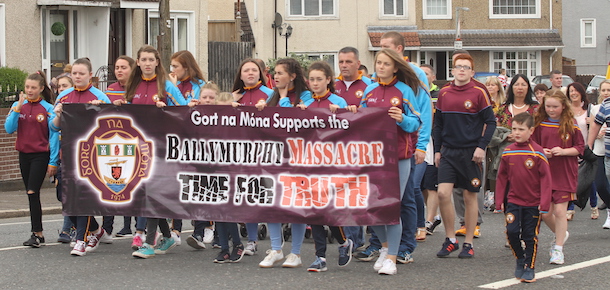
● How can details of the British Army massacre of unarmed civilians in Ballymurphy in 1971 affect national security today?

Sinn Féin has submitted proposals on how to end this impasse – the British Government should answer publicly why it rejects that template
SINN FÉIN tabled a motion in the Assembly last week on legacy inquests in an attempt to secure cross-party political consensus on this standalone issue based on proposals from the North’s Lord Chief Justice.
The unionist parties voted to defeat our motion.
This was a missed opportunity to demonstrate cross-party solidarity with the families directly affected by the denial of legacy inquests.
In October 2015, the Assembly debated a Sinn Féin motion which called for our coronial court system to be resourced to function in a timely and effective way and to also address outstanding legacy inquests.
There was agreement during that debate that victims’ families deserved the support of our local political institutions in having access to the necessary coronial mechanisms – properly resourced legacy inquests being key to that.
In the previous ten years, only 13 legacy inquests have been heard.
.JPG)
● Taoiseach Enda Kenny lays flowers at the Ballymurphy Massacre Memorial in Belfast last year when he met families
Later, in November 2015, the Fresh Start Agreement (FSA) approved a framework to deal with the past, including the priority of legacy inquests.
The FSA created the potential for victims to effectively pursue truth recovery and justice for their relatives.
It opened a door to hope for victims’ families.
During those negotiations, however, the British Government withdrew the political commitment it made in 2014 to ensure maximum information would be given to families.
It insisted on having a “national security” veto and refused to draft appropriate enabling legislation.
That’s the reason for the current impasse on legacy issues.
It is directly attributable to the negative influence of the British Ministry of Defence and Security Services MI5/MI6 over British Government policy.
The effect has been to compound families’ disappointment and anger.
And the impact of this veto affects all sections of the community, both unionist and nationalist.
Victims’ families are still being failed – and for no good reason.
Sinn Féin has submitted proposals on how to end this impasse. The British Government should answer publicly why it rejects that template.
British intransigence is undermining the Fresh Start Agreement mechanisms agreed in 2015 to deal with the past.
“National security” is a smokescreen.
There is no arguable way in which disclosure of information about the actions of state forces or agents over 20, 30 or 40 years ago could undermine British national security in the present day’s geo-political context.
How can disclosure about details of the British Army massacre of unarmed civilians in Ballymurphy in 1971 negatively impact national security today?
Victims currently have no other option than to pursue the truth individually through the courts.
The only European Convention on Human Rights (ECHR) Article 2 compliant mechanism that exists in the North and is available to them is the legacy inquest.

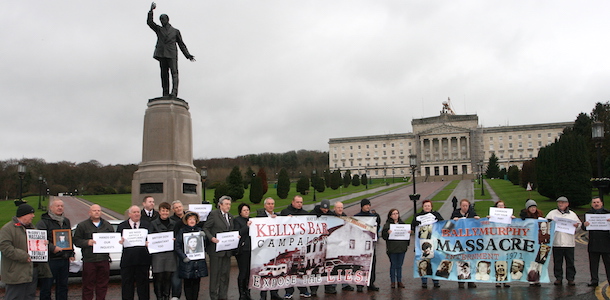
There are now 56 legacy cases relating to 97 deaths representing citizens from both unionist and nationalist backgrounds, including groups such as the Ballymurphy and Springhill Massacres and Kelly’s Bar families.
Last February, the Lord Chief Justice proposed to fast-track these cases which date back 45 years.
He believes this could be completed in five years with PSNI and Ministry of Defence co-operation, and with the necessary funding.
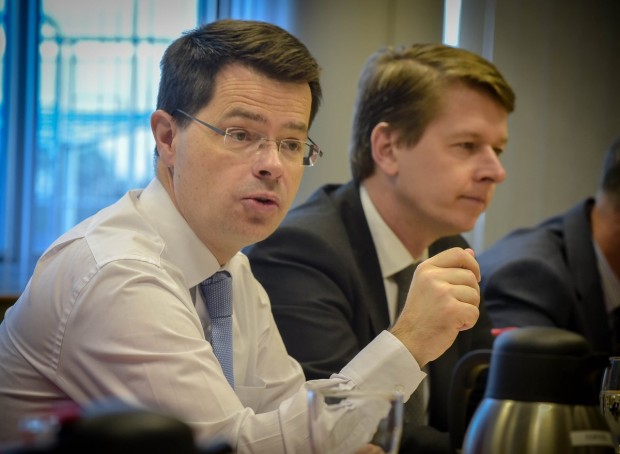
● British Secretary of State James Brokenshire – His government is now refusing to release the £150million it pledged in 2014 to deal with the past
The Lord Chief Justice has requested £25million in immediate funding, which he suggested could come from the £150million committed by the British Government in 2014 to deal with the past.
The British Government is now blocking this approach by refusing to release these funds.
It is using refusal by Arlene Foster’s Democratic Unionist Party to discuss the proposal within the Northern Executive as a bogus excuse for doing so.
The stance adopted by the British Government is an absolute disgrace.
Regardless of political disagreements within the Assembly or the Executive, the British Government has an international obligation to ensure timely and effective legacy investigations compliant with Article 2 of the ECHR.
After 45 years it is long past time for the British Government to ensure the coronial system here is capable of satisfying its Article 2 obligations.

● The Lord Chief Justice has consulted experts such as the Council of Europe Commissioner on Human Rights, Nils Muiznieks
As the Lord Chief Justice reminded us in September, the pressing need to make progress was recognised by the Committee of Ministers of the Council of Europe.
Its report in June said that it is essential for the British Government to take all necessary measures to ensure the legacy system here is properly resourced and staffed to enable investigations to be concluded.
The Lord Chief Justice has consulted experts such as the Council of Europe Commissioner on Human Rights, Nils Muiznieks, and the UN Special Rapporteur on Human Rights, Pablo de Greiff.
He has also engaged with victims’ families.
His approach has helped to restore a level of confidence in the criminal justice system in the North of Ireland.
He has found a solution to the crisis facing our coronial system and the lack of available legacy inquests.
British avoidance, evasion and rejection of its responsibility is blocking implementation of the Lord Chief Justice’s proposals.
Over one year after the Fresh Start Agreement, the British state is preventing a resourced and Article 2 compliant coronial system in the North.
As a result, more than 30 families from both nationalist and unionist backgrounds are now taking legal action against the British Government because it refuses to fulfil its human rights obligations.
It is an offence against common decency and an affront to human and democratic rights that these families must go to court to secure access to legacy inquests.
That would not happen in any other democratic society.
Just a few days ago, the British Secretary of State in the North, James Brokenshire, said his government will not be “rushing to artificial deadlines and timescales” to deal with the past.
His remarks are despicable.
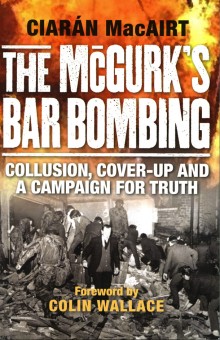
Add to that the revelation in the past few days that a British Army file on the McGurk’s Bar bombing by state agents 45 years ago is being kept secret into until January 2056!
There is only one conclusion to be drawn – the British Government is mocking victims’ families.
This shocking reality should concentrate minds.
The silence of the Irish Government is deafening.
Finding a resolution to legacy inquests should be above political or party differences.
The families being denied legacy inquests deserve to be shown that the resolution of this issue can transcend local political differences.
We all know that we don’t agree on the past but the blame game is a dead-end street.
So legacy inquests should be treated as a free-standing issue.
As more time passes, family members are beginning to die. Important witness evidence is being lost.
The British Government is playing for time.
It is a political scandal.
In human terms, another generation is being denied closure.
The Lord Chief Justice’s proposals are a roadmap to finding a solution for many families.
But continued failure to agree is to fail those families once again.
All the political parties in the North, civil and human rights advocates and campaigners, and the Irish Government should be working together to bring pressure to bear upon the British Government to release these funds and to meet its obligations.
This is about information recovery and justice.
It is about speaking truth to power.
It is also about restoring confidence in the justice system here in the North.
As the Lord Chief Justice said recently:
“We need to deal effectively with our past.
“We cannot do that if we leave any section of our society behind.
“We cannot move on while we remain under the shadow of the past.
“Nor should we.
“But time is not on our side.”
Time is not on the side of victims’ families.
Resolution on legacy inquests is urgently required.
That is what the families deserve.
That is what parties in the North and the Irish Government should ensure is delivered on their behalf.
Follow us on Facebook
An Phoblacht on Twitter
An Phoblacht Podcast

Uncomfortable Conversations
An initiative for dialogue
for reconciliation
— — — — — — —
Contributions from key figures in the churches, academia and wider civic society as well as senior republican figures