

1 November 2016
Brexit – Unprecedented challenges to jobs, investment, public services and political progress

The Tory Party – that has been rejected in every election in the North – has no mandate to negotiate for the people in the North
TOMORROW, in Dublin, political parties, economic and social organisations and other interested groups from across Ireland will meet at a conference convened by the Taoiseach to discuss the implications of the EU referendum and approaches to the upcoming negotiations.
This is a hugely important event which represents an opportunity to have an island-wide discussion on an issue which has implications for the whole of Ireland.
Such a forum is crucial because the Irish Government will have a
central role in the multi-layered negotiations on Brexit: directly with
the British Government and between the EU and Britain when Article 50 is
triggered.
In all of these negotiations it is crucial that the Irish Government represents
the national interest of all our people, of our interdependent and interlinked
economies North and South, and safeguards the advances of the Good Friday Agreement
and other Agreements.
Brexit presents enormous and unprecedented challenges to jobs and investment, to public services and to the progress and co-operation we now take for granted. It demands that we put the needs of our people and economy to the fore. That means ensuring that the benefits of EU membership are protected for the people of the North and that the Border remains open.
We are in a situation without precedent and without a clear outcome.
Everything is on the table in a negotiation that will be multi-layered and multi-faceted, involving not just London and Belfast but between the devolved governments, the Irish Government and the EU.
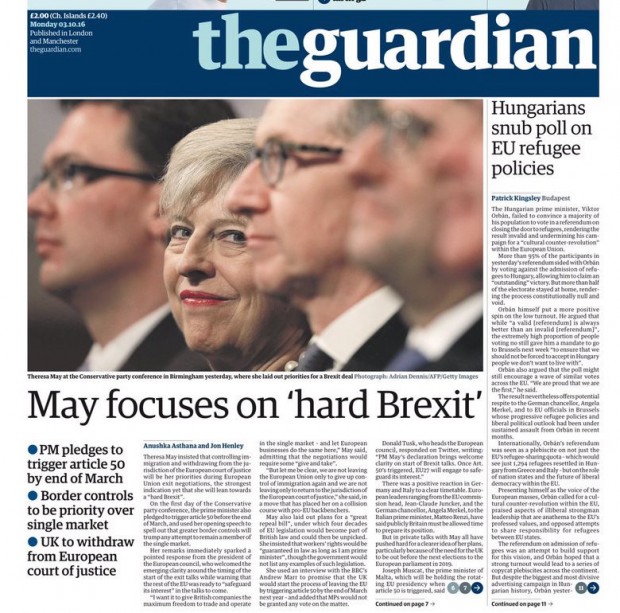
It is also clear that the Tory Government at Westminster is
struggling to develop a coherent approach. This is no surprise given the
nature of the “Leave” campaign, much of which played to the base racist
sentiments and offered no credible alternative to EU membership. The same Tory
Party that has been rejected in every election in the North believe they can
impose their cuts and their ideology on the people here.
Before the British Government has triggered Article 50, we are already seeing
the potentially disastrous consequences of Brexit. While there has been a
devaluation of sterling and an increase in exports since the referendum, this is
also driving up inflation and the cost of living. It is the people who are
paying this cost.
The North is heavily dependent on imports and will be severely affected
by fluctuations in exchange rates.
The South and the EU are crucial export markets and yet these may effectively
be closed off or made more difficult to access in two years’ time.
Our Foreign Direct Investment strategy presented the North as a bridge into the
EU and again this may be closed down.
And what of public services? Will people living in the North be able to avail freely of healthcare when travelling south or across the EU? Will workers’ rights, hard won in Europe, be left at the mercy of a future government in London?
And, of course, the success of the Good Friday Agreement is based on the interlinked sets of relationships – in the North, between the North and South and between the island of Ireland and Britain. Brexit, with the imposition of an EU border, has the potential to damage this architecture.
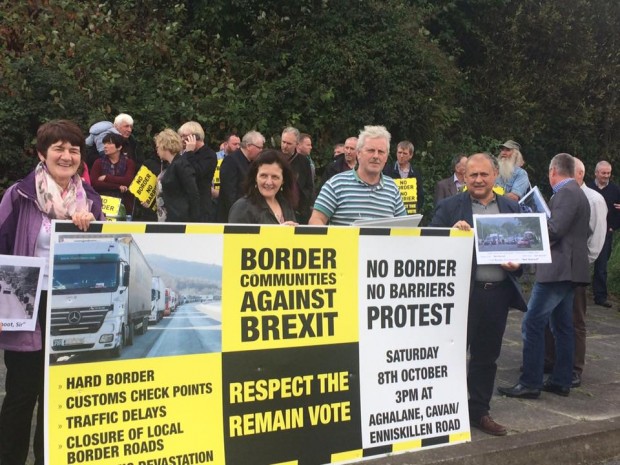
All of these challenges must be addressed and overcome in the difficult negotiations ahead. The people in the North voted to “Remain”. That needs to be recognised and respected The debate is now beginning as we enter into the upcoming talks.
The Tory Government has no mandate to negotiate for the people in the North. That is why we are demanding access to the negotiations at the highest level. That is why we need to engage fully and directly with the Irish Government.
I do not believe that we should leave our future in the hands of the Tory Party – a party without a mandate in Ireland; a party that views Ireland, North and South, as incidental to their England-centred politics.
I do trust
the views of the majority of the people in the North who voted to “Remain”. It
is the job of political leadership to make good on that vote and to deliver for
all our people.
Yes, the referendum is over, but the debate and the negotiations are only
beginning. That is why this week’s all-Ireland conference is
important.
I
take my responsibilities as deputy First Minister very seriously and my
deeply-held view is that the best way to protect the interests of all the people
on the island is to have a very strong relationship between our administration
in the North and the government in Dublin.
That is why I and Sinn Féin will be attending and making the case that the vote in the North is recognised and
respected.
That is why I will be in London next week making that same case and ensuring that the interests of our people are represented directly and robustly in every forum and at every level in the long and difficult negotiations ahead.
Follow us on Facebook
An Phoblacht on Twitter
An Phoblacht Podcast
Uncomfortable Conversations

An initiative for dialogue
for reconciliation
— — — — — — —
Contributions from key figures in the churches, academia and wider civic society as well as senior republican figures