



31 August 2016
Government must address exodus of healthcare graduates
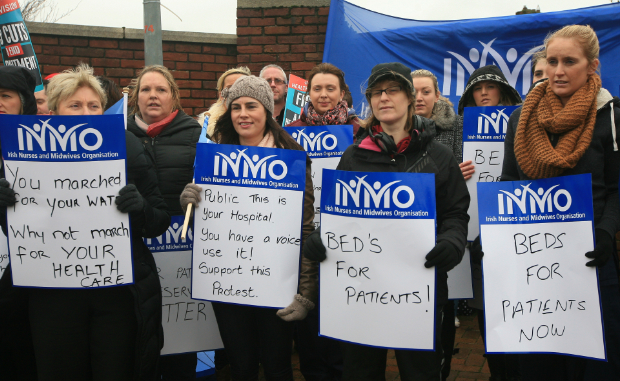
Nurses protest at Beaumont Hospital over conditions and overcrowding
- Louise O'Reilly TD, Sinn Féin Health Spokesperson, writes that major reform in health service is needed if we want to keep nurses and doctors in Ireland:
THIS week, students are making decisions on their CAO offers. Earlier this year the CAO reported an 11% increase in the number of applications being made to nursing courses.
In higher degree courses at Level 8, this increase came third behind architecture and engineering/technology. It is very clear that nursing is increasing in popularity in terms of course choice at this level. However, while the increase in applications is welcome, this may not itself translate in an increase for the recruitment and retention of nurses in the Irish health system in years to come.
Let’s be clear: we are educating and training nurses in their droves. But our employment and retention levels leave much to be desired. This is no accident of fate. And it is not isolated to nursing – it extends to the entire medical profession. This is because of the inadequacy of working conditions, the lack of confidence in the health service and the skepticism on meaningful reform.
With a worldwide shortage of nurses, increasing demand and growing competition in the recruitment of nurses, it is now time to ask of ourselves and our health service why are we educating more and more nurses yet failing to retain them in our services?
Why are our Emergency Departments overcrowded and waiting lists bulging at the seams, yet hundreds of our junior doctors, consultants and therapists taking up jobs elsewhere?
In a paper published by researchers at NUIG last year entitled Ireland’s medical brain drain: migration intentions of Irish medical students, it was found that across all Irish medical schools, 88% of Irish medical students are intending or are contemplating migration when they qualify.
Career opportunities, working conditions and lifestyle were cited as the top three factors. This is endemic in the nursing profession and is reflected in reports earlier this year that as of May, only 92 nurses had availed of the incentive package which was offered by the HSE to attract nurses home to work in the Irish health system. The HSE undertook a targeted campaign for nurses and this has clearly failed, so imagine the hidden realities of the other medical professionals in Ireland which we do not hear about everyday.
This is indicative of a health system in crisis which, without a plan for meaningful reform, will continue to hemorrhage staff and will fail to attract the talent that the services and the patients need.
When you combine unrealistic workloads, staff shortages, extended working hours and a sense of a frustration with the lack of change in the healthcare system, is it any wonder that the HSE recruitment campaign has fallen flat on its face?
Clearly, there is a great desire among students to pursue nursing and medicine as a career. It is a meaningful and respected vocation. But, without doubt, it is hugely demanding with very long hours across all faculties and specialties.
Couple this with many problems within the health service, the feeble attempts to recover from the pressures exerted by the recruitment moratorium and indeed, the subsequent “don’t hire unless you can afford it” attitude from the HSE towards hospitals, and it is very evident why nurses and doctors are not staying within the system following their training.
The CAO application numbers, the points and the offers that will be made show that many young women and men want to be nurses, doctors and healthcare professionals but the conditions in the health service, reported on everyday resulting from strikes and scandals, are more indicative of the continuing trend of high numbers emigrating overseas.
What the HSE and the Minister must realise is that the inability to address the negative and toxic working conditions negatively impacts the supply of medical professionals to meet the demands of the health system. They need to help prepare a strong, competent workforce for the future, but without that component of professionalism, through a serious financial commitment to expand health workforce numbers to the level needed to radically reshape the working environment in our health system, this will not happen.
Healthcare professionals need to be able to trust that their work environment will get better and stay better. Any ad hoc, half-hearted recruitment efforts simply will not cut it. Half-hearted commitments to recruit a meagre fraction of what is needed are doomed to failure. They will only be enticed to remain, and to return, if they are confident that in the years ahead our health system will become a good place to work.
So now the HSE and the Minister must make a commitment to the 2017 intake into medicine and nursing programmes that when they graduate the Irish health system will be better resourced, will have adequate staffing levels and will have decent working conditions. Until that time, Ireland will continue to lose its graduates, and no incentive package will bring them back.
Follow us on Facebook
An Phoblacht on Twitter
An Phoblacht Podcast

Uncomfortable Conversations

An initiative for dialogue
for reconciliation
— — — — — — —
Contributions from key figures in the churches, academia and wider civic society as well as senior republican figures