


3 March 2016
3 March 1976 – Spanish police shoot five dead during Basque general strike
By Jack Redmond
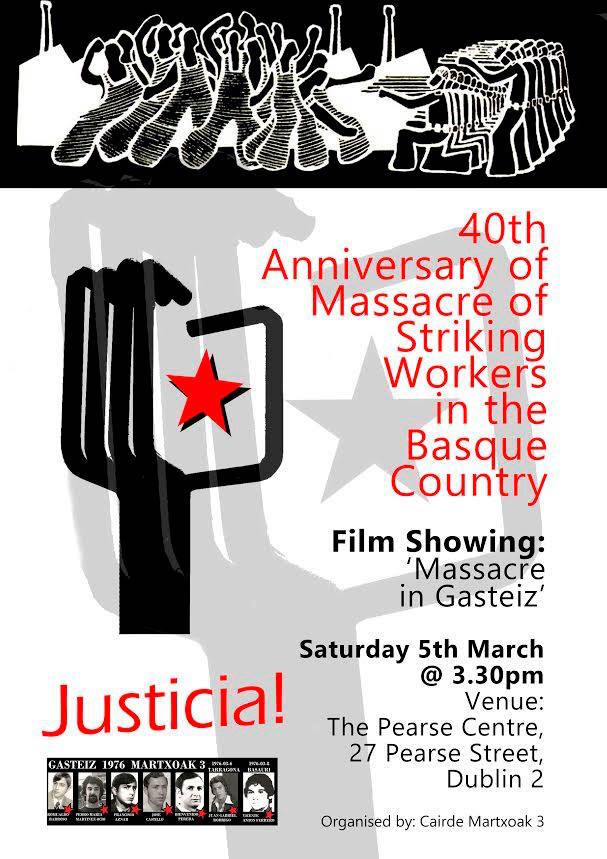
TODAY marks the 40th anniversary of a little-known atrocity carried out by Spanish police in the city of Vitoria-Gasteiz in the Basque Country. On 3 March 1976, the police shot five young men dead in a church during a general strike and many others suffered gunshot wounds.
The fascist dictator General Francisco Franco had died just weeks earlier, in November 1975. In the wake of his death, workers in the Basque Country and across Spain combined to demand change from the harsh employment laws that had been imposed on them during the Franco era.
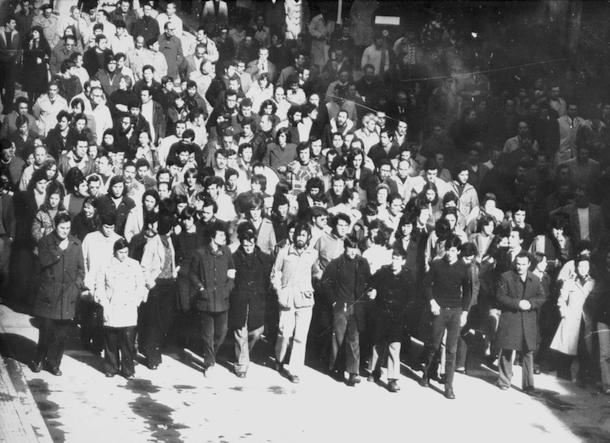
The demands of the Basque workers were not unreasonable – they sought a modest pay rise, a 40-hour working week and the right to retire at the age of 60. In addition, the workers demanded the right to free assembly and the right to hold demonstrations.
To that end, in January 1976, workers at the Forzas Alavesas car parts factory embarked on industrial action which quickly spread to other companies in Gasteiz. Two general strikes followed in February and there was widespread support right across the city for the protest from the beginning.
Even those not directly involved with the strike gave support. From students, to the local clergy, to farmworkers – the whole community of Gasteiz was involved. Shops gave credit and loans to the strikers, and students organised demonstrations.
The women of Gasteiz were particularly strong in their support for the workers. They organised a strike fund, food collections and held regular ‘empty shopping bag’ marches through the city to demonstrate their support for the strikers.
During January and February, the workers held weekly assemblies at the Church of San Francisco de Asis in the city and there were regular clashes with the police on the streets afterwards.
There had been general strikes on 16 and 23 February. On 3 March, a complete work stoppage was called. Workers and students from all over Gasteiz converged on the city centre. The police opened fire on the protesters with live ammunition and several protesters were shot and injured.
A tense stand-off followed during the afternoon and the weekly workers assembly took place at the Church of San Francisco at 5pm, where it was intended to discuss the broadening of the strike and the events of the morning. The church filled up quickly and the area surrounding it was packed with an estimated 4,000 people.
The police placed a cordon around the church and ordered the workers inside to leave. When they refused, the police attacked them with teargas and opened fire with live ammunition.
As the church filled with teargas, panic ensued and people stampeded to escape. Windows were broken so that people could breathe and, as protesters clambered through the windows, many were shot and beaten by police.
Others outside the church who tried to go to their aid were badly beaten also. Later that evening, people rushing to the hospitals to check on injured relatives were also attacked with teargas and rubber bullets.
At the end of the day, five young men lay dead and over 100 were injured, many of them with gunshot wounds. The number of wounded is believed to be a conservative estimate as many of the injured stayed away from the hospitals to avoid arrest or face the prospect of further injury from the police.
At the funerals, 6,000 thronged the Cathedral of San Francisco in Gasteiz and thousands more gathered outside. In the immediate aftermath of the massacre, there were huge protests across the Basque Country.
In Catalonia, at a strike called in solidarity with the murdered Basque protesters, a young man was shot dead by the police and another man was murdered by the Guardia Civil in Basuri. In Rome, Italian police attacked a demonstration outside the Spanish Embassy, killing a bystander.
Each year on the anniversary of the massacre, thousands still gather in Gasteiz to demand justice for the five who were murdered on 3 March 1976. Forty years on, no one has been convicted of the murders.
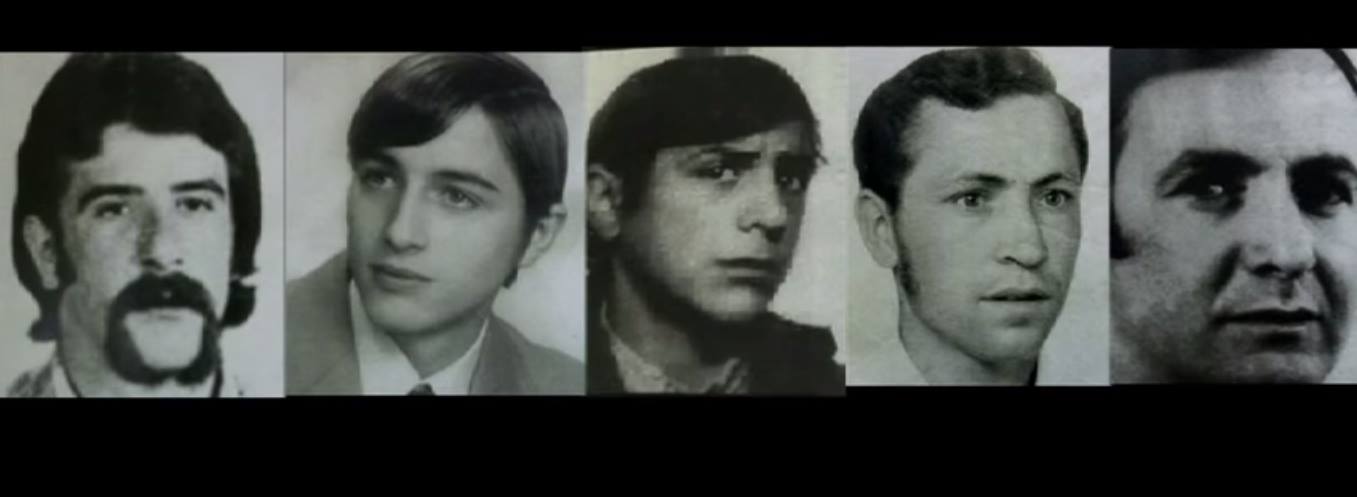
● Pedro Maria Martinez Ocio (27), Romualdo Barroso (19), Francisco Aznar (17), Jose Castillo (32), and Bienvenido Paredo (32) – shot dead by Spanish police in Gasteiz in the Basque Country on 3 March 1976
Follow us on Facebook
An Phoblacht on Twitter
An Phoblacht Podcast

Uncomfortable Conversations
An initiative for dialogue
for reconciliation
— — — — — — —
Contributions from key figures in the churches, academia and wider civic society as well as senior republican figures