


17 January 2016
1916 cover-up – Secret British papers revealed ‘weak’ evidence led to executions
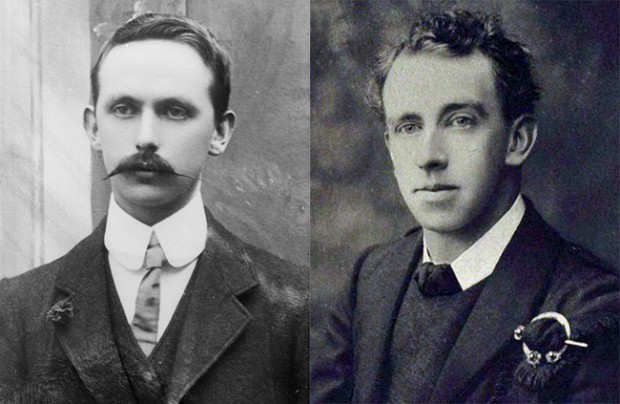
● Eamonn Ceannt called Thomas MacDonagh as a witness but he had been shot that morning
EVERY YEAR, little nuggets of historical facts emerge from the vaults of the British and Irish Governments’ respective Public Records Offices. These gems, which have been denied to the public for 50, 75 or even 100 years, sometimes help to unravel historical mysteries, confirm a specific version of events, but on occasion they confuse further our attempts to decipher the past.
In January 2001, files relating to 1916 ‘emerged’ — released by the British.
That files relating to 1916 and the Tan War were still classified “Top Secret” confirms the widely-held belief that the British are still hiding the truth about their actions in Ireland.
The contents of these files clearly show that they had something to hide. The files reveal that the evidence used to ‘convict’ the 1916 leaders in the courts-martial was considered even by the English to be “too weak”. They further show that a policy of shoot-to-kill existed and that there was a premeditated cover-up of the slaughter by British soldiers.
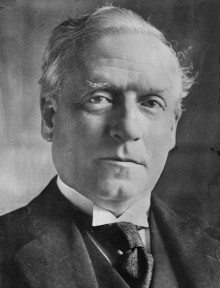
The files, originally supposed to be closed until 2017 – in the interests of “national security” – relate to discussions in 1917 about whether or not to release the transcripts of the 1916 courts-martial which sentenced 90 Volunteers of the Irish Republic to death. Fifteen were executed. Originally, English Prime Minister Herbert Asquith (pictured) considered releasing them but was dissuaded from doing so by the War Office.
When Asquith was succeeded by Lloyd George, the War Office had their way and the files were sealed.
Sir Edward Troup, Permanent Secretary to the Home Office, reporting on the courts-martial, says to Asquith:
“Nothing but harm could come of any enquiry that would draw further attention to the matter.”
In a very remarkable statement, Troup shows that the British covered up blatant breaches of even the very minimal rights a defendant facing court-martial had.
“Nor do I think it would be wise if, for example, we were to publish the evidence in the case of Edmund Kent and we had to publish the fact that he summoned one of the witnesses Thomas MacDonagh and we had to state that: ‘Thomas MacDonagh was not available as a witness as he was shot this morning’.”
The then British Army Adjutant-General, Sir Nevil Macready, advised:
“I have evidence to believe that in certain cases the evidence was not too strong and the inevitable result of publication would be that a certain section of the Irish community would urge that the sole reason for trial in camera was that the authorities intended to execute certain of the Sinn Féiners whether there was evidence against them or not.”
SHOOT-TO-KILL
Asquith had also requested a report on the killing of several Dublin civilians by marauding British soldiers during the Rising and just afterwards. This report, by Sir Edward Troup, marked “Very Confidential”, was among those released on New Year’s Day 2001.
During the Rising, 254 civilians were killed and over 2,000 were injured, the vast majority gunned down by British soldiers under orders not to take prisoners – 64 Volunteers died; 142 British soldiers were killed.
For weeks after, bodies of civilians were being found in cellars, yards and houses where they had been summarily executed.
In a statement, which could equally have applied to the covering up of the more recent shoot-to-kill episodes in Ireland, Asquith’s chief civil servant, Sir Edward Troup, advised:
“I do not know how far the facts of the cases are known in Ireland. But I suggest the right line to take is that the deaths have been thoroughly investigated by military courts; and that no evidence is available on which any charge could properly be brought against any person; and that there is no possibility of further evidence being obtained.”
On the large number of civilian deaths, Troup says:
“The root of the mischief was the military order to take no prisoners. This in itself may have been justifiable – but it should have been made clear that it did not mean that an unarmed rebel might be shot after he had been taken prisoner . . . still less could it mean that a person taken on mere suspicion could be shot without trial.”
In the case of North King Street, the British Army operated under the assertion by the police that “the whole of this street was a nest of Sinn Féiners”. Over 263 men, women and children were taken away “to a place of safety”, though Troup admits that “some were probably not even sympathisers”.
Troup’s report mentions in particular instances on North King Street, Dublin, of Michael Hughes and John Walsh, found dead at Number172; Patrick Balin and James Healy at 177; Peter Connolly at 170; Thomas and Christopher Hickey at 168.
The Hickeys were shot although “beyond the fact that they were associates of [neighbour Peter Connolly said to have been an active Sinn Féin supporter] there is nothing to show that they were Sinn Féiners or had any active part in the fighting”.
Troup says of another case, James Moore of Little Britain Street, who was standing at his front door, that “he was probably a perfectly innocent person and his being shot must be regarded as an accident. I have no doubt, however, that if the evidence were published there would be a demand that Flood should be tried for murder.” (A Sergeant Flood was in the charge of the British Army unit that killed Moore.)
In another incident cited, Patrick Derrick of Eustace Street, supposedly caught by soldiers with a rifle and fixed bayonet, was summarily shot in front of his family in their yard on the orders of Major Montgomery.
Britain had once again been proven to have covered up its less savoury activities in Ireland, this time by its own secret papers. Obviously the call now should be for the British to release all remain documents relating to not only 1916 but all their illegal activities in Ireland.
Follow us on Facebook
An Phoblacht on Twitter
An Phoblacht Podcast
Uncomfortable Conversations
An initiative for dialogue
for reconciliation
— — — — — — —
Contributions from key figures in the churches, academia and wider civic society as well as senior republican figures