



14 January 2016
Only Sinn Féin in Government can be trusted to abolish water charges and Irish Water, says Senator David Cullinane
Water charges were the “brainchild” of Fianna Fáil
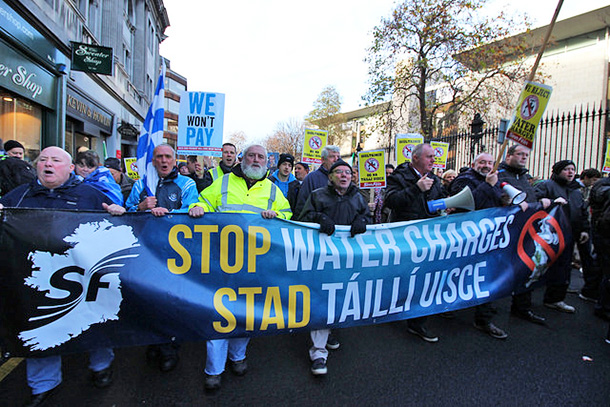

WATER CHARGES were the “brainchild” of Fianna Fáil, and only Sinn Féin in Government can be trusted to abolish water charges and ensure water is kept in public ownership, Sinn Féin Senator David Cullinane has said during a Seanad debate on a Fianna Fáil Private Members Business on Irish Water.
A Constitutional referendum to enshrine public ownership of Ireland’s water services and roll out a major water conservation programme in conjunction with local authorities will also be carried out by Sinn Féin, he said.
“The introduction of water charges for households was the brainchild of Fianna Fáil. They formalised this flawed policy in the terms and conditions attached to the EU-IMF Troika ‘bail out’ loans.
“In its 2011 election manifesto, Labour argued against water charges on the basis they did not address the needs of people experiencing poor supply.
“Yet once in Government they too became cheerleaders for this unfair and unpopular tax.
“Clearly, only Sinn Féin in government can be trusted to abolish domestic water charges.”

The Waterford senator said that Sinn Féin in Government will dismantle Irish Water and replace it with a new model of governance, funding and delivery that is accountable to the Oireachtas.
“We will abolish domestic water charges, end the metering project and redirect the remaining monies to direct investment in infrastructure.
“We will establish an Independent Commission on Water Services to examine the most appropriate public ownership model to report back to Government within nine months.
“We will hold a Constitutional referendum to enshrine public ownership of Ireland’s water services and roll out a major water conservation programme in conjunction with local authorities.”
Follow us on Facebook
An Phoblacht on Twitter
An Phoblacht Podcast

Uncomfortable Conversations

An initiative for dialogue
for reconciliation
— — — — — — —
Contributions from key figures in the churches, academia and wider civic society as well as senior republican figures