

14 May 2015
Tories back in power – What next for the North?
North's Executive should unite to oppose Tories' threatened austerity onslaught
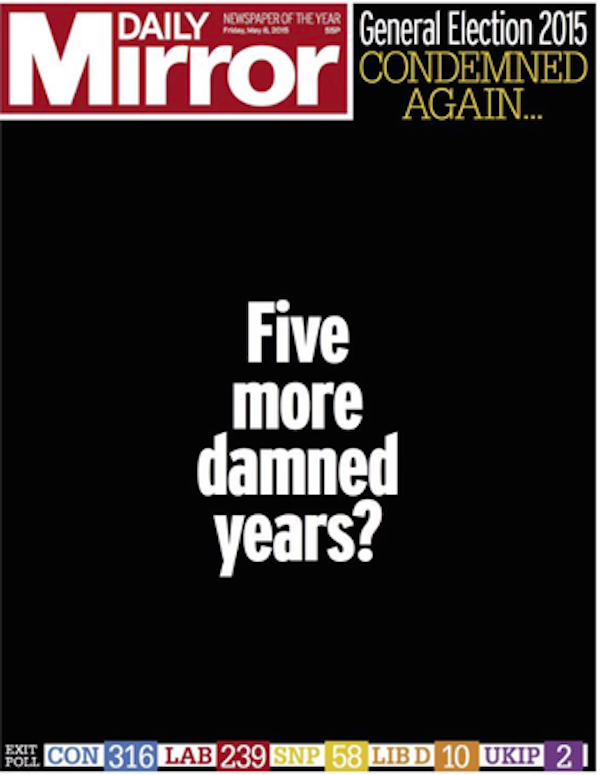

THIS Westminster election was always set to be both politically and economically significant, for the British state and the Six Counties.
The landslide in support for the Scottish National Party has changed the Scottish political landscape, perhaps irrevocably. In the North, the contradictions of the Union and partition have been deepened by British Government austerity.
The new Tory Government’s legislative and economic policy programme will be in conflict with both the Northern Executive’s Programme for Government and the Good Friday Agreement.
A likely referendum on EU membership could also have far-reaching ramifications, jeopardising the basis from which up to one tenth of the regional GDP has been generated in recent years.
Sinn Féin said consistently, before and during this election, that it was about a choice between austerity and equality. We said austerity under either the Tories or British Labour would have a detrimental economic and political impact in the North. That message was vindicated by the massive Sinn Féin share of the popular vote in the North.
Separately, the anti-austerity politics of the SNP were also decisively endorsed with massive electoral support.
The return of the Tories to power, however, also forcefully vindicates Sinn Féin’s election platform.
The Tories are now poised to pursue even more aggressive austerity measures. Their ideological crusade against the welfare state was confirmed during the election campaign by Iain Duncan Smith’s statement that £12billion of an overall £30billion reduction in public expenditure would come specifically from welfare protection.
Meanwhile, the Tories also announced an investment package of £20billion in the Trident nuclear missile system. At the same time, both the DUP and the Ulster Unionist Party confirmed their own pro-austerity and pro-Tory priorities with manifesto commitments to support a 2% increase in British defence spending!
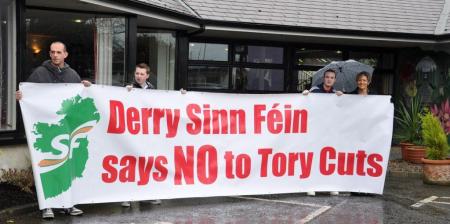
No citizen anywhere in Britain or Ireland should be forced to live with the inequalities caused by austerity. The British state’s £75billion deficit and £1.6trillion debt were not caused by the disadvantaged, the working poor, or small-business people.
The Six Counties already have the lowest living standards of any region in the British state or Ireland. Child poverty, zero-hours contracts, public sector pay restraints, restricted credit access for small businesses, emasculated public services and the weak private sector have all been entrenched and exacerbated by the earlier removal of £1.5billion from the North’s public expenditure settlement (or Block Grant).
The North’s economy and society cannot afford any more cuts, hardship or inequality.
The biggest threat to the viability of the political institutions and political process itself over the last five years was the approach of the Tory-led coalition. It reduced the North to a political backwater through negative mismanagement of the peace and political processes and, with the imposition of its austerity agenda, directly contributed to renewed political instability.
No political process can flourish without a sustainable economic framework or the required expenditure to support society’s needs.
All the indications are that David Cameron’s government intends no change in either political or economic policy towards the North. In that event, the negative politics which became increasingly ascendant here during the last five years would be set to continue, with disastrous effects for all sections of the community.
Put starkly, the Tories back in power will bring more bad leadership, bad politics and bad policy to the North.
Make no mistake: the Tory approach and policy intentions will plunge society in the Six Counties into an even deeper and irreversible race to the bottom, with catastrophic consequences.
Austerity is the antithesis of equality, enterprise, social justice and economic growth.
The Northern Executive should unite and give leadership on a cross-party basis to oppose this threatened austerity onslaught.
It should ask the local business sector, trades unions, churches, community groups and wider civic society to mobilise in opposition against the austerity agenda, and in support of a reinstatement of the funds removed from the Block Grant, a new public expenditure settlement, and planned full fiscal autonomy to strategically restructure the regional economy.
Unity of purpose and solidarity is the only way forward.
Our previous status quo was unsustainable. The re-election of the Tories has changed everything – it has the potential to push the Six Counties into unknown political terrain. That must be avoided.
Follow us on Facebook
An Phoblacht on Twitter
An Phoblacht Podcast

Uncomfortable Conversations

An initiative for dialogue
for reconciliation
— — — — — — —
Contributions from key figures in the churches, academia and wider civic society as well as senior republican figures