


12 October 2014
I was there – The burning of Long Kesh
15 October 1974
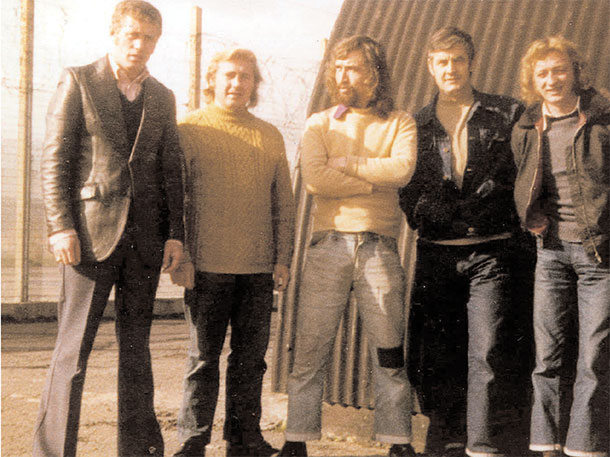
• Francie Fitzsimmons, Gerard McAuley, Christy Keenan, Eddie Larkin, Seamus Drain
“The CR gas was dropped similar to a cluster bomb,” remembers Christy. “A large container hit the ground and the small canisters were scattered about, clouding the whole pitch area in gas."
CHRISTY KEENAN, from the Short Strand in Belfast, was in Cage 18. Serving seven years for possession of weapons, he was in charge of communications between his cage and the other cages where republican POWs, both internees and sentenced, were being held.
“The tension in the camp was building up throughout the day,” he recalls. “There had been a row in the visits and the screws [prison officers] wanted to take those involved out of Cage 13 for punishment. The camp staff refused to send the men out.
“Semaphore messages were going up and down the camp all day before the order came through to burn the camp.”
The POWs had been training for such an inevitability.
“We were ordered to put together a survival kit with some food and a sharp instrument for protection. We were also in training over obstacle courses to get our fitness levels as high as possible.
“At about 8pm, the order was given. Everything was piled up in the middle of the huts and we doused it with the highly flammable floor polish we were issued with and ignited it,” says Keenan. “After we torched the huts we went over the wire and formed into our separate companies and marched towards the football pitches.”
As the huts went up in flames, the prisoners, armed with bed-ends, brush shafts and any other makeshift weapon they could get their hands on, awaited the inevitable assault by the British Army.
At dawn the next day, Keenan recalls, the British Army initially used the ploy of asking for negotiations with the camp staff.
“Paul ‘Dingus’ Magee, the camp adjutant, went to talk to a British Army major at the gate at the internees’ end of the camp and the Brits tried to snatch him. As this was happening, the British Army moved in behind us. They used Saracen armoured cars to smash through the fences and stormed the pitches.”
Like Joe, Christy recalls the injuries received by the men and the choking CR gas that was used against the prisoners to help subdue what had been a spirited battle against all the odds.
“The CR gas was dropped similar to a cluster bomb,” remembers Christy. “A large container hit the ground and the small canisters were scattered about, clouding the whole pitch area in gas.
“Gradually, the British Army regained control of the camp and rounded us all up and we were spreadeagled against the fences.”
Keenan also recalls the injuries inflicted and remembers that some British soldiers, serving in Belfast, went in search of prisoners they knew and beat them up in revenge attacks.
Follow us on Facebook
An Phoblacht on Twitter
An Phoblacht Podcast

Uncomfortable Conversations
An initiative for dialogue
for reconciliation
— — — — — — —
Contributions from key figures in the churches, academia and wider civic society as well as senior republican figures