

20 March 2014
Directly-elected Dublin Mayor to get backing of Sinn Féin councillors
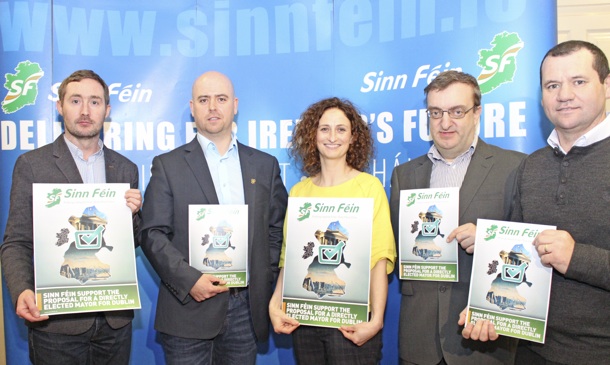
Sinn Féin Cllr Eoin Ó Broin, Cllr Cathal King, EU candidate Lynn Boylan, Cllr Mícheál Mac Donncha and local candidate Paul Donnelly show their support for a directly-elected Dublin Mayor

The Mayor should have a number of clearly defined executive powers including transport; major roads; waste management and tourism
SINN FÉIN councillors will vote in support of a referendum to see if people in Dublin want a directly-elected mayor. And if a referendum is held on 23 May, the party will advocate a ‘Yes’ vote.
Sinn Féin Councillor Cathal King, the former Mayor for South Dublin County, said on Thursday that giving the people of Dublin an opportunity to elect their own mayor would undoubtedly strengthen the democracy of local government.
“The Mayor would serve a term of five years with the first election taking place in conjunction with the next local government elections in 2019,” Councillor Cathal King said.
“Sinn Féin would call for significant executive power to be devolved from central government to the Mayor’s office. The Mayor should have a number of clearly defined executive powers including transport; major roads; waste management and tourism.”
The Mayor would also have responsibility for strategic policy development in a number of areas including economic development, environment, housing and planning.
The Mayor would be held to account by a regional assembly made of six councillors from each of the four Dublin local authorities appointed using the Group selection system. The Assembly would also assist the Mayor in the development of strategic policy while having a role, with the local authorities, in the appointment of the Directors of Service.
The funding and staffing of the Mayor’s office will predominantly come from existing central government and state agencies’ resources.
Follow us on Facebook
An Phoblacht on Twitter
An Phoblacht Podcast

Uncomfortable Conversations
An initiative for dialogue
for reconciliation
— — — — — — —
Contributions from key figures in the churches, academia and wider civic society as well as senior republican figures