




4 November 2013 Edition
Will only our rivers run free?
Water meters, conservation and public services under pressure
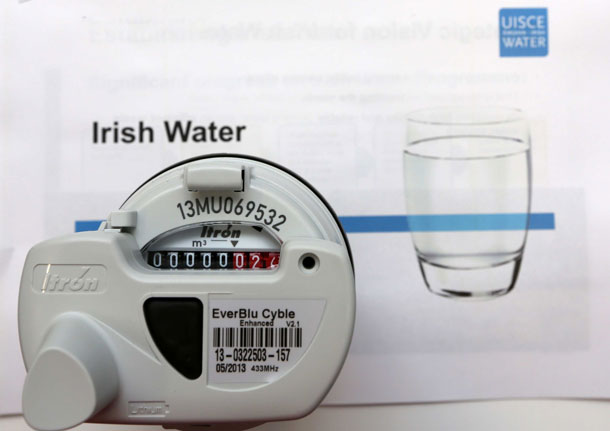

A decade of under-investment means that in some local authority areas more than half the water is leaking away. Clearly it is not the householder but the water distribution network that is the biggest culprit when it comes to water waste
THERE IS A LINE from a famous Irish ballad that goes “And
still only our rivers run free.” If this government’s TDs have their way, it
will be only our rivers that run free.
Fine Gael and the Labour Party are committed to introducing water rates. Cynically, they have ensured people will not be receiving bills until January 2015 – well after the local elections of May 2014.
But it was their predecessors in Fianna Fáil who actually came up with the plan.
In December 2010, in the dying days of the last government (which included Mícheál Martin as a senior minister at the Cabinet table), Fianna Fáil produced the National Recovery Plan 2011-2014. Fianna Fáil were very clear:
“Water billing for domestic customers will be made on the basis of metered charges. This will require a nationwide project to install meters in domestic residences.”
Three months later, out go Fianna Fáil and in come Fine Gael and the Labour Party.
Irish Water was to be established, take democratic control from local authorities and impose domestic water rates on householders.
Sinn Féin has stopped water rates in the North; we were not going to allow them to be introduced in the 26 Counties without a fight.
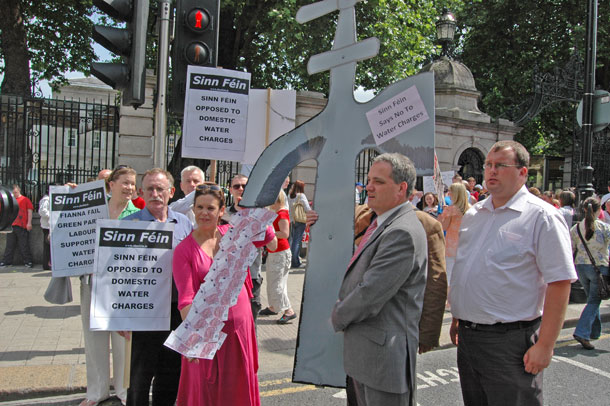
• Sinn Féin TDs and representatives protest outside Leinster House against domestic water charges
In May 2012, Sinn Féin launched our alternative to Irish Water. It stated that while we understand the challenges facing the water sector:
“Sinn Féin is fundamentally opposed to the introduction of water charges, privatisation of water and sewerage service provision, and any double-taxation as a method of financing these vital public services to achieve this end. Sinn Féin also opposes the establishment of the proposed new utility, Irish Water.”
This is still Sinn Féin’s position today.
From his experience in the North, Conor Murphy MP explains:
“As Assembly minister with responsibility for water services I blocked any attempt to introduce water rates.
“Westminster tried to bully us into imposing water charges but we successfully resisted this. We invested £1billion over four years, £1million every day, without ever introducing water rates. This money was raised through inter-departmental savings. Up to 6% was saved through efficiencies. This money was used to upgrade the water system. The Irish Government are wrong to say that all citizens in the EU pay water rates. I can safely say water rates is off the agenda in the Northern Assembly.”
Water Services Bill
The Irish Government introduced the Water Services Bill in May of this year. It established Irish Water as a subsidiary of Bord Gáis Éireann, a company this government said they intend to sell off large parts of. This new company has been given the power to install water meters and then charge households for the water they use.
The establishment of Irish Water has nothing to do with conservation and everything to do with taking power from local authorities, centralising it and then preparing it for the privatisation of Irish Water. Shine up the family silver and then sell it off to the highest bidder.
Speaking to An Phoblacht, Michael Wall, Local Authority Organiser for trade union SIPTU, said:
“We are in no doubt that the establishment of Irish Water announced as part of the Fine Gael election manifesto was designed to bring about the privatisation of the Irish water service. What has happened since the election has not allayed our fears that this government is trying to follow conservative governments in Britain and across Europe.
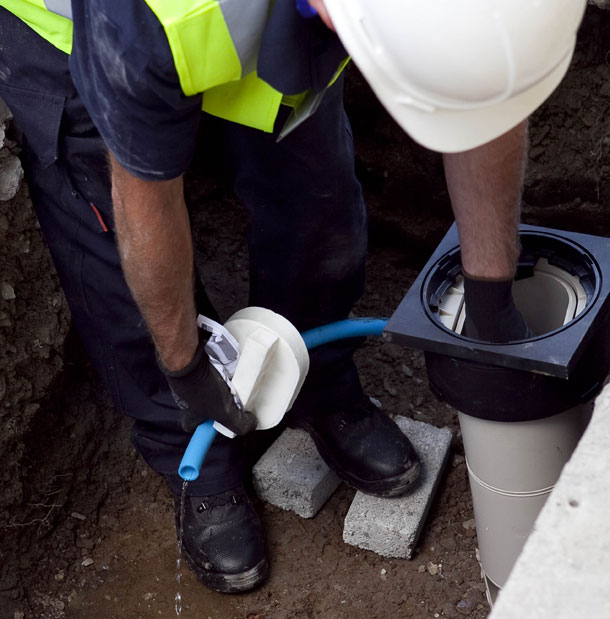
• One of the first new water meters is installed as part of a blanket roll-out across the 26 Counties
“SIPTU along with the European Trade Union Congress are united in our stance to prevent privatisation of water. We are campaigning to ensure that water and sanitation services remain in public ownership for future generations. We want to see water services under local, democratic control and publicly accountable.”
Challenging the myths
Brian Stanley TD, Sinn Féin spokesperson on Environment, Community and Local Government, says that the establishment of Irish Water is driven by Fine Gael’s right-wing agenda “and supported by a spineless Labour Party”.
He says that in their drive to establish Irish Water the Government continues to promote myths about water meters and water charges which need to be challenged.
“Myth number one: the public get water for free. This is untrue. People pay for their water through their taxes. The introduction of separate water charges forces the public to pay for water twice – once in their taxes and at a second time through the water meter.
“Secondly, that all other citizens in the EU pay water charges. This again is not true. Sinn Féin successfully resisted introducing water charges in the North of Ireland.
“Finally, the Government would have us believe that water metering reduces consumption. This again is untrue. In England, where water metering has been in place for many years, consumption is at 158litres per head per day; in Dublin, the Dublin Water Supply Report of 2008 showed consumption at 148 litres per head per day.”
It transpires that one third of households in Dublin cannot be installed with meters. This will also be the case in apartment blocks and older houses in many parts of the country. If water meters equal water conservation then the Government have a serious problem. One third of homes in the capital will be on the proposed flat rate with no incentive to conserve water.
Transfer of assets
The Government intends to introduce the Water Services Bill II later this year. This will allow for the handing over of all water sector assets from local authorities to Irish Water.
The Government had hoped to move the water sector employees from local authorities over to Irish Water. But this was not to be. SIPTU have opposed this and protected the employees in the 34 local authorities.
The workers will remain employed by local authorities and Service Level Agreements will be in place between local authorities and Irish Water to provide water to households.
This should make it more difficult to sell off Irish Water and will make it easier for a progressive government to reverse the legislation and hand the water sector back to the local authorities to manage.
Challenges and solutions
Sinn Féin fully understands the challenges that lie ahead for the water sector. Our approach is based on ensuring that water provision remains in public ownership and paid for through progressive taxation.
Sinn Féin supports the introduction of district metering as opposed to installing domestic water meters. This is already in place in a number of local authorities and is cheaper and is effective in monitoring usage and identifying leaks.
We would be far better off investing money from the National Pension Reserve Fund in creating real jobs that have a positive legacy. The money being wasted on meters should be invested in upgrading an ageing, leaking water distribution system.
Sinn Féin calls for the establishment of a National Water Service Framework Team overseeing governance of the water sector and capital investment for the sector.
We need to develop an All-Ireland strategy on water provision where shared resources, joint capital investment in infrastructure and procurement would clearly prove beneficial on an all-Ireland basis.
Consecutive governments have allowed the state’s water distribution network to become antiquated. Capital investment in water was cut by 25% to €331million in 2012. More cuts are planned until the budget is reduced to €266 million. These cuts will result in a lot more leaks and a lot more wasted water.
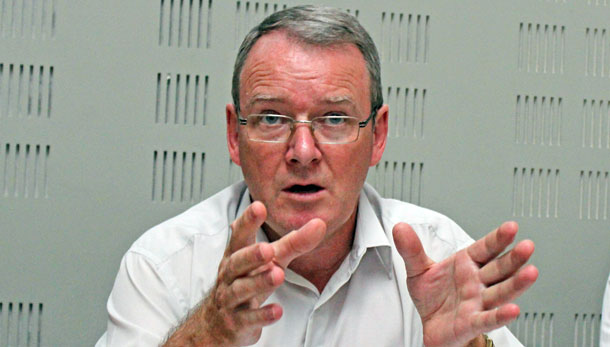
• Sinn Féin Environment spokesperson Brian Stanley
A decade of under-investment means that in some local authority areas more than half the water is leaking away. Clearly it is not the householder but the water distribution network that is the biggest culprit when it comes to water waste.
The Department of Environment, Community and Local Government must return to at least the 2011 level of investment.
While the Environment Minister’s proposals are focused on the domestic householder, there is no mention of the debt owed by the commercial sector where only 52% of water rates are collected. So it appears that households are being penalised for leaking pipes and poor governance. The Government must take action on the outstanding water rates owed to the state by the commercial sector.
Companies have now been contracted to install domestic water meters. These contractors, including media mogul Denis O’Brien’s Siteserv PLC, will install water meters to ensure Irish Water can bill households for the water used.
If, for any number of reasons, a household does not have a water meter installed they will still have to pay water rates. Their bill will be based on an estimated use of water.
Sinn Féin activists are encouraged to take the lead in organising the campaign against this double taxation.
Sinn Féin will be identifying when and where water meters are being installed. Sinn Féin will target those areas with information leaflets outlining our opposition to water rates and highlighting our alternatives to Irish Water.
We will be working with communities to organise public meetings and protests to show opposition to water rates.
Sinn Féin reps will also be challenging Fine Gael and Labour TDs and councillors to debate the issues around water rates, conservation, public services and privatisation.
It is only by bringing pressure to bear on this government will we change their direction on water rates and ultimately keep water services in public ownership under the control of our local authorities.