1916 - 2006: Sinn Féin President on legacy and relevance of the Easter Rising
BY Gerry Adams
Completing the unfinished business of 1916
The most important thing to state about the 1916 Proclamation of the Irish
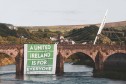
Republic in 2006 is that it is unfinished business. We don't have a United
Ireland - yet. We don't have a society where all the children of the nation
are cherished equally - yet. But we in Sinn Féin believe that we can achieve
those aims and create a better society for everyone on this small island -
Catholic, Protestant and Dissenter, people of all religions and none, Irish
citizens and new communities in our country alike.
Sinn Féin has paid tribute to the men and women of 1916 every year for the
past 90 years, often at times when governments in Leinster House chose to
ignore them. At other times governments paid lip service to 1916 while
putting in jails and internment camps many of those who took the
Proclamation seriously. So Easter is a time of irony and contrasts, as well
as a time of celebration and remembrance. Everyone knows that the revival of
the state commemoration of 1916 is all to do with the growth of Sinn Féin.
That is all to the good. We have called many times for Easter 1916 to be
commemorated appropriately by the Irish government.
It is entirely positive that the Irish Government's revival of its Easter
military parade and President Mary McAleese's speech in February have
provoked much debate about 1916 and its legacy. There have been TV, radio
and newspaper features, exhibitions and public debates. New books have been
published; others have been republished. People are being educated anew on
the events of that momentous year, on the men and women who made the Easter
Rising possible and on the movements and ideas which led to the
Proclamation. It is an opportunity for young people especially to look at
the ideas of Pearse and Connolly, the pivotal role of women and the
commitment of the 1916 freedom fighters to the Irish language.
In assessing the relevance of the ideas and actions of 1916 to our own time,
we need to look at the different strands which made up the Rising and their
principles as reflected in the Proclamation. Irish Republicanism began with
the United Irish movement of the 1790s when Wolfe Tone set out his aim to
break the connection with England, "to abolish the memory of past
dissensions, and to substitute the common name of Irishman in place of the
denominations of Protestant, Catholic and Dissenter". Through Young Ireland
to the Fenians, the ideas of Irish republicanism evolved. They are distilled
in the wrtings of Pádraig Pearse, especially The Sovereign People, the
message of which is summed up in the line from the Proclamation which
asserts "the right of the people of Ireland to the ownership of Ireland".
Who owns Ireland today? The British government still has jurisdiction over
the North East of our country. There can be no final settlement, no real
reconciliation and, most certainly, no fulfilment of the Proclamation so
long as British jurisdiction remains. Irish unity and the establishment of
the Irish Republic as, in the words of the Proclamation, "a Sovereign
Independent State" remains our core objective.
Others also contest the ownership of Ireland. North and South, governments
pursue a privatisation agenda which puts more of our resources and of our
infrastructure in the hands of profiteers. The sell-out of our oil and gas
to multinationals, the sale of the national airline Aer Lingus and the
privatisation of health services run contrary to the Proclamation's
declaration of the right of the Irish people to "the unfettered control of
Irish destinies".
James Connolly brought to the Easter Rising the militancy of radical trade
unionism and the ideas of socialism. The year before the Rising he stated:
"In the long run the freedom of a nation is measured by the freedom of its
lowest class; every upward step of that class to the possibility of
possessing higher things raises the standard of the nation in the scale of
civilisation." The Proclamation guaranteed "religious and civil liberty,
equal rights and equal opportunities and declares its resolve to pursue the
prosperity of the whole nation and of all its parts, cherishing all the
children of the nation equally". These are the most often quoted words of
the Proclamation, yet the Ireland of 2006 falls far short of their
guarantee. Inequality abounds amidst previously undreamt-of prosperity. At
least one in seven of our children live in poverty, denied the improved
educational and employment prospects that all parents want for the next
generation.
"A free Ireland with no sex distinction should be the motto of all
nationalist women", said Constance Markievicz who fought in Easter Week. The
Proclamation was advanced and progressive for its time as it advocated
universal suffrage and addressed men and women equally. Women played a key
role in the Rising and in all phases of the struggle for Irish independence.
Yet Irish women remain significantly under-represented in Irish political
life today - including in our own party. We simply cannot attain our
objectives if we do not bring far more women into our party and into elected
positions.
One key line in the Proclamation refers to "the differences carefully
fostered by an alien government, which have divided a minority from the
majority in the past". This refers to the British government's policy of
divide and conquer which kept Irish people separated by using sectarianism
to maintain its rule in Ireland. Like the men and women of 1916 Sinn Féin
today rejects all forms of sectarianism and bigotry. We are committed to a
process of national reconciliation and have entered a long-term dialogue
with representatives of unionism in our country.
The 90th anniversary of the Rising is a time to celebrate and commemorate.
It is also a time of challenges as we move the republican project forward in
the Ireland of 2006. So let us all make the Proclamation more than a framed
document on the wall. Let us work towards the day when we will live in the
type of Republic it promises, an Irish Republic worthy of the name.
Martin McGuinness and Gerry Adams at the launch of a campaign to promote the
wearing of the Easter Lily this year, the 90th anniversary of the 1916 Rising
Articles may not be reproduced without the consent of An Phoblacht. For further information, please contact